 North Shore Plant Club
- Shop For Plants
- Search Plants
- Resources for Gardeners
- Color Wheel of Plants
- Interactive Landscapes
- Photos of Planters & Hanging Baskets
- September Photos from Our Community
- Botanic Gardens: Chicago & Beyond
- Local Nurseries
- Upcoming Plant Events
- Plant Club Articles & Answers
- Gardening in the News
- Chicagoland Garden Calendar
- Explaining Plant Container Sizes
- Thrillers, Fillers & Spillers
- Join Free!
- Mundelein
Feb 22, 2026
Agnes Arber: Seeing Plants with Both Eye and Mind
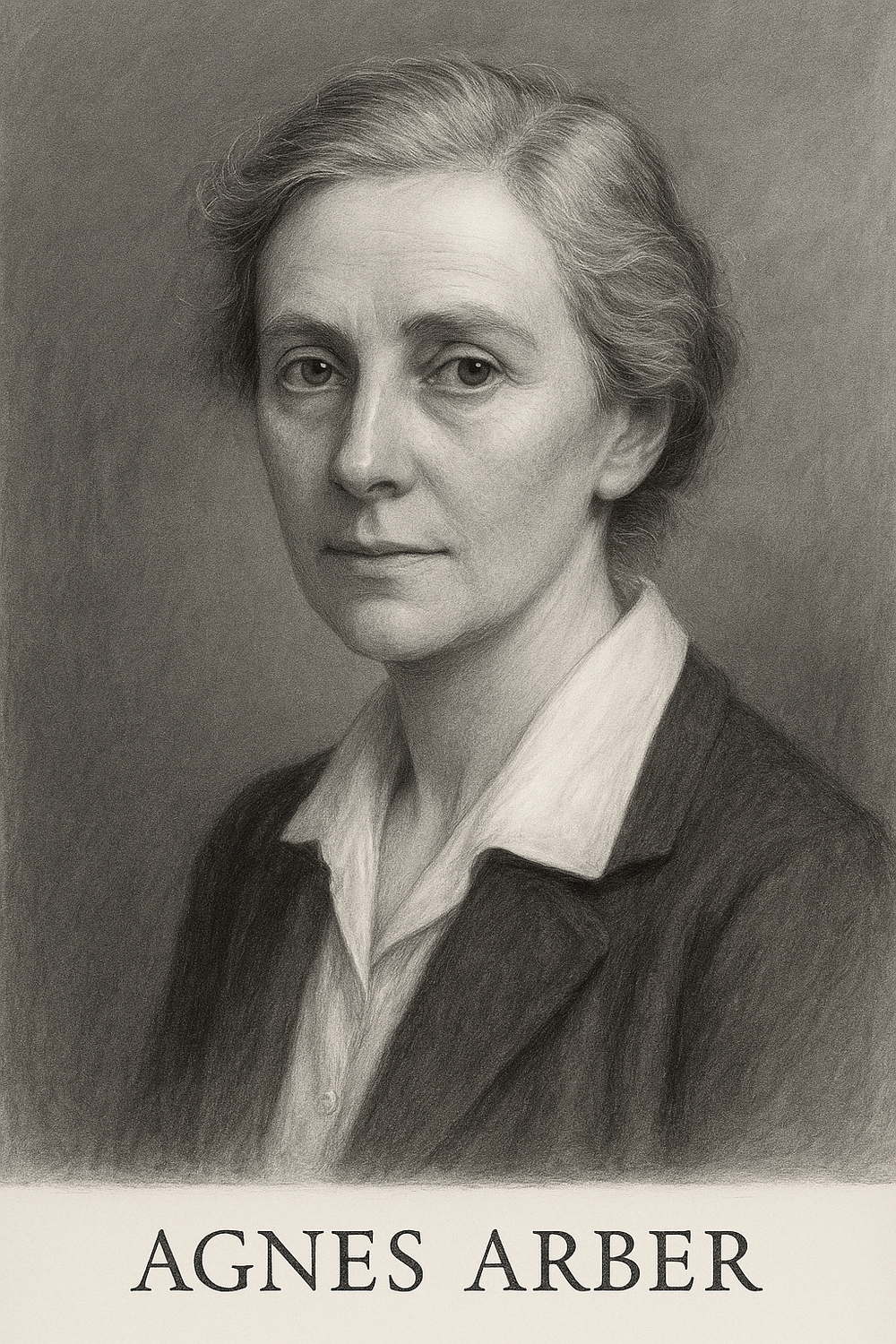
Agnes Arber (1879–1960) was a British botanist whose work profoundly shaped how plants are studied, understood, and appreciated. Although she was not a “gardener” in the traditional sense, her influence on horticulture reaches deeply into the way gardeners observe plant form, growth, and structure today. Arber believed that careful looking—combined with curiosity and imagination—was central to understanding the living world.
Born in London to an artistic family, Arber learned to draw at an early age, a skill she later used to illustrate her own botanical research. This blend of art and science became a defining feature of her work and helped bridge the gap between professional botany and the observational practices familiar to gardeners. She studied botany at University College London and Newnham College, Cambridge, at a time when women faced significant barriers in scientific education and careers.
Arber became best known for her research into plant morphology—the study of plant form and structure—focusing especially on monocotyledons, a group that includes grasses, irises, lilies, and many familiar garden plants. Her books, including Herbals, Their Origin and Evolution (1912), Water Plants (1920), and Monocotyledons (1925), combined scientific rigor with historical insight and remain influential today.
What set Arber apart was her conviction that plants should be studied as living, integrated organisms rather than isolated parts. She encouraged botanists—and by extension gardeners—to observe how form, function, and environment work together. This holistic approach resonates strongly with gardeners who learn through watching plants grow over time rather than through theory alone.
In recognition of her achievements, Arber became the first woman botanist elected as a Fellow of the Royal Society in 1946 and later received the Linnean Society’s Gold Medal, another historic first for a woman. Later in life, she turned her attention to the philosophy of biology, exploring how scientists—and gardeners—come to know and understand plants.
For garden enthusiasts, Agnes Arber’s legacy is a reminder that gardening is not only about cultivation, but also about observation, patience, and respect for plant individuality. Her work invites gardeners to slow down, look closely, and truly see the plants they grow.