 North Shore Plant Club
- Shop For Plants
- Search Plants
- Resources for Gardeners
- Color Wheel of Plants
- Interactive Landscapes
- Photos of Planters & Hanging Baskets
- September Photos from Our Community
- Botanic Gardens: Chicago & Beyond
- Local Nurseries
- Upcoming Plant Events
- Plant Club Articles & Answers
- Gardening in the News
- Chicagoland Garden Calendar
- Explaining Plant Container Sizes
- Thrillers, Fillers & Spillers
- Join Free!
- Mundelein
Feb 22, 2026
Carl Linnaeus Gave Order to the Garden
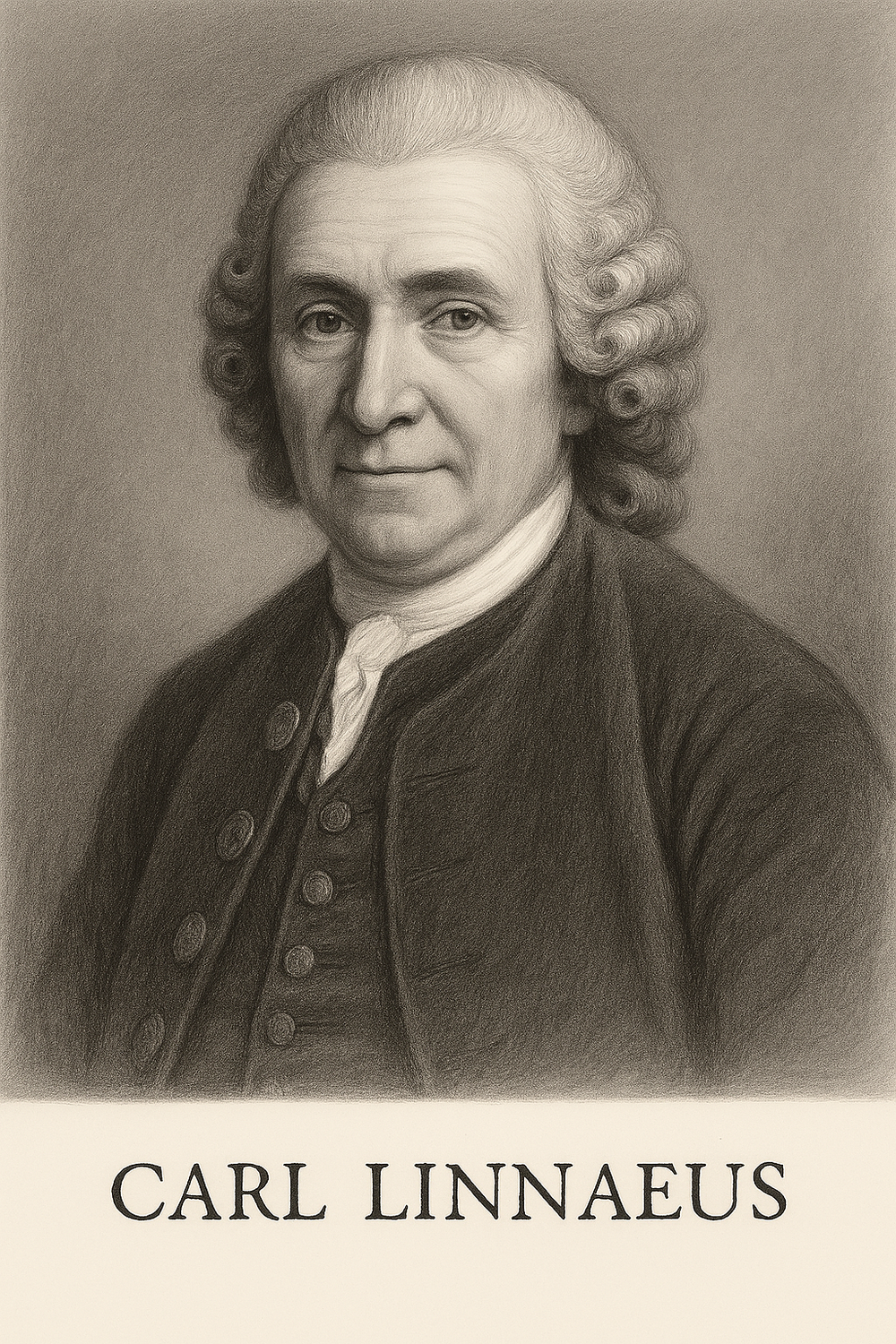
Every gardener, whether they realize it or not, works within a system created by Carl Linnaeus. The familiar Latin names on plant tags, seed packets, and nursery labels all trace back to this Swedish botanist whose work brought order to the plant world and forever changed how we understand, share, and grow plants.
Carl Linnaeus was born on May 23, 1707, in the small village of Råshult in southern Sweden. His father was a Lutheran pastor with a deep love of gardening, and young Carl grew up surrounded by plants. From an early age, he learned their names and forms, developing a fascination that would shape his life. At a time when plants were often known only by long, descriptive phrases, Linnaeus was already searching for clarity and structure in the natural world.
Linnaeus studied medicine at Lund University and later at Uppsala University, where botany was considered an essential part of medical training. While still a student, he began teaching botany and caring for the university’s garden, using living plants as tools for study. His early work laid the foundation for a bold idea: that all living things could be classified and named using a consistent system.
That idea took shape in 1735 with the publication of Systema Naturae. In this slim but revolutionary book, Linnaeus introduced a hierarchical way of organizing nature into groups such as kingdom, class, order, genus, and species. Most importantly, he proposed a standardized two‑word naming system—binomial nomenclature—giving each species a unique Latin name made up of its genus and species.
For gardeners, this was a turning point. Before Linnaeus, plants often had different names in different regions, or names so long they were impractical to use. Linnaeus’ system created a shared language that allowed gardeners, botanists, and nurseries to know they were talking about the same plant, no matter where they lived or what language they spoke. This clarity remains essential today, especially when selecting plants for specific traits such as hardiness, disease resistance, or growth habit.
In 1753, Linnaeus published Species Plantarum, a landmark work that formally applied binomial nomenclature to thousands of plant species. This book is considered the starting point for modern botanical naming and is still referenced in plant taxonomy today. Many of the names gardeners use—Quercus for oaks, Rosa for roses, Acer for maples—were standardized through this work.
Linnaeus also developed what he called the “sexual system” of plant classification, grouping plants based on the number and arrangement of their reproductive parts. While later scientists recognized that this system was artificial, its simplicity made plant identification easier and encouraged close observation of flowers—a practice gardeners continue to value.
Beyond classification, Linnaeus trained a generation of students who traveled the world collecting and documenting plants. Their discoveries expanded the range of plants available to European gardens and laid the groundwork for modern plant exploration and horticulture. Through these efforts, Linnaeus helped connect gardens to global plant diversity.
Today, Linnaeus’ influence is everywhere in gardening. Scientific plant names prevent confusion when common names vary. Plant labels rely on his system to convey accurate information. Garden books, plant databases, and botanical gardens all depend on the structure he created. Even modern plant breeding and conservation efforts use Linnaean taxonomy as a foundation for organizing knowledge.
Carl Linnaeus died in 1778, honored across Europe as the “father of modern taxonomy.” Yet his greatest legacy lives quietly in gardens everywhere. Each time a gardener reads a plant label, compares species, or learns a new Latin name, they are participating in a system designed nearly three centuries ago to bring order, understanding, and connection to the living world.
For gardeners, Linnaeus reminds us that naming is not just about labels—it is about seeing plants clearly, appreciating their relationships, and sharing knowledge across time and place.