 North Shore Plant Club
- Shop For Plants
- Search Plants
- Resources for Gardeners
- Color Wheel of Plants
- Interactive Landscapes
- Photos of Planters & Hanging Baskets
- September Photos from Our Community
- Botanic Gardens: Chicago & Beyond
- Local Nurseries
- Upcoming Plant Events
- Plant Club Articles & Answers
- Gardening in the News
- Chicagoland Garden Calendar
- Explaining Plant Container Sizes
- Thrillers, Fillers & Spillers
- Join Free!
- Mundelein
Aug 3, 2026
The Enduring Story of Chrysanthemums: From Ancient Healing Herb to American Garden Favorite
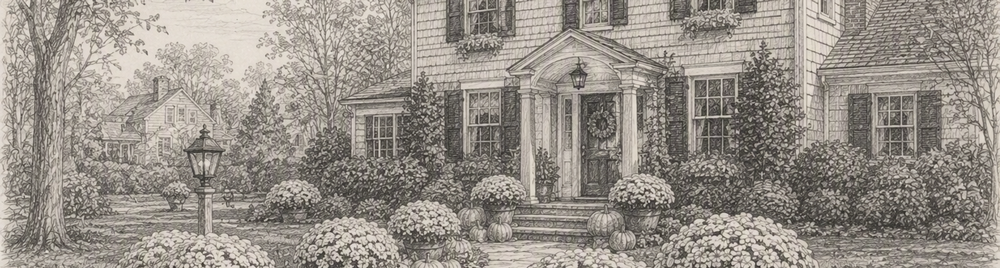
Every autumn, garden centers across America burst into color with chrysanthemums. Their cheerful mounds of gold, bronze, red, purple, and white flowers signal the changing seasons just as surely as turning leaves and crisp mornings. Yet behind these familiar fall blooms lies a remarkable history stretching back more than 3,000 years. Few plants have traveled so far, influenced so many cultures, or remained as beloved across the centuries as the chrysanthemum.
Ancient China: Medicine, Symbol, and Art
The story begins in ancient China, where chrysanthemums were cultivated as early as the 15th century B.C. Unlike the large, showy garden mums we know today, the earliest chrysanthemums were simple yellow, daisy-like flowers valued as much for their practical uses as their beauty. Chinese herbalists used various parts of the plant in traditional remedies, believing it could help relieve headaches and other ailments. Young shoots and petals were even eaten in salads, while flowers and leaves were brewed into teas. The ancient Chinese called the flower "Chu," and its importance was such that a city, Chu-Hsien — literally "Chrysanthemum City" — was named in its honor. Some sources identify Chu-Hsien with the present-day city of Kaifeng, still celebrated today for its chrysanthemum festivals and heritage.
As the flower became woven into Chinese culture, it gained symbolic significance beyond its medicinal uses. Chrysanthemums came to represent longevity, nobility, and perseverance. Chinese artists and poets frequently featured them in paintings and literature. The famous poet Tao Yuanming celebrated chrysanthemums as symbols of a life lived in harmony with nature rather than worldly ambition. The flower eventually became one of China's revered "Four Gentlemen" of classical art, alongside bamboo, orchid, and plum blossom, each representing important human virtues.
Imperial Japan and the Chrysanthemum Throne
By the eighth century A.D., chrysanthemums had made their way to Japan, likely carried by Buddhist monks and cultural exchanges between the two nations. There, the flower achieved even greater prominence. Japanese gardeners developed extensive breeding programs, selecting plants for unique forms, colors, and petal arrangements. The chrysanthemum became so deeply associated with the Japanese imperial family that a stylized sixteen-petaled chrysanthemum was adopted as the emperor's official seal. Even today, the Japanese monarchy is sometimes referred to as the "Chrysanthemum Throne."
Japan also established traditions that continue to this day. The annual Chrysanthemum Festival, known as Kiku no Sekku or the Festival of Happiness, celebrates the flower every September. Elaborately trained specimens are displayed in gardens and temples, showcasing extraordinary horticultural skill. In Japan, chrysanthemums symbolize longevity, rejuvenation, and happiness — meanings that remain attached to the flower throughout much of Asia.
The European Detour
The chrysanthemum's journey westward was much slower. Dutch traders and explorers introduced chrysanthemums to Europe during the seventeenth and eighteenth centuries. However, European gardeners were initially less enthusiastic than their Asian counterparts. Interest grew after plant hunter Robert Fortune brought improved Chinese varieties to England in the mid-1800s. French and English gardeners began breeding chrysanthemums extensively, creating many of the flower forms still recognized today, including pompons, spiders, and decorative types.
Interestingly, chrysanthemums developed very different cultural meanings in Europe than they had in Asia. In countries such as France, Poland, Spain, and Belgium, chrysanthemums became associated with remembrance, mourning, and cemetery plantings. To this day, giving chrysanthemums as gifts in some European countries can carry very different connotations than in Asia or North America.
Arrival in America
The flower arrived in North America during the late eighteenth century. One of the earliest documented introductions occurred in 1798, when New Jersey nurseryman John Stevens imported a variety often called "Old Purple" (some historical sources refer to it as "Dark Purple"). Through the nineteenth century, chrysanthemums grew steadily in popularity as gardeners discovered their extraordinary ability to provide reliable color late in the growing season, when many other plants were fading.
By the turn of the twentieth century, chrysanthemums had firmly established themselves in American horticulture. The Chrysanthemum Society of America was founded in 1900, and its first exhibition was held at the Art Institute of Chicago in 1902. Enthusiastic hybridizers continued developing thousands of new cultivars. Some featured enormous exhibition blooms requiring meticulous disbudding and staking, while others were selected for compact growth and dependable garden performance.
A Note for Today's Gardeners
Amongst the chrysanthemums available today are florist mums, grown under greenhouse conditions for the showiest blooms, and garden mums, marketed as hardy but not always reliably so. Keep in mind that even mums labeled hardy may struggle to establish if planted in the ground as late as September — the plant simply hasn't had time to root in before winter. For the best chance at a mum that returns next year, get it in the ground as early in the season as you can.
American Gardens Today
Today, chrysanthemums occupy a unique place in American gardens. Unlike many specialty plants cherished primarily by collectors, mums appeal to gardeners of all experience levels. Their popularity stems from several practical advantages: they bloom when most garden perennials have finished, they are available in a vast range of colors, and many varieties are affordable and easy to grow. Particularly in the Midwest, including the Chicago area, garden mums have become synonymous with autumn displays, often paired with pumpkins, ornamental grasses, asters, other fall annuals, and Halloween decorations.
Modern chrysanthemums also serve purposes beyond ornament. Some species produce pyrethrum, a naturally occurring insecticide that remains widely used in garden and agricultural products. Others continue to be used in teas and traditional herbal preparations. Plant breeders are still hard at work, developing varieties with improved cold hardiness, disease resistance, unique flower forms, and extended bloom periods.
For American gardeners, chrysanthemums have become the unofficial queens of fall. Every time we plant a mum beside the front walk or place a pot on the porch, we participate in a story that began in ancient Chinese gardens, passed through imperial Japanese courts, traveled across Europe, and ultimately found a permanent home in our own landscapes. Today's garden mums connect us to generations of gardeners, plant explorers, breeders, artists, and herbalists who appreciated the flower long before it became a staple of American autumn — living proof that some plants never go out of style.