 North Shore Plant Club
- Shop For Plants
- Search Plants
- Resources for Gardeners
- Color Wheel of Plants
- Interactive Landscapes
- Photos of Planters & Hanging Baskets
- October Photos from Our Community
- Botanic Gardens: Chicago & Beyond
- Local Nurseries
- Upcoming Plant Events
- Plant Club Articles & Answers
- Gardening in the News
- Chicagoland Garden Calendar
- Explaining Plant Container Sizes
- Thrillers, Fillers & Spillers
- Join Free!
- Mundelein
Jul 7, 2025
The History of Hydrangeas: From Native Woodland Shrubs to Modern Garden Superstars
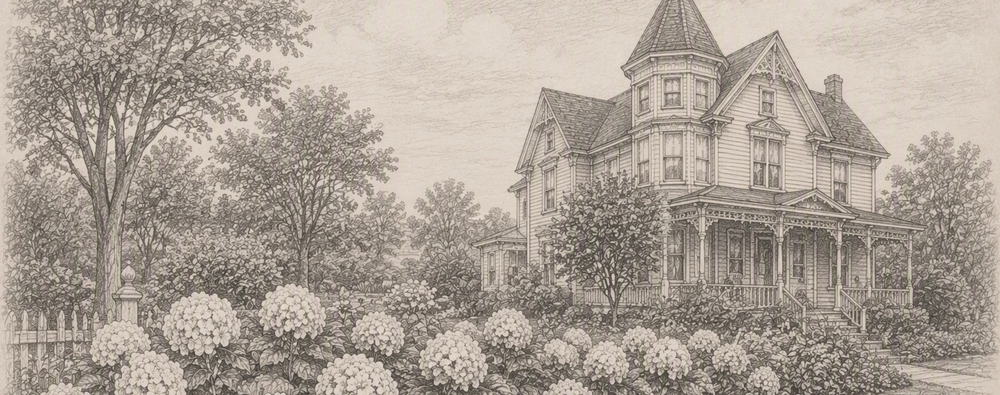
Few shrubs have captured the imagination of gardeners quite like hydrangeas. Their enormous flower clusters, long bloom season, and remarkable diversity have made them favorites in gardens from Japan to Europe to North America. Today we can choose from compact reblooming selections, giant panicle hydrangeas, native species, and varieties that flower in nearly every shade from white to deep rose. Yet the story of hydrangeas stretches back far beyond modern garden centers and plant catalogs.
Hydrangeas belong to the genus Hydrangea, a group of roughly 70 species distributed primarily across eastern Asia, with additional native species occurring in North America. Fossil evidence suggests hydrangeas have existed for millions of years, long before humans began cultivating them. Most of the hydrangeas gardeners recognize today trace their ancestry either to the forests of Japan, China, and Korea or to the woodlands of the eastern United States.
The word Hydrangea derives from the Greek words hydor (water) and angeion (vessel or pitcher), referring to the shape of its seed capsules. It’s a great literal nod to how much water these plants love!
Native Hydrangeas and Their Early Uses
Long before hydrangeas became ornamental landscape plants, Indigenous peoples in North America used native species for medicinal purposes. The smooth hydrangea (Hydrangea arborescens) and oakleaf hydrangea (Hydrangea quercifolia) were particularly important. Root preparations from smooth hydrangea were traditionally used in herbal remedies, while the plants themselves formed part of the rich ecology of southeastern forests. In Japan, hydrangeas (ajisai) have been celebrated in poetry since the 8th century and are deeply tied to the rainy season.
These native species remain important today, not only because of their beauty but because they are adapted to local ecosystems. Oakleaf hydrangea, with its distinctive lobed foliage and spectacular fall color, is native to the southeastern United States. Smooth hydrangea occurs naturally across much of the eastern U.S. and is one of the most cold-hardy members of the genus.
Hydrangeas Arrive in Europe
The first hydrangeas reached Europe during the eighteenth century, an era of botanical exploration. Plant collectors and naturalists were fascinated by unusual plants from Asia and the Americas, and hydrangeas quickly attracted attention.
North American species were among the earliest introduced abroad. Starting in the 1730s, the Philadelphia botanist John Bartram began shipping seeds and specimens of native American plants, hydrangeas among them, to correspondents and collectors in England, helping spark European interest in the New World's flora.
Back home, those same native hydrangeas found their way into some of the era's most famous gardens. In 1792, George Washington planted smooth hydrangea (Hydrangea arborescens) on the bowling green at Mount Vernon, and Thomas Jefferson added it to his plantings at Monticello around the same period. Both purchased their plants from William Bartram — John's son, who had taken over the family's Philadelphia nursery — making the Bartrams a two-generation thread running through the early American history of hydrangeas.
Asian species followed. The first viable specimens of Hydrangea macrophylla reached England in 1788, when an East India Company surgeon stationed near Canton shipped a consignment of plants to Sir Joseph Banks at Kew. Gardeners were astonished by their large flower heads and ability to display different colors depending on soil chemistry. The mophead and lacecap hydrangeas familiar to gardeners today derive largely from these Japanese species.
The Rise of the Bigleaf Hydrangea
Among all hydrangea species, none achieved greater popularity than Hydrangea macrophylla, commonly known as the bigleaf hydrangea. Native to Japan, it naturally grew in coastal habitats before becoming one of the world's most widely cultivated ornamental shrubs.
Bigleaf hydrangeas became famous for their unusually large flower clusters and, perhaps even more notably, their ability to change color. In acidic soils containing available aluminum, flowers often appear blue. In alkaline soils, the same plant may bloom pink. This chemistry-based color shift fascinated Victorian gardeners and continues to intrigue gardeners today.
During the nineteenth century, breeders selected plants with larger flowers, improved colors, and different flower forms. Two major garden styles emerged:
- Mopheads, with large rounded clusters of showy sterile florets.
- Lacecaps, with a ring of larger florets surrounding fertile flowers in the center.
These forms remain staples of gardens around the world.
Native American Stars: Annabelle and Oakleaf
While bigleaf hydrangeas dominated many gardens, American species quietly gained popularity.
One of the most significant selections was 'Annabelle,' a variety of smooth hydrangea. Found growing wild in 1910 by Harriet Kirkpatrick and her sister-in-law, Amy, out on a horseback ride near Anna, Illinois, Annabelle wasn't officially commercialized until decades later, but ever since gardeners have loved its enormous white flower heads and dependable flowering habit. Unlike many bigleaf hydrangeas, smooth hydrangeas bloom on new wood, meaning they flower reliably even after harsh winters.
Oakleaf hydrangeas also became increasingly popular during the twentieth century. Their appeal extends beyond flowers: dramatic foliage, exfoliating bark, and brilliant autumn color make them four-season shrubs. Cultivars such as 'Snow Queen,' 'Alice,' and later the Gatsby series expanded their landscape use dramatically.
For Midwest gardeners, including those in the Chicago region, these native species often outperform traditional bigleaf hydrangeas because of their cold tolerance and adaptability.
The Panicle Revolution
Another species transformed hydrangea gardening: Hydrangea paniculata. Native to China and Japan, panicle hydrangeas produce cone-shaped flower clusters and tolerate considerably more sun than most hydrangeas. They are also exceptionally cold hardy.
Classic cultivars such as 'Grandiflora' (often called PeeGee hydrangea) became landscape staples. More recently, breeders introduced selections with stronger stems, compact habits, and flowers that age from white to pink and red.
Gardeners today recognize names such as 'Limelight', 'Little Lime', 'Quick Fire', 'Fire Light', and 'Phantom'. Many of these cultivars have become mainstays in Midwestern landscapes because they thrive in conditions that challenge bigleaf hydrangeas.
Reblooming Hydrangeas Change Everything
Perhaps the most important hydrangea breeding breakthrough of the modern era began, almost by accident, in the mid-1980s in the yard of a Minnesota elementary school teacher named Dennis Bostrom. One of his hydrangeas kept doing something no bigleaf hydrangea was supposed to do in Zone 4: surviving harsh winters and reliably reblooming anyway. Bailey Nurseries took the plant into trials, testing it for more than a decade. In 1998, renowned plant breeder Dr. Michael Dirr spotted it during a visit to Bailey's test gardens, recognized what he was looking at, and carried cuttings back to Georgia for further development. The result, launched commercially in 2004 as Endless Summer®, could bloom on both old wood and new wood — meaning that even if a hard winter killed off existing buds, the shrub would simply flower on fresh growth later in the season.
Prior to this development, many gardeners in colder climates experienced disappointment when late frosts killed flower buds. A hydrangea might survive winter but fail to bloom.
Endless Summer changed that equation. Even if winter damaged existing buds, the shrub could produce flowers on new growth later in the season. The result was more consistent flowering and a dramatically expanded geographic range for bigleaf hydrangeas. Breeders quickly began incorporating reblooming traits into new introductions.
Today gardeners can choose from numerous reblooming varieties including:
- Endless Summer®
- BloomStruck®
- Summer Crush®
- Twist-n-Shout®
These cultivars helped renew interest in hydrangeas during the early twenty-first century and sparked a new wave of breeding efforts.
Hydrangeas Today
Modern hydrangea breeding focuses on solving gardeners' real-world challenges. Breeders seek improved cold hardiness, stronger stems, disease resistance, longer bloom seasons, compact growth habits, and richer flower colors. As a result, today's gardeners enjoy far more choices than previous generations.
For experienced gardeners, the most exciting aspect of hydrangea history may be the way old and new continue to blend together. Native American species such as smooth and oakleaf hydrangeas remain as valuable as ever. Asian species continue to provide breathtaking floral displays. Modern breeding has enhanced both groups without losing the characteristics that made them beloved in the first place.
From wild woodland shrubs used by Indigenous peoples to reblooming cultivars developed through sophisticated breeding programs, hydrangeas have traveled an extraordinary journey. Their story reminds us that gardening is always a partnership between nature and people—one that continues to produce beautiful new chapters with every growing season.
Explore the many varieties of Hydrangeas available from the North Shore Plant Club.