 North Shore Plant Club
- Shop For Plants
- Search Plants
- Resources for Gardeners
- Color Wheel of Plants
- Interactive Landscapes
- Photos of Planters & Hanging Baskets
- September Photos from Our Community
- Botanic Gardens: Chicago & Beyond
- Local Nurseries
- Upcoming Plant Events
- Plant Club Articles & Answers
- Gardening in the News
- Chicagoland Garden Calendar
- Explaining Plant Container Sizes
- Thrillers, Fillers & Spillers
- Join Free!
- Mundelein
Feb 25, 2026
How Winter Cold Shapes the Landscape
Winter is often thought of as the quiet season in the garden, but cold weather is anything but passive. Freezing temperatures, fluctuating thaws, drying winds, and snow cover all play major roles in determining which plants survive, which struggle, and which thrive when spring returns. Understanding how winter cold affects landscape plants—and how gardeners can work with it rather than against it—leads to healthier gardens and fewer losses year after year.
Understanding Cold & Why Minimum Temperatures Matter
When choosing landscape plants, the most important winter-related number to know is the minimum temperature your area is likely to experience. In the United States, this is summarized by the USDA Plant Hardiness Zone Map, which is based on the average annual extreme minimum winter temperature over the preceding 30 years.
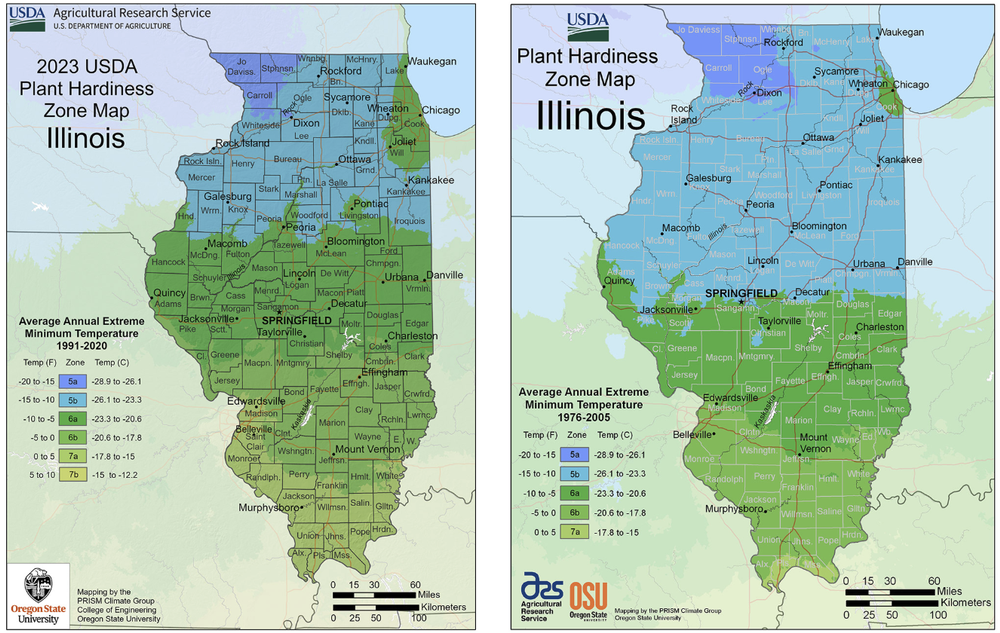
Hardiness zones do not describe average winter temperatures, snowfall, or how long cold lasts. Instead, they answer one critical question: How cold does it typically get at its coldest? A plant labeled “hardy to Zone 5” is expected to survive winter lows typical of that zone, but not necessarily colder.
A lot of Chicago’s winter climate is determined by its latitude. During the winter, the sun doesn’t shine very long or very brightly on our part of the world, so there is less heat to go around. And the polar jet stream often passes near or over Illinois during winter, bringing wind and cold clear nights during allow heat to dissipate.
But gardeners just a few miles apart may experience different cold extremes in the same winter. Lake Michigan exerts a moderating influence on temperatures. During the summer, the lake tends to cool the nearby lakeshore. During the winter, the lake and areas near it stay relatively warm and are somewhat protected by lake effect snow. Similarly, urban development creates a heat-retaining effect – buildings and pavement absorb heat and release it at night when temperatures would often be coldest. Because of these factors and an overall warming trend you can see in the maps above, Chicago and many of its suburbs are now Zone 6a (expecting low temperatures around negative 5-10 Fahrenheit). In contrast, the far western suburbs can be several degrees cooler and are in Zone 5b (negative 10-15 F).
That said, winter can be unpredictable no matter where you are in Chicagoland. Seemingly far-away factors like the warmth of ocean water in the Pacific Ocean can affect temperatures and precipitation. Chicago’s mid-continental location can expose it to polar vortexes delivering extended and extreme cold. Even parts of your yard can be exposed to very different conditions.
For gardeners, this means:
- Choose perennials, trees, and shrubs rated for your zone—or colder. Plants at the edge of their hardiness range are more vulnerable during severe winters or sudden cold snaps.
- Understand zone limitations. Hardiness zones are based on averages, not guarantees. Exceptional cold years can still occur, and microclimates within your yard may be colder or warmer than the regional norm.
- Use zones as a starting point, not the whole story. Soil drainage, sun or wind exposure, snow cover, and moisture all influence winter survival but are not reflected in zone numbers.
Gardeners who treat hardiness zones as guidelines rather than promises make better long-term planting decisions.
How Cold Weather Damages Plants
Winter injury shows up in many ways, and understanding the causes helps prevent it.
Freezing injury occurs when temperatures drop low enough to damage plant tissues, particularly in roots, buds, and cambium layers. Some plants tolerate this well; others do not.
Desiccation (winter drying) is especially common in evergreens. When the ground is frozen, roots cannot replace water lost through needles or leaves, particularly during windy or sunny winter days.
Freeze–thaw cycles can be more damaging than sustained cold. Repeated warming and refreezing can cause soil heaving that exposes roots, cracks bark, or disrupts plant dormancy.
Snow and ice damage may break branches or deform shrubs, especially those with upright or brittle growth habits.
Choosing Plants with Winter in Mind
Smart plant selection is the most effective winter protection strategy.
When selecting plants, consider:
- Cold hardiness beyond your minimum zone. Choosing plants hardy to one zone colder than yours adds a safety margin.
- Plant origin and genetics. Cultivars bred for northern climates whose ancestors lived with a variety of winter weather often outperform the same species grown from stock that originated in a warmer place.
- Growth habit. Compact, flexible plants tend to resist snow damage better than tall, brittle forms.
- Evergreen vs. deciduous. Evergreen broadleaf shrubs are often more vulnerable to winter burn than deciduous plants, even if they are technically hardy.
Bulbs such as tulips and daffodils actually require a period of cold to bloom properly, illustrating that winter is not always an enemy—but rather a necessary part of the plant life cycle.
Preparing the Garden for Winter
Winter care begins long before the first freeze.
Water deeply in fall. Moist soil holds heat better than dry soil and reduces winter desiccation, especially for evergreens.
Mulch wisely. A 2–4 inch layer of organic mulch helps moderate soil temperatures, reduce freeze–thaw cycles, and protect roots. Mulch should be applied after the ground cools but before deep freezing.
Avoid late-season fertilizing or pruning. Encouraging new growth late in the season makes plants more vulnerable to cold injury.
Protect young and newly planted trees and shrubs. Plants in their first few winters have shallower and less developed root systems and benefit from extra care.
When Extreme Cold Is Forecast
Even well-prepared gardens can be stressed when temperatures plunge far below normal. When especially cold weather is predicted, targeted action can make a difference.
Cover vulnerable plants. Materials such as burlap are effective because they block wind and sun while allowing air circulation, reducing frost damage and winter burn. [gardeningknowhow.com]
Shield from wind. Temporary windbreaks on the windward side of plants reduce moisture loss and cold stress.
Protect containers. Potted plants are far more vulnerable than in-ground plantings. Group containers together, move them to sheltered locations, or insulate pots to protect roots.
Let snow work for you. Snow is an excellent insulator. Where safe, gently pile snow around plants to protect crowns and roots during extreme cold.
It is important to remove covers when temperatures moderate to prevent overheating and moisture buildup.
Accepting Winter as a Garden Partner
No garden emerges from winter entirely unchanged. Some losses are inevitable, especially in years of extreme weather. However, winter damage is not always failure—it can be valuable feedback.
Plants that struggle may be poorly sited, marginally hardy, or unsuited to local conditions. Plants that thrive without special protection are often the backbone of resilient landscapes.
By understanding minimum temperatures, choosing appropriate plants, preparing thoughtfully for winter, and responding wisely to extreme cold, gardeners can work with winter rather than fighting it. Over time, this approach leads to stronger plants, fewer losses, and a landscape that looks better—and recovers faster—each spring.