 North Shore Plant Club
- Shop For Plants
- Search Plants
- Resources for Gardeners
- Color Wheel of Plants
- Interactive Landscapes
- Photos of Planters & Hanging Baskets
- September Photos from Our Community
- Botanic Gardens: Chicago & Beyond
- Local Nurseries
- Upcoming Plant Events
- Plant Club Articles & Answers
- Gardening in the News
- Chicagoland Garden Calendar
- Explaining Plant Container Sizes
- Thrillers, Fillers & Spillers
- Join Free!
- Mundelein
Feb 14, 2026
Love Them Longer: How to Keep Valentine’s Day Flowers Fresh in a Vase
Valentine’s Day often brings flowers into our homes at a time of year when the garden feels very far away. Whether they arrive as a passionate bouquet of roses or a simple bunch of tulips from the grocery store, cut flowers are a reminder that spring will come again—and that beauty, even when fleeting, is worth caring for well.
The good news is that with a little attention, most cut flowers can last far longer than we expect. The difference between a bouquet that fades in three days and one that looks good for a week or more usually comes down to a few simple habits.
Start With a Clean Slate
Before flowers ever touch water, the vase matters. A vase that looks clean can still harbor bacteria from previous arrangements, and bacteria is the number one enemy of cut flowers. It clogs stems, prevents water uptake, and accelerates decay.
Wash vases thoroughly with hot, soapy water before use. If a vase has held flowers that rotted quickly, a splash of white vinegar or a quick rinse with diluted bleach (followed by thorough rinsing) can make a real difference. Think of it as giving your flowers a fresh start rather than placing them into someone else’s mess.
Always Recut the Stems
Flowers should never go straight from wrapping into a vase. Recutting stems is essential, even if the florist already trimmed them.
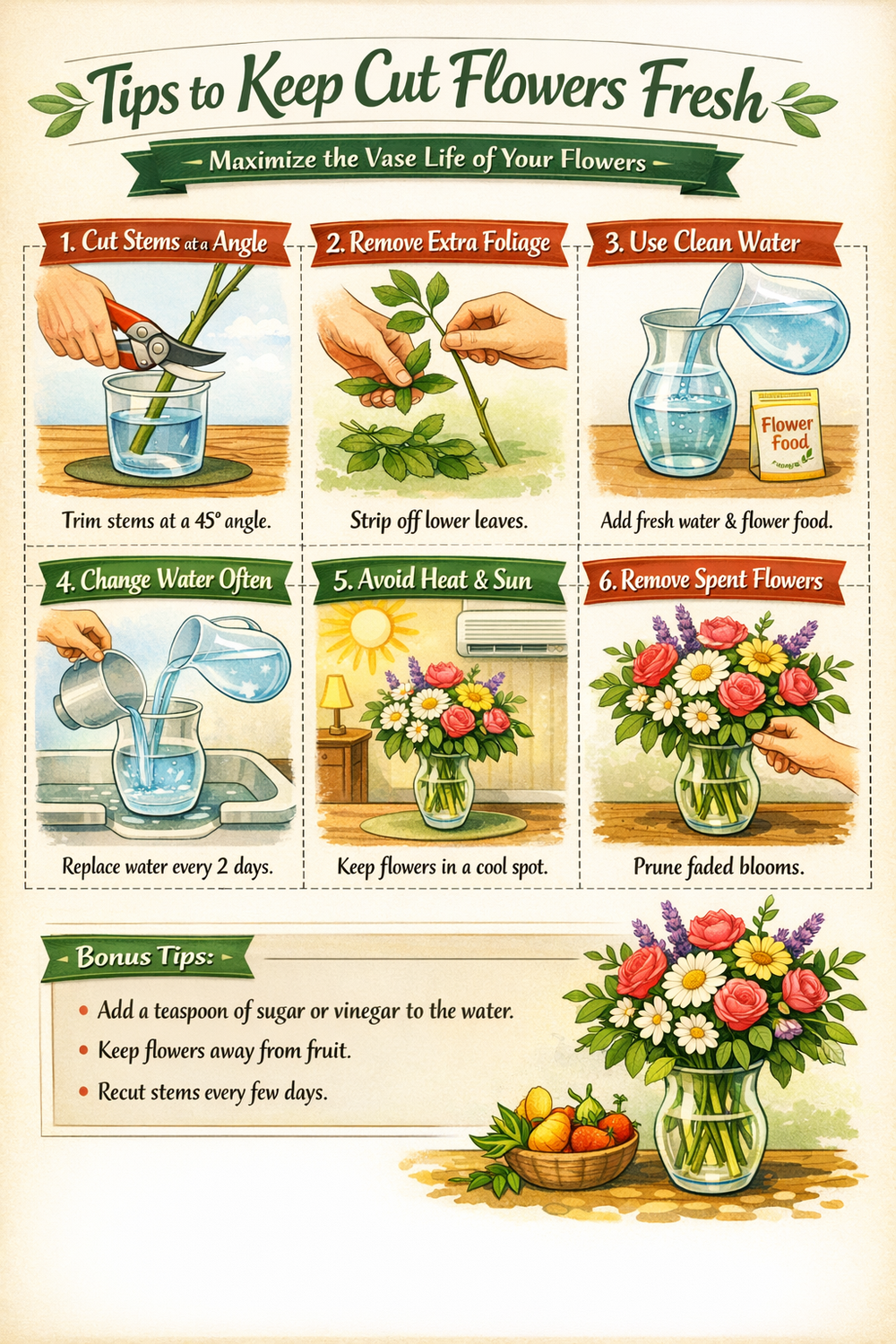
Use sharp scissors or pruners and cut at a slight angle, removing at least half an inch—more if the stems look dry or discolored at the bottom. An angled cut increases the surface area for water absorption and prevents the stem from sitting flat against the bottom of the vase.
If you want to be extra careful, recut stems under running water or immediately place them into water after cutting. This prevents air from entering the stem, which can block water movement.
Strip Leaves Below the Water Line
Leaves left in the water will rot quickly, turning clean vase water cloudy and foul-smelling. This encourages bacterial growth and shortens the life of the entire arrangement.
Remove all foliage that would sit below the water line, even if it means the arrangement looks a little bare at first. Flowers will last longer, and the water will stay clearer between changes.
Use Flower Food—Or Keep It Simple
Commercial flower food packets are designed to do three things: feed the flowers, acidify the water, and reduce bacterial growth. When you have them, use them.
Valentine's Day Tip: Studies have shown that a 1mg dose of Viagra (sildenafil citrate) — considerably smaller than the human dosage — acts on plants similarly to its effect on humans—it boosts water transport and inhibits the production of ethylene, a hormone that accelerates aging and wilting in cut flowers. Research also found that simply using nitric oxide is a cheaper, safer, and more efficient way to preserve flowers and agricultural produce.
That said, plain, clean water changed regularly often works just as well. If you skip flower food, resist the temptation to add home remedies like sugar, aspirin, or soda. These are often well‑intentioned but can actually encourage bacteria unless balanced with an acid or antibacterial agent.
The simplest, safest approach: clean water, changed often.
Change the Water More Than You Think
Fresh water is more important than deep water. Check the vase daily and change the water every two days—or sooner if it looks cloudy.
Each time you change the water:
- Rinse the vase
- Recut the stems slightly
- Remove any fading flowers or dropped petals
This small routine can easily double the life of a bouquet.
Keep Flowers Cool and Out of Trouble
Cut flowers last longer in cooler temperatures. While Valentine’s bouquets are often displayed front and center, try to keep them away from direct sunlight, heat vents, fireplaces, and appliances.
Fruit bowls are another hidden danger. Ripening fruit releases ethylene gas, which speeds flower aging. Keeping flowers a few feet away from fruit can noticeably extend their lifespan.
At night, moving flowers to a cooler room—even briefly—can help slow their decline.
Know Your Flowers’ Personalities
Not all flowers age at the same pace. Tulips continue to grow in the vase and often bend toward light, while roses may need a bit of extra hydration early on. Mixed bouquets may need occasional editing as some blooms fade faster than others.
Removing spent flowers promptly isn’t failure—it’s good maintenance. It allows remaining blooms to continue looking their best and keeps bacteria from spreading.
Accept That Flowers Are Temporary—and Enjoy Them Anyway
Even with perfect care, cut flowers are living things on borrowed time. Part of their beauty lies in their impermanence. Caring for them well is less about preserving them forever and more about honoring them while they’re here.
On Valentine’s Day especially, flowers are a reminder of attention and intention. Taking a few extra minutes to change the water, trim the stems, and place them thoughtfully is its own quiet act of care—one that gardeners, perhaps more than anyone, understand deeply.
After all, loving plants has always meant knowing when to tend, when to enjoy, and when to let go.