 North Shore Plant Club
- Shop For Plants
- Search Plants
- Resources for Gardeners
- Color Wheel of Plants
- Interactive Landscapes
- Photos of Planters & Hanging Baskets
- September Photos from Our Community
- Botanic Gardens: Chicago & Beyond
- Local Nurseries
- Upcoming Plant Events
- Plant Club Articles & Answers
- Gardening in the News
- Chicagoland Garden Calendar
- Explaining Plant Container Sizes
- Thrillers, Fillers & Spillers
- Join Free!
- Mundelein
Feb 9, 2026
Keeping Patio Pots and Hanging Baskets Looking Their Best All Season
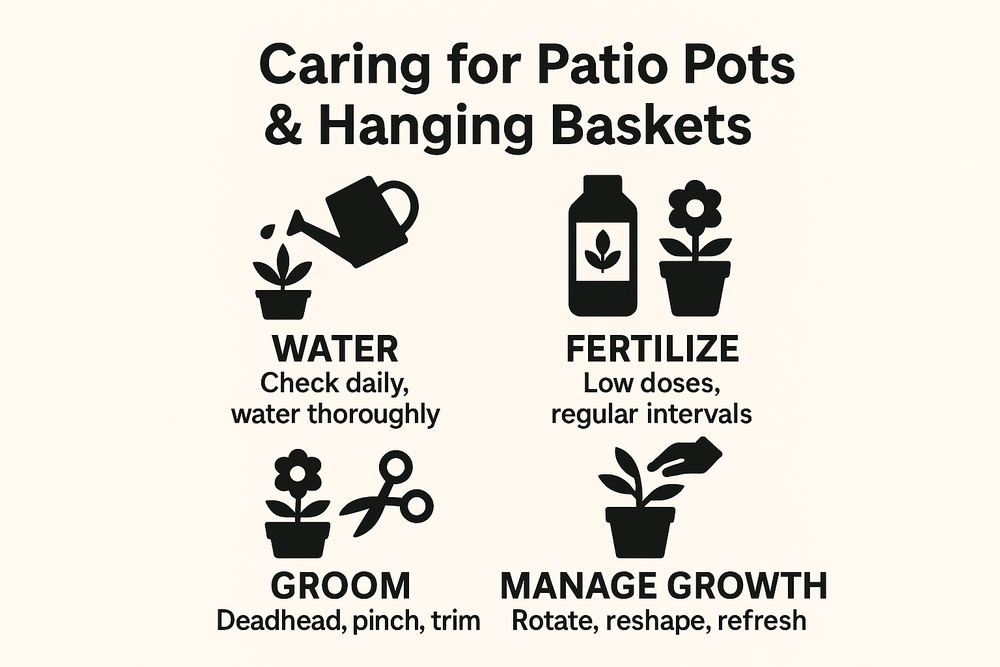
Patio containers and hanging baskets are the jewelry of the garden. They draw the eye, welcome guests, and bring color right up to where we live. But unlike plants in the ground, container plants depend entirely on us for water, nutrients, and regular care. With the right routine, however, pots and baskets can look full, lush, and beautiful from spring through frost.
The key is understanding that containers are a high‑performance garden system: small soil volume, fast growth, and constant exposure to sun and wind. This article walks through what garden club members need to do—week by week and month by month—to keep container plantings thriving all season long.
Start With the Right Foundation
Healthy containers begin below the surface.
Use a quality potting mix, never garden soil. Potting mixes are designed to drain well while still holding moisture and air around the roots, which is essential in containers. Garden soil compacts, drains poorly, and quickly leads to stressed plants.
Equally important is drainage. Every pot and basket must have drainage holes. Without them, even careful watering can lead to soggy roots, oxygen deprivation, and root rot.
Watering: The Single Most Important Task
Watering is where most container problems begin—and where success is won.
Because containers hold limited soil, they dry out much faster than garden beds, especially in warm, windy weather. Hanging baskets dry out fastest of all because air circulates completely around them.
Best watering practices:
- Check containers daily during warm weather
- Water deeply and thoroughly until water runs out the drainage holes
- Avoid light, surface watering, which encourages shallow roots
A reliable test is to feel the soil an inch or two below the surface. If it feels dry, it’s time to water. Visual cues alone can be misleading—both overwatered and underwatered plants may wilt.
During heat waves, some containers—especially baskets in sunny locations—may need watering twice a day to maintain even moisture.
Fertilizing: Feeding a Hungry System
Container plants grow fast and are watered often. That means nutrients wash out of the soil quickly, even when using potting mix with added fertilizer.
To keep plants blooming and vigorous:
- Begin fertilizing 2–6 weeks after planting
- Use a balanced, all‑purpose fertilizer as a starting point
- Apply at a low rate but regularly, following label directions carefully
Soluble fertilizers are especially effective for containers because nutrients are immediately available to roots. Slow‑release fertilizers can also work, but fast‑growing plants may still need supplemental feeding later in the season.
Yellowing leaves, weak growth, or reduced flowering often indicate nutrient depletion rather than disease.
Grooming: Small Tasks, Big Results
Regular grooming keeps containers looking fresh and encourages continued flowering.
Key grooming tasks include:
- Deadheading spent blooms to prevent plants from going to seed
- Pinching or trimming leggy growth to restore shape
- Removing yellow or damaged leaves promptly
Many annuals respond dramatically to light pruning, producing new growth and fresh flowers within weeks. Hanging baskets, in particular, benefit from midseason trimming to prevent a tired, stretched look.
Managing Growth and Balance
As the season progresses, plants don’t grow evenly. One plant may surge while another stalls.
Gardeners should:
- Rotate pots occasionally so all sides receive light
- Trim aggressive growers that overwhelm neighbors
- Avoid letting one trailing plant dominate the entire basket
Containers are living compositions. Adjusting them is part of successful care, not a sign of failure.
Mulch and Moisture Management
Adding a thin layer of mulch—fine bark, compost, or even decorative gravel—helps reduce evaporation and keeps soil temperatures more stable. This is especially helpful for large patio pots exposed to full sun.
Mulch also improves appearance and reduces soil splash during watering.
Watch for Stress Signals Early
Container plants don’t have reserves to fall back on. Stress shows quickly.
Common warning signs include:
- Wilting that doesn’t improve after watering
- Yellowing leaves starting at the bottom
- Reduced flowering
- Sudden leaf drop during hot weather
Respond early by checking water, adjusting fertilizer, and improving airflow or shade if needed. Prompt action can save a container in decline.
Refreshing Midseason
By midsummer, some plants may be past their peak. Garden club members should feel comfortable refreshing containers by:
- Cutting plants back hard
- Replacing one or two tired plants
- Rebalancing overcrowded pots
This midseason “reset” can extend the life of a container well into fall.
Final Thoughts for Garden Club Success
The secret to stunning patio pots and hanging baskets is not complicated—it’s consistent attention. Containers ask more of us than garden beds, but they reward us with unmatched color and impact in return.
With proper watering, steady feeding, regular grooming, and a watchful eye, patio containers can look just as good in August as they did in May—and sometimes even better.