 North Shore Plant Club
- Shop For Plants
- Search Plants
- Resources for Gardeners
- Color Wheel of Plants
- Interactive Landscapes
- Photos of Planters & Hanging Baskets
- September Photos from Our Community
- Botanic Gardens: Chicago & Beyond
- Local Nurseries
- Upcoming Plant Events
- Plant Club Articles & Answers
- Gardening in the News
- Chicagoland Garden Calendar
- Explaining Plant Container Sizes
- Thrillers, Fillers & Spillers
- Join Free!
- Mundelein
Aug 18, 2026
Behind the Tag: How Plant Patents Shape What Grows in Your Garden
A law born from a breeder's frustration
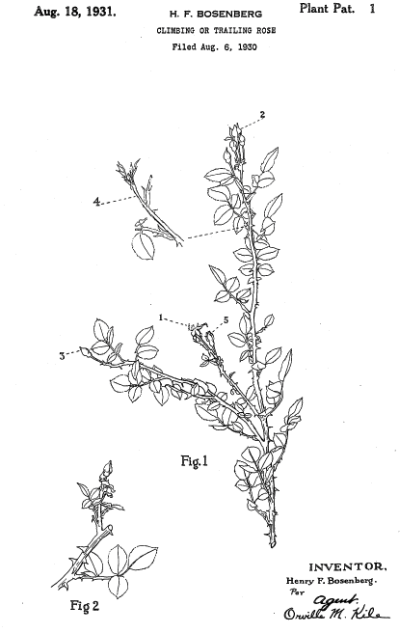
For most of history, plant breeders had no way to profit from their work beyond the first sale. Once a new rose or apple left the nursery, anyone could take cuttings and sell copies. Luther Burbank, the California breeder behind the Shasta daisy, the Santa Rosa plum and the Russet Burbank potato, spent his career watching others multiply his creations. He died in 1926, but his example, along with steady lobbying from the nursery industry, helped persuade Congress to pass the Plant Patent Act of 1930. It was the first law anywhere to extend patent protection to living plants.
The very first plant patent, PP1, was issued on August 18, 1931 to Henry Bosenberg, a New Jersey landscaper, for 'New Dawn', a pale pink climbing rose that reblooms through the season. Nearly a century later you can still buy it. Roses dominated the early decades of plant patents, but today the list covers everything from hostas and hydrangeas to apples, blueberries and houseplants. The U.S. Patent and Trademark Office has now issued more than 36,000 of them.
How a plant gets patented
A plant patent covers a single, specific variety, essentially one clone. To qualify, the plant must be new and distinct from existing varieties, and the applicant must show it can be reproduced asexually, through cuttings, grafting, division or tissue culture, so that every copy is genetically identical to the original. That is why most patented plants in the trade are woody shrubs and perennials that are propagated vegetatively.
The law draws a few lines. Tuber-propagated crops like potatoes are excluded, and so are plants discovered growing in the wild. But a chance seedling spotted in a cultivated bed, a branch sport with unusual foliage, or a deliberate hybrid can all qualify, as long as the person who found or bred it recognizes what makes it different and propagates it.
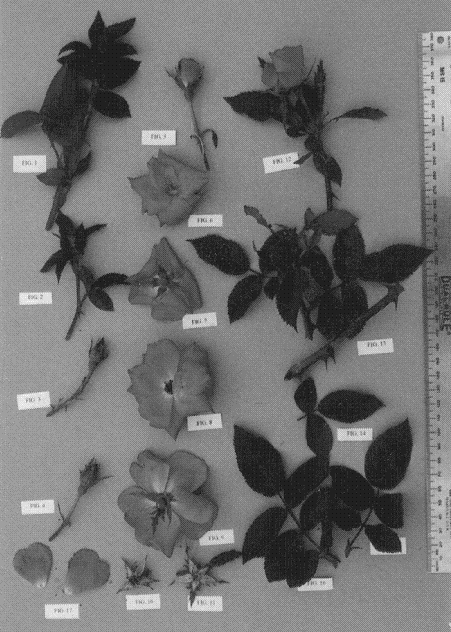
The application itself is unusual. Instead of pages of technical claims, a plant patent has just one claim: the plant "as illustrated and described." The heavy lifting is done by a detailed botanical description, covering habit, leaf size, flower color, bloom time and disease resistance, backed by color photographs. Breeders generally have one year from first public sale to file. Once granted, the patent lasts 20 years from filing and gives the owner the right to stop others from asexually reproducing, selling or using the plant.
Seed-grown varieties follow a separate path. They can be protected through Plant Variety Protection certificates from the USDA, and some breeders also seek standard utility patents on plant traits.
What it means at your local nursery
The plant patent system is a big reason garden centers look the way they do. Patents make breeding pay. A new shrub can take a decade of crossing, trialing and evaluation before it is ready for market, and patent royalties, usually a small amount per plant collected from licensed growers, fund that work. Those royalties helped build the branded programs you see on colorful pots, from Proven Winners and First Editions to Endless Summer hydrangeas.
For gardeners, the benefits are real: compact hydrangeas that rebloom after a hard Midwest winter, coneflowers in orange and raspberry, disease-resistant roses like the Knock Out series that made roses practical for low-maintenance yards. Patented introductions are also heavily trialed, which often means more reliable performance.
There are trade-offs. The royalty is built into the price, so patented plants often cost more. Legally, you may not take cuttings or divisions of a patented plant to propagate it, even to share with a neighbor, until the patent expires. And the steady stream of "new and improved" varieties can push older, proven cultivars off the shelves.
Patents do run out, though. When they expire, any grower can propagate the plant freely, and prices typically fall. Knock Out roses, once a premium item, are now widely produced now that the original patent has lapsed.
Next time you're browsing, check the tag. That little string of letters and numbers tells you a plant's story: someone found or bred something special, and the patent is how it made its way to you.