 North Shore Plant Club
- Shop For Plants
- Search Plants
- Resources for Gardeners
- Color Wheel of Plants
- Interactive Landscapes
- Photos of Planters & Hanging Baskets
- September Photos from Our Community
- Botanic Gardens: Chicago & Beyond
- Local Nurseries
- Upcoming Plant Events
- Plant Club Articles & Answers
- Gardening in the News
- Chicagoland Garden Calendar
- Explaining Plant Container Sizes
- Thrillers, Fillers & Spillers
- Join Free!
- Mundelein
Apr 13, 2026
Weed Smarter, Not Sorer: The Science of Good Weeding Posture
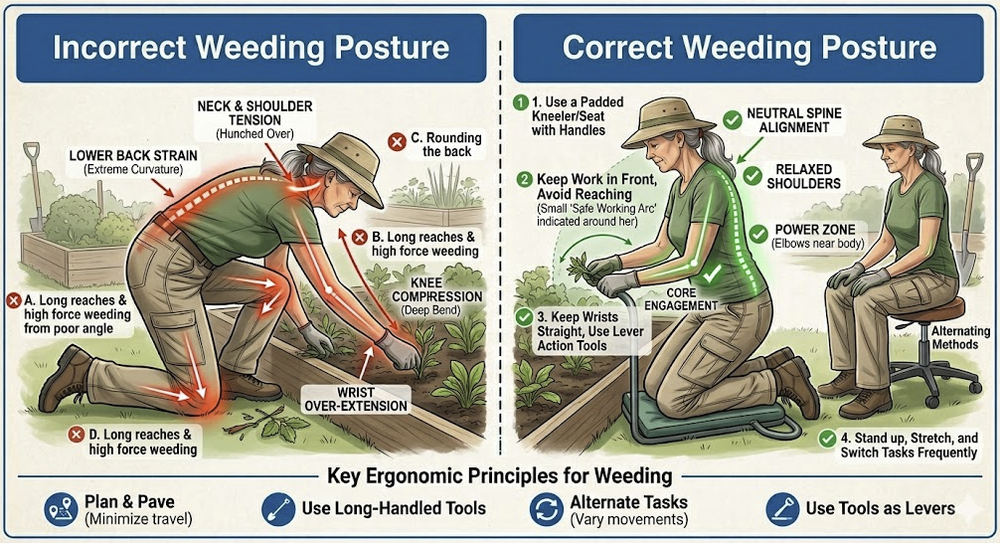
Few garden tasks are as satisfying —and as deceptively hard on the body— as weeding. Ten minutes in, you feel virtuous. Thirty minutes in, your knees protest. An hour later, your lower back is filing a formal complaint. The good news? Many of the aches gardeners accept as “part of the job” are preventable. With better posture, and an understanding of what’s happening inside your body, you can weed longer, recover faster, and still move comfortably the next day.
Why Weeding Hurts
When gardeners bend at the waist to pull weeds, the spine takes the brunt of the load. The lumbar spine (your lower back) is designed to support weight when it stays relatively neutral—not when it’s flexed forward for long periods. In a bent posture, the small stabilizing muscles of the back fatigue quickly, and pressure increases on spinal discs. Over time, this contributes to muscle strains, disc irritation, and lingering stiffness.
Knees have their own issue. Prolonged kneeling—especially on hard ground—can inflame the bursae (small fluid-filled sacs that cushion the joint), leading to the notorious “gardener’s knee.” Add repetitive reaching and twisting, and you’ve recruited shoulders, wrists, and elbows into the misery.
Kneel Tall
Medical and physical therapy guidance consistently points to tall kneeling as the safest weeding posture for most people. That means one knee down, one knee up, torso upright. Why that works:
- Keeps the spine closer to neutral
- Distributes load between hips and legs
- Reduces deep knee compression
- Allows easy position changes
Use a knee pad or folded cushion under the down knee, and switch sides every few minutes. Alternating prevents muscle fatigue and keeps one side from doing all the work.
If You Must Bend, Bend Right
Sometimes kneeling isn’t practical. In that case, bending at the hips and knees, rather than the waist, is critical. This hip hinge motion lets the large muscles of the legs and glutes assist, sparing the back. Think of lowering your center of gravity instead of folding yourself in half.
Avoid twisting while bent. If the weed is just out of reach, shuffle your feet or reposition—your spine prefers moving as a unit.
Low garden stools or kneeling benches are not “cheating.” From a biomechanical standpoint, sitting reduces joint load, conserves energy, and keeps posture more stable. A seated position is especially helpful for gardeners with knee arthritis or balance concerns... and it encourages working closer to the task, rather than reaching awkwardly.
Small Habits, Big Payoff
Good posture isn’t just about which position you use—it’s about how long you stay in it. Change positions every 5–10 minutes. Move between patches of weeds, rather than reaching for them. Alternating tasks with different kinds of movements can be helpful. Stretching periodically—especially for the hips, hamstrings, and lower back—helps prevent next day stiffness.
Long handled weeders, ergonomic hand tools, and raised beds don’t replace good posture, but they support it. Tools that keep your wrists straight and bring the work higher reduce strain throughout the chain—from hands to shoulders to spine.
Garden for a Lifetime
Weeding should strengthen your connection to the garden, not shorten your time in it. By choosing postures that respect how your body is built—and by listening to early warning signs like soreness or stiffness—you’re gardening with longevity in mind.
In other words: tend the weeds, but take care of the gardener first.