Deadnettle (Lamium)
[LAY-mee-um]

Semi-Evergreen Perennial Low, Spreading Groundcover in the Lamiaceae Family
Low, spreading perennial groundcover for shady spots, prized for its patterned foliage.

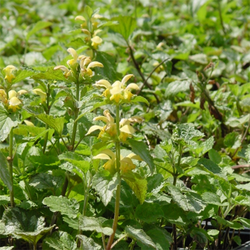
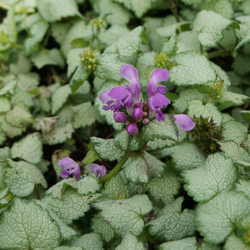
Lamium (Deadnettle) is a genus in the mint family (Lamiaceae) with roughly 30 species ranging from upright annual weeds to low, trailing perennial groundcovers. The Deadnettles carried at North Shore Plant Club are drawn from the ornamental, shade-tolerant perennial side of the genus -- primarily Lamium maculatum (Spotted Dead Nettle) and Lamium galeobdolon (Yellow Archangel) -- grown for their attractively patterned foliage and low, spreading habit under trees and shrubs.

Pros

  • Low, spreading groundcover for shady spots where many perennials struggle
  • Attractive, often silver-patterned foliage that brightens dark corners
  • Fast-filling and low-maintenance once established
  • Deer- and rabbit-resistant

Cons

  • Can spread aggressively if not kept in check, especially the yellow-flowered Lamium galeobdolon
  • Foliage has an unpleasant odor when crushed
  • Dislikes hot afternoon sun and wet, waterlogged soil
Highlights A shade-garden workhorse: fast-filling, low-maintenance groundcover with attractively patterned foliage, happiest tucked under trees and shrubs where little else thrives.
 

Plant Data

Growth Rate Fast
Sun Exposure Full Shade - Partial Shade
Moisture Tolerance Medium : Tolerant of some drought once established, but does not tolerate compacted or waterlogged soil -- wet soil risks crown and stem rot.
Tags Deer Resistant, Full Shade, Good for Spring Containers, Medium, Partial Shade, Perennial
Foliage Color
 

Plant Club Content


More Info from Experts


© North Shore Plant Club 2026. Privacy Policy, Terms & Conditions.

Field-Grown vs. Greenhouse-Grown Plants

Plants which are well-adapted to our local climate are most often field-grown (outside). Field-grown plants are generally cheaper and have the advantage of already somewhat acclimated to our cold winters, but that means they’re not artificially far along in the spring and tend to bloom at the normal time in our area.

Spring annuals and tender perennials are typically grown in Greenhouses so they can be ready and luxurious exactly when customers want them. Some perennials are also “forced” into early bloom in greenhouses. In May, there can be a very big difference between field-grown and greenhouse-grown plants of the same type. The latter typically look good right away (so they’re a great choice where that’s important), but we typically pay a premium for it.


Estimated Recipe Cost

The cost of this recipe's ingredients will vary depending on the season and the sizes and varieties you select.


Benefits of Membership

Want a better way to get great plants and make your yard look awesome? Create your account below and get:

  • The best plants… from the same sources the pros use, but at near wholesale prices
  • More plants in more sizes than anywhere else… whether you’re looking for classics or rarities; annuals, perennials or shrubs; one plant or a whole yardful!
  • "No Contact" delivery or easy pick-up at a site near you without fighting the retail crowds. You choose!

Membership is free, but — since we rely on delivery and local pick-up — you have to live near one of our hubs (or be willing to drive to a site to pick them up). If you live farther away, and would like to help us bring the club to your neighbors, please email helpusgrow@northshoreplantclub.com.

Already a member?
Login
About Ordering From The Plant Club

To secure the best prices for club members and make sure we know the current plants available from each nursery, we take orders only a couple of times a month.

Shoot us an email at help@northshoreplantclub.com, and we'll be happy to talk about plants or let you know when it's time to buy them!