 North Shore Plant Club
- Shop For Plants
- Search Plants
- Resources for Gardeners
- Color Wheel of Plants
- Interactive Landscapes
- Photos of Planters & Hanging Baskets
- October Photos from Our Community
- Botanic Gardens: Chicago & Beyond
- Local Nurseries
- Upcoming Plant Events
- Plant Club Articles & Answers
- Gardening in the News
- Chicagoland Garden Calendar
- Explaining Plant Container Sizes
- Thrillers, Fillers & Spillers
- Join Free!
- Mundelein
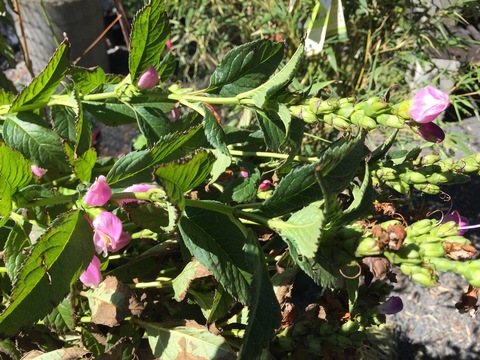
Tiny Tortuga Turtlehead (Chelone obliqua 'Armtipp02' TINY TORTUGA)
|
|
| Deciduous Perennial Compact, Upright in the Plantaginaceae Family | |
Tiny Tortuga is a dwarf pink turtlehead bred for small gardens and containers, with dark, bronze-tinged foliage and the same turtle-mouthed blooms as its bigger relatives, just scaled down to about a foot and a half. |
|
|
Chelone obliqua 'Tiny Tortuga' is a charming dwarf variety that boasts deep pink blooms, making it a standout choice for any garden. This compact perennial, reaching 18 inches in height and 12 inches in width, is great in containers and serves effectively as a garden border. Blooming from summer to fall, it adds vibrant color to late summer landscapes while its dark green foliage provides structure. Ideal for moist shade, 'Tiny Tortuga' thrives in woodland beds, native plantings, and rain gardens, and it can also be positioned at the edge of ponds or water gardens. As a pollinator-friendly plant that tolerates clay soils, Chelone obliqua 'Tiny Tortuga' is a versatile |
|
Pros
|
|
Cons
|
|
| Highlights |
|
Plant Data | |
| Mature Size | 12 - 24 inches tall. 10 - 16 inches wide. |
| Growth Rate | Medium |
| Sun Exposure | Partial Shade - Full Sun |
| Moisture Tolerance | Medium - Wet: Tolerates wet, boggy soil and sits well at pond or stream edges; not drought-tolerant. |
| Zones | 4a - 9a (Usually hardy to -30° F) |
| Tags | Attracts Bees, Attracts Butterflies, Attracts Hummingbirds, Attracts Pollinators, Attracts Wildlife, Container, Deciduous, Deer Resistant, Fall interest, Filler, Full Sun, Good for Borders, Good for Butterfly Garden, Good for Cut Flowers, Good for Mass Planting, Good for Rain Garden, Grown For Attractive Foliage, Low Maintenance, Medium, Partial Shade, Partial Sun, Perennial, Rabbit Resistant, Shade Tolerant, Showy Flowers, Wet, Wet Site Tolerant |
| Bloom Period | July To September |
| Flower Color | Rose-Pink
|
Commonly Planted with...Like other turtleheads, it looks at home among other moisture-loving perennials - Astilbe, ferns, Hosta, and Lobelia - though its compact size also suits a container or small bed on its own. (Carried over from general Chelone companion-planting guidance; no 'Tiny Tortuga'-specific companion source was found.) |
|
Photos of This with...Blush Satin Rose of Sharon, Double Stuff Solomon's Seal |
|



| |
|
Want More
photos of this plant? Try
Google Image Search!
|
|
Pricing and Availability HistoryClick a label to toggle visibility for that size
|
|
Past Availability2025 : 04/13 - 10/042024 : 05/01 - 10/05 2023 : 05/04 - 09/30 |
|