 North Shore Plant Club
- Shop For Plants
- Search Plants
- Resources for Gardeners
- Color Wheel of Plants
- Interactive Landscapes
- Photos of Planters & Hanging Baskets
- October Photos from Our Community
- Botanic Gardens: Chicago & Beyond
- Local Nurseries
- Upcoming Plant Events
- Plant Club Articles & Answers
- Gardening in the News
- Chicagoland Garden Calendar
- Explaining Plant Container Sizes
- Thrillers, Fillers & Spillers
- Join Free!
- Mundelein
Alpine Columbine (Aquilegia alpina)
|
|
| Deciduous Perennial Upright, bushy, Clump-forming in the Ranunculaceae Family | |
Discover Aquilegia alpina, the alpine columbine -- among the largest-flowered columbines, with vivid blue and violet blooms and dramatically long spurs above tidy mounds of blue-green foliage. |
|
|
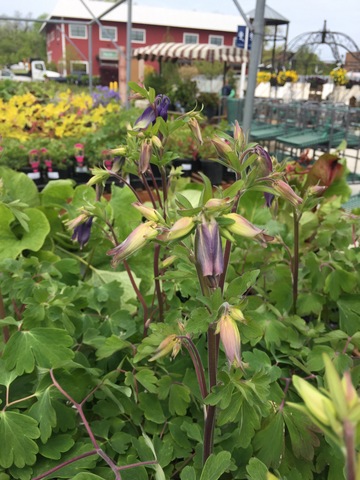
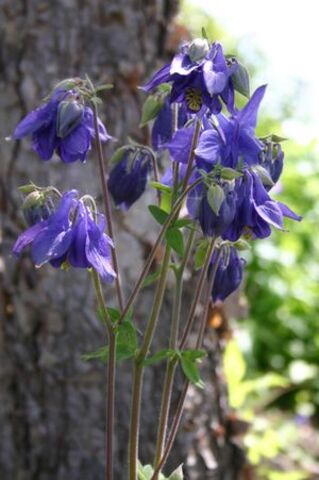
Aquilegia alpina, the alpine columbine, is an herbaceous perennial in the buttercup family (Ranunculaceae), native to subalpine meadows and rocky, carbonate-rich slopes in the mountains of France, Switzerland, Austria, and Italy. Its large, nodding blue-to-purple flowers carry unusually long, straight-to-slightly-curved spurs -- the longest of any Eurasian columbine -- above mounds of finely divided, blue-green foliage. Note: much of what's sold in the trade under this name is actually a hybrid with garden columbine (Aquilegia vulgaris), identifiable by hooked rather than straight spurs; true A. alpina is less common in cultivation. |
|
Pros
|
|
Cons
|
|
| Why Like | In its native subalpine meadows and rocky slopes across the French, Swiss, Austrian, and Italian Alps, alpine columbine produces some of the largest flowers in the genus -- vivid blue-to-violet blooms up to about 3.5 inches across with long, elegant spurs. It's a plant of high, open, carbonate-rich ground, and true wild-type seed strains are prized by alpine and rock-garden specialists for keeping that compact, sturdy alpine character rather than drifting toward the taller habit and hooked spurs typical of garden hybrids. |
| Highlights | One of the largest-flowered columbines, alpine columbine produces nodding blue and violet blooms with dramatically long spurs above neat mounds of blue-green foliage. Its more compact, sturdy habit suits a rock garden or the front of a perennial border, where the flowers can be appreciated up close. |
Plant Data | |
| Mature Size | 18 - 24 inches tall. 10 - 12 inches wide. |
| Growth Rate | Moderate |
| Sun Exposure | Partial Shade - Full Sun |
| Moisture Tolerance | Medium : Average to Moist, well-drained |
| Zones | 3a - 8b (Usually hardy to -40° F) |
| Tags | Attracts Butterflies, Attracts Hummingbirds, Attracts Pollinators, Attracts Wildlife, Container, Deciduous, Deer Resistant, Extended Bloom Time, Filler, For a Shady Spot, Formal Garden, Full Sun, Good for Accents, Good for Beginners, Good for Borders, Good for Cottage Garden, Good for Cut Flowers, Good for Mass Planting, Medium, Medium, Non-Allergenic, Normal Soil, Partial Shade, Partial Sun, Perennial, Prairie Garden, Rabbit Resistant, Showy Flowers, Tolerant of Clay Soil, Tolerant of Moist Soil, Tolerant of Sandy Soil, Well-Drained Soil, Woodland Garden |
| Bloom Period | Late Spring - Early Summer |
| Flower Color | Blue/Purple
|
| Foliage Color | Gray-Green |
Commonly Planted with...Alpine and rock-garden companions such as dwarf conifers, sedums, and other compact alpines; in a border, pair with spring bulbs or low groundcovers. |
|




| |
|
Want More
photos of this plant? Try
Google Image Search!
|
|
Pricing and Availability HistoryClick a label to toggle visibility for that size
|
|
Past Availability2025 : 04/13 - 10/042024 : 05/01 - 10/05 2023 : 04/13 - 08/05 |
|