 North Shore Plant Club
- Shop For Plants
- Search Plants
- Resources for Gardeners
- Color Wheel of Plants
- Interactive Landscapes
- Photos of Planters & Hanging Baskets
- October Photos from Our Community
- Botanic Gardens: Chicago & Beyond
- Local Nurseries
- Upcoming Plant Events
- Plant Club Articles & Answers
- Gardening in the News
- Chicagoland Garden Calendar
- Explaining Plant Container Sizes
- Thrillers, Fillers & Spillers
- Join Free!
- Mundelein
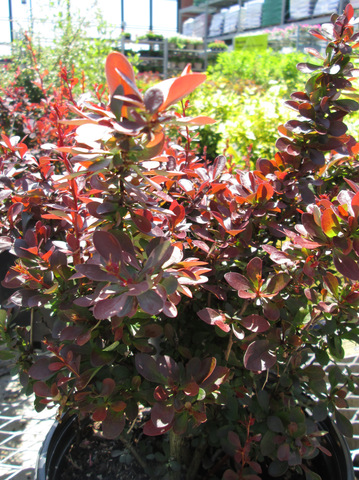
Atropurpurea Nana Japanese Barberry (Berberis thunbergii f. atropurpurea 'Atropurpurea Nana')
|
|
| Deciduous Perennial Dense, Compact, Mounded Shrub in the Berberidaceae Family | |
A compact, dwarf barberry with rich burgundy-purple foliage all season -- the original selection behind the widely sold 'Crimson Pygmy.' |
|
|
Berberis thunbergii 'Atropurpurea Nana' is a compact, dwarf cultivar of the Japanese barberry shrub. This variety is prized for its vibrant purple foliage that provides striking color throughout the growing season. The small, oval leaves emerge a deep burgundy in spring, maintaining their rich, almost black-purple hue through summer before transitioning to brilliant scarlet tones in fall. Reaching only 2-3 feet tall and wide at maturity, 'Atropurpurea Nana' has a rounded, dense growth habit that makes it well-suited for low borders, foundations, and mass plantings. Small yellow flowers appear in spring, followed by bright red berries in autumn that provide additional seasonal interest. Hardy in USDA Zones 4-8, this diminutive barberry thrives in full sun to partial shade and a variety of well-drained soil types. Its compact size, exceptional color, and low-maintenance nature make 'Atropurpurea Nana' a standout choice for adding bold foliage accents to the landscape. |
|
Pros
|
|
Cons
|
|
| Highlights |
|
Plant Data | |
| Mature Size | 18 - 24 inches tall. 24 - 36 inches wide. |
| Growth Rate | Medium |
| Sun Exposure | Partial Shade - Full Sun |
| Moisture Tolerance |
Dry - Medium: Tolerates dry to medium, well-drained soil once established, including some drought. Will not do well in poorly drained, wet soils. |
| Zones | 4a - 8b (Usually hardy to -30° F) |
| Tags | Colorful Foliage, Deciduous, Deer Resistant, Drought Tolerant, Dry, Fall Color, Foundation, Full Sun, Good for Hedges, Good for Mass Planting, Grown For Attractive Foliage, Low Maintenance, Medium, Most Popular, Mounded, Non-Allergenic, Partial Shade, Partial Sun, Perennial, Potentially Toxic, Rabbit Resistant, Shrub, Thorns, Tolerant of Clay Soil, Tolerant of Hot Dry Site, Tolerant of Poor Soil, Well-Drained Soil |
| Bloom Period | April To May |
| Flower Color | Yellow |
| Foliage Color | Burgundy |
More Info from Experts |
|
Commonly Planted with...Pairs beautifully with low, sun-loving companions such as Russian sage and coneflowers, or with other drought-tolerant perennials that share its need for good drainage. |
|
| |
|
Want More
photos of this plant? Try
Google Image Search!
|
|
Pricing and Availability HistoryClick a label to toggle visibility for that size
|
|
|
|
|