 North Shore Plant Club
- Shop For Plants
- Search Plants
- Resources for Gardeners
- Color Wheel of Plants
- Interactive Landscapes
- Photos of Planters & Hanging Baskets
- October Photos from Our Community
- Botanic Gardens: Chicago & Beyond
- Local Nurseries
- Upcoming Plant Events
- Plant Club Articles & Answers
- Gardening in the News
- Chicagoland Garden Calendar
- Explaining Plant Container Sizes
- Thrillers, Fillers & Spillers
- Join Free!
- Mundelein
Lo & Behold 'Blue Chip Jr.' Butterfly Bush (Buddleja 'Blue Chip Jr.')
|
|||||
| Deciduous Perennial Compact, Spreading in the Scrophulariaceae Family | |||||
Buy Lo & Behold 'Blue Chip Jr.' Butterfly Bush | |||||
|
|||||
|
|||||
|
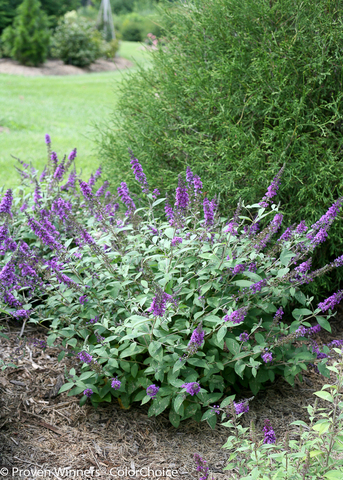
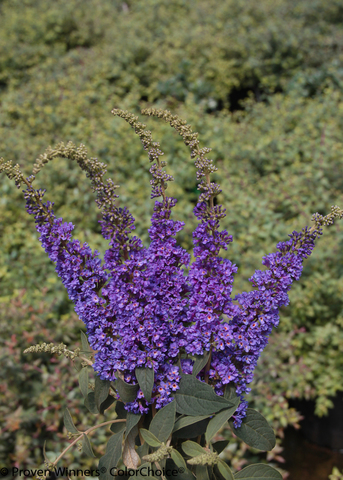
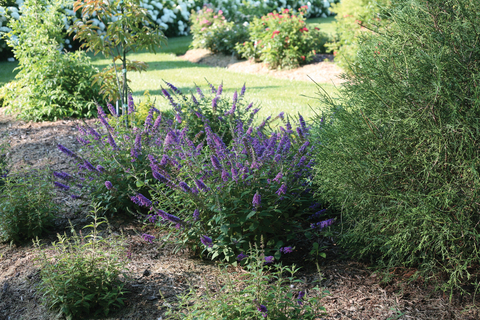
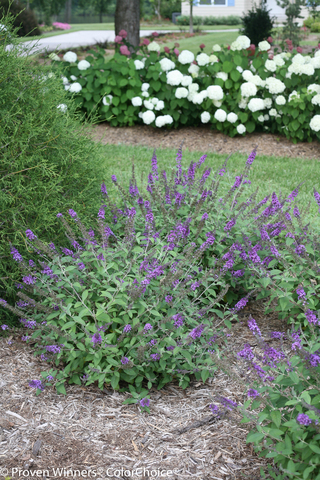
Buddleja 'Blue Chip Jr.' (US Plant Patent 26,581) was bred by Dr. Dennis J. Werner at North Carolina State University, selected in 2009 from a cross using the original 'Blue Chip' as the female parent. It is genuinely sterile -- the flowers lack functional anthers and set no viable seed -- so it spreads only by its own dense, mounding growth, never by seeding into the garden or surrounding landscape. Compared to its parent, 'Blue Chip Jr.' is slightly smaller, blooms noticeably earlier in the season (often beginning in late spring), and carries bluer purple-violet flower spikes above silvery-gray foliage, blooming continuously without deadheading from early summer into fall. |
|||||
Pros
|
|||||
Cons
|
|||||
| Highlights | Fragrant Flower Continuous Bloom or Rebloomer Long Blooming Deadheading Not Necessary Drought Tolerant | ||||
Plant Data | |||||
| Mature Size | 18 - 30 inches tall. 20 - 32 inches wide. | ||||
| Growth Rate | Fast | ||||
| Sun Exposure | Full Sun - Full Sun | ||||
| Moisture Tolerance | Dry - Medium | ||||
| Zones | 5a - 9b (Usually hardy to -20° F) | ||||
| Tags | Attracts Birds, Attracts Butterflies, Attracts Hummingbirds, Attracts Pollinators, Attracts Wildlife, Container, Deciduous, Deer Resistant, Drought Tolerant, Dry, Edging, Extended Bloom Time, Fragrant, Fragrant Flowers, Full Sun, Good for Beginners, Good for Borders, Good for Butterfly Garden, Good for Cottage Garden, Good for Cut Flowers, Good for Hedges, Good for Mass Planting, Low Maintenance, Medium, Most Popular, Non-Allergenic, Normal Soil, Perennial, Prairie Garden, Proven Winner Selection, Rabbit Resistant, Reblooms, Showy Flowers, Shrub, Thrillers, Tolerant of Hot Dry Site, Tolerant of Loamy Soil, Tolerant of Moist Soil, Well-Drained Soil | ||||
| Bloom Period | July-October | ||||
| Flower Color | Blue Purple | ||||
| Foliage Color |
| ||||
Commonly Planted with...Pairs beautifully with other full-sun, pollinator-friendly perennials such as Russian sage, coneflowers, and black-eyed Susans, or with ornamental grasses for textural contrast. |
|||||
Photos of This with...Flambe Yellow Strawflower, Vermillionaire Firecracker Plant, Luscious Bananarama Lantana, Royale Pina Colada Lantana, Mojave Tangerine Purslane |
|||||

| |
|
Want More
photos of this plant? Try
Google Image Search!
|
|
Pricing and Availability HistoryClick a label to toggle visibility for that size
|
|
Past Availability2025 : 02/05 - 05/172024 : 02/08 - 05/18 2023 : 03/02 - 05/21 |
|