 North Shore Plant Club
- Shop For Plants
- Search Plants
- Resources for Gardeners
- Color Wheel of Plants
- Interactive Landscapes
- Photos of Planters & Hanging Baskets
- October Photos from Our Community
- Botanic Gardens: Chicago & Beyond
- Local Nurseries
- Upcoming Plant Events
- Plant Club Articles & Answers
- Gardening in the News
- Chicagoland Garden Calendar
- Explaining Plant Container Sizes
- Thrillers, Fillers & Spillers
- Join Free!
- Mundelein
Blue Grama (Bouteloua gracilis)
|
|
| Deciduous Perennial Clump-forming, slowly rhizomatous in the Poaceae Family | |
A compact native prairie grass with distinctive eyelash-like flower spikes, nicknamed 'mosquito grass.' |
|
|
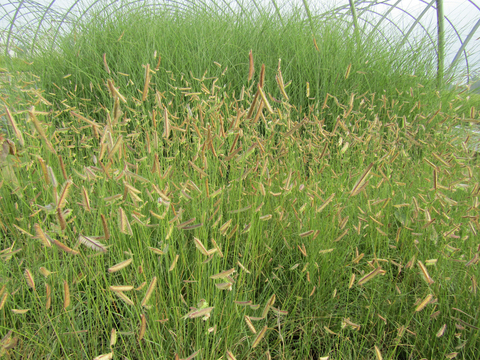
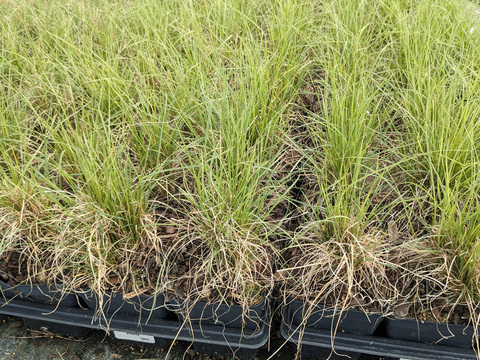
Blue grama (Bouteloua gracilis) is a low, warm-season perennial bunchgrass native to the Great Plains and much of North America, including parts of Illinois. It forms dense, curly tufts of fine blue-green foliage only 8-12 inches tall, with slender flowering stems rising to about 2 feet. Its most distinctive feature is its flower spike: 1-3 short, densely packed rows of spikelets held horizontally, resembling eyelashes or a fine-toothed comb, which has earned the plant the nickname 'mosquito grass.' As the spike dries it curls, persisting into winter. Highly drought tolerant and unfussy about soil, blue grama is a low-maintenance native grass valued for rock gardens, prairie plantings, and even as a low-water lawn alternative. |
|
Pros
|
|
Cons
|
|
| Why Like | Blue grama is one of the defining grasses of the shortgrass prairie, found across much of North America including parts of Illinois in dry, sandy, rocky, or clay soils. It serves as a larval host plant for several skipper butterfly species and provides seed for birds and small mammals, as well as ground cover for nesting birds. Its deep, drought-adapted root system helps stabilize soil in dry, open sites, and it remains an important forage grass on the Great Plains. |
| Highlights | Blue grama is known for its distinctive horizontal flower spikes, with spikelets arranged in a comb-like row that curls as it dries, earning it the nickname 'mosquito grass.' Its fine blue-green foliage turns golden with orange-red highlights in fall, and its compact, clumping habit and excellent drought tolerance make it a versatile native grass for small spaces and prairie plantings alike. |
Plant Data | |
| Mature Size | 9 - 24 inches tall. 18 - 24 inches wide. |
| Growth Rate | Medium |
| Sun Exposure | Full Sun - Full Sun |
| Moisture Tolerance |
Dry - Medium: Highly drought tolerant once established. Avoid poorly drained or consistently wet sites. |
| Zones | 3a - 10b (Usually hardy to -40° F) |
| Tags | Attracts Birds, Attracts Butterflies, Deciduous, Deer Resistant, Drought Tolerant, Dry, Full Sun, Good for Mass Planting, Good for Rock Garden, Grasses, Illinois Native, Medium, Native to North America, Naturalizing, Perennial, Popular For Fall, Prairie Garden, Tolerant of Clay Soil, Tolerant of Poor Soil, Tolerant of Sandy Soil |
| Bloom Period | July to September |
| Flower Color | Purple-tinged, comb-like spikes
|
| Foliage Color | Blue-green |
More Info from Experts |
|
Commonly Planted with...Pairs well with other sun-loving, drought-tolerant prairie natives. Browse more Illinois native, drought-tolerant companions for a low-maintenance planting. |
|

| |
|
Want More
photos of this plant? Try
Google Image Search!
|
|
Pricing and Availability HistoryClick a label to toggle visibility for that size
|
|
|
|
|


