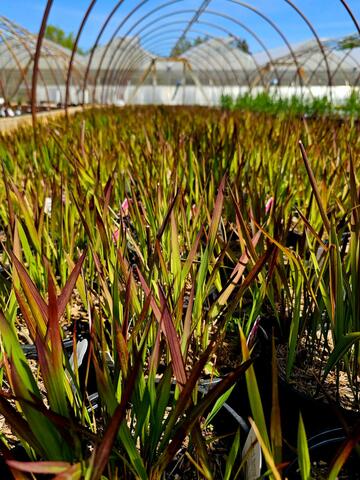
Red Baron Japanese Blood Grass (Imperata cylindrica 'Red Baron')
im-per-AY-tah sill-IND-rih-kah 'Red Baron'

Perennial (usually grown as an annual near you) in the Poaceae Family
'Red Baron' is a selection of Japanese blood grass grown for its blades, which emerge green at the base and turn deep blood-red toward the tips, intensifying through the growing season and becoming most vivid in full sun during late summer and fall. It was named and introduced to the US nursery trade by Kurt Bluemel, Inc.; the red-leaved form itself originated in Japan.

Pros

  • Striking red-to-burgundy seasonal color unlike almost any other ornamental grass
  • More compact and far less aggressive than the wild green species
  • Low-maintenance once established; rarely needs dividing

Cons

  • Color is much less vivid in shade than in full sun
  • Hardiness is marginal in the Chicago area; may not reliably survive harsh winters
  • Can revert to plain green growth, which should be removed promptly since the green form is an aggressive, federally regulated noxious weed
This plant may be mostly winter-hardy outdoors where you live, but it may need protection to survive extreme weather.
 

Plant Data

Mature Size 12 - 24 inches tall.
Sun Exposure Partial Shade - Full Sun
Moisture Tolerance Dry - Medium
Zones 6a - 9b (Usually hardy to -10° F)
Tags Colorful Foliage, Deer Resistant, Drought Tolerant, Dry, Full Sun, Grasses, Grown For Attractive Foliage, Low Maintenance, Medium, Most Popular, Partial Shade, Partial Sun, Perennial, Red Foliage, Specimen, Winter Interest
Bloom Period Rarely Flowers
Foliage Color
 

Most Popular Plants

Want More photos of this plant? Try Google Image Search!


Pricing and Availability History

Click a label to toggle visibility for that size

Past Availability
2025 : 04/13 - 10/04
2024 : 05/01 - 10/05
2023 : 04/13 - 09/30

© North Shore Plant Club 2026. Privacy Policy, Terms & Conditions.

Field-Grown vs. Greenhouse-Grown Plants

Plants which are well-adapted to our local climate are most often field-grown (outside). Field-grown plants are generally cheaper and have the advantage of already somewhat acclimated to our cold winters, but that means they’re not artificially far along in the spring and tend to bloom at the normal time in our area.

Spring annuals and tender perennials are typically grown in Greenhouses so they can be ready and luxurious exactly when customers want them. Some perennials are also “forced” into early bloom in greenhouses. In May, there can be a very big difference between field-grown and greenhouse-grown plants of the same type. The latter typically look good right away (so they’re a great choice where that’s important), but we typically pay a premium for it.


Estimated Recipe Cost

The cost of this recipe's ingredients will vary depending on the season and the sizes and varieties you select.


Benefits of Membership

Want a better way to get great plants and make your yard look awesome? Create your account below and get:

  • The best plants… from the same sources the pros use, but at near wholesale prices
  • More plants in more sizes than anywhere else… whether you’re looking for classics or rarities; annuals, perennials or shrubs; one plant or a whole yardful!
  • "No Contact" delivery or easy pick-up at a site near you without fighting the retail crowds. You choose!

Membership is free, but — since we rely on delivery and local pick-up — you have to live near one of our hubs (or be willing to drive to a site to pick them up). If you live farther away, and would like to help us bring the club to your neighbors, please email helpusgrow@northshoreplantclub.com.

Already a member?
Login
No Pricing or Availability Right Now

We order from a rotating cast of the best nurseries in the Great Lakes region. It looks like we've offered this plant in the past, but the nurseries we're working with this week don't appear to have it in stock at the moment.

Our goal is to bring as many plants together under "one roof" as possible, so we'll try hard to make it available again in the future!