 North Shore Plant Club
- Shop For Plants
- Search Plants
- Resources for Gardeners
- Color Wheel of Plants
- Interactive Landscapes
- Photos of Planters & Hanging Baskets
- November Photos from Our Community
- Botanic Gardens: Chicago & Beyond
- Local Nurseries
- Upcoming Plant Events
- Plant Club Articles & Answers
- Gardening in the News
- Chicagoland Garden Calendar
- Explaining Plant Container Sizes
- Thrillers, Fillers & Spillers
- Join Free!
- Mundelein
Sierra Shooting Star (Dodecatheon jeffreyi)
|
|
| Deciduous Perennial Clump-Forming in the Primulaceae Family | |
| Note: Spring ephemerals have evolved take advantage of sunlight which penetrates deciduous forests before the trees fully leaf out and then shut down for the year by the end of spring to rest until the next year. When buying them in summer you typically won't see anything above the ground until the next April! | |
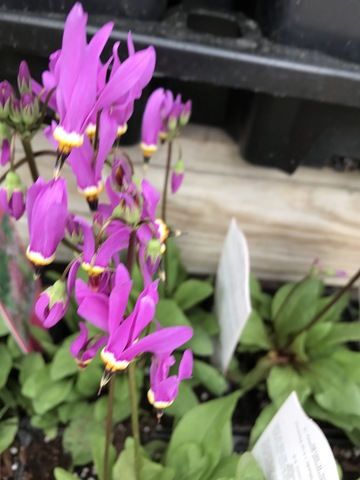
A western mountain wildflower with nodding, cyclamen-like pink-purple blooms held above a basal rosette of leaves in late spring. |
|
|
Sierra Shooting Star is a western North American wildflower native to moist mountain meadows, streambanks, and open coniferous woodlands from California's Sierra Nevada north to Alaska and east to Montana and Wyoming. In late spring, leafless flower stalks rise above a basal rosette of rounded leaves, each topped with an umbel of several nodding, rose-purple flowers with swept-back petals and a dark central cone of stamens -- a shape that gives the whole genus its "shooting star" name. By midsummer the entire plant goes fully dormant and disappears until the following spring. |
|
Pros
|
|
Cons
|
|
| Why Like | Sierra Shooting Star grows wild in wet mountain meadows, stream and lake margins, and open coniferous forest across the western mountains, from the Sierra Nevada north into Alaska and east to Montana and Wyoming. The Xerces Society recognizes it as having special value to native bumble bees, which visit its nodding flowers for pollen. Its ephemeral habit -- flowering in a burst each spring, then vanishing underground by midsummer -- is typical of plants adapted to short mountain growing seasons. |
| Highlights |
|
Plant Data | |
| Mature Size | 12 - 24 inches tall. 10 - 24 inches wide. |
| Growth Rate | Slow |
| Sun Exposure | Partial Shade - Full Sun |
| Moisture Tolerance |
Medium - Wet: Needs consistently moist to wet soil; tolerates standing water along streambanks and pond edges, but won't tolerate drying out. |
| Zones | 4a - 9a (Usually hardy to -30° F) |
| Tags | Deciduous, Full Sun, Medium, Partial Shade, Partial Sun, Perennial, Spring Ephemeral, Wet |
| Bloom Period | Late Spring to Early Summer |
| Flower Color | Pink to Rose-Purple
|
| Foliage Color | Green |
Commonly Planted with...Pairs well with later-emerging moisture-loving perennials and ferns that can fill in once it goes dormant, such as ferns, sedges, and other streamside or bog-garden companions. |
|
| |
|
Want More
photos of this plant? Try
Google Image Search!
|
|
Pricing and Availability HistoryClick a label to toggle visibility for that size
|
|
|
|
|