 North Shore Plant Club
- Shop For Plants
- Search Plants
- Resources for Gardeners
- Color Wheel of Plants
- Interactive Landscapes
- Photos of Planters & Hanging Baskets
- September Photos from Our Community
- Botanic Gardens: Chicago & Beyond
- Local Nurseries
- Upcoming Plant Events
- Plant Club Articles & Answers
- Gardening in the News
- Chicagoland Garden Calendar
- Explaining Plant Container Sizes
- Thrillers, Fillers & Spillers
- Join Free!
- Mundelein
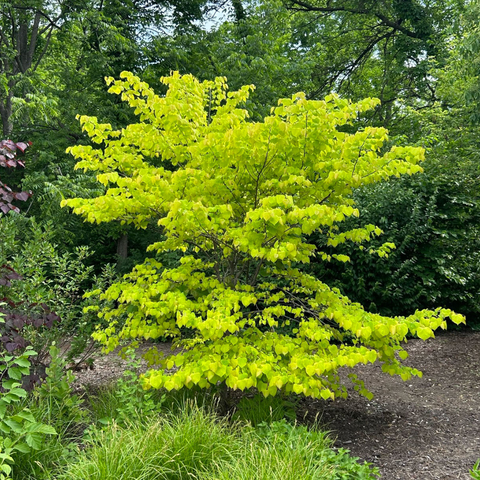
Hearts of Gold Eastern Redbud (Cercis canadensis 'Hearts of Gold')
|
|||||
| Deciduous Perennial Tree in the Fabaceae Family | |||||
Buy Hearts of Gold Eastern Redbud | |||||
|
|||||
|
Cercis canadensis, commonly known as the Eastern Redbud, is a small, deciduous tree native to eastern North America. It typically grows 20 to 30 feet tall and wide, with a graceful, spreading, often multi-trunked form. One of the most distinctive features of the redbud is its prolific spring bloom. Before the tree's heart-shaped leaves emerge, the bare branches become covered in an abundance of small, pea-like, magenta-pink flowers that often appear directly on the trunk and older branches (a trait called cauliflory). This showy floral display makes redbud a popular ornamental tree. Cercis canadensis prefers well-drained, evenly moist soil and full sun to partial shade, and is not particular about soil pH. It is moderately drought-tolerant once established, though it appreciates supplemental water during hot, dry spells, especially in full sun. The tree provides year-round interest with its spring blooms, heart-shaped summer foliage, yellow fall color, and interesting seed pods that persist into winter. In the landscape, the redbud makes an excellent specimen tree, accent plant, or addition to naturalized areas. Its smaller size also allows it to work well in urban settings and as an understory tree. Redbuds attract pollinators and provide cover for wildlife. The tree requires minimal pruning beyond occasional thinning or shaping, and has a taproot that makes it resent transplanting once established — it's best sited while young and then left undisturbed. |
|||||
Pros
|
|||||
Cons
|
|||||
Plant Data | |||||
| Mature Size | 20 - 25 feet tall. 25 - 35 feet wide. | ||||
| Sun Exposure | Partial Shade - Full Sun | ||||
| Moisture Tolerance | Medium | ||||
| Zones | 5a - 9b (Usually hardy to -20° F) | ||||
| Tags | Attracts Butterflies, Deciduous, Deer Resistant, Fall Color, Flowering Tree, Full Sun, Good for Accents, Good for Asian Garden, Good for Borders, Good for Butterfly Garden, Good for Cottage Garden, Good for Rain Garden, Grown For Attractive Foliage, Medium, Medium, Nativar, Ornamental Tree, Partial Shade, Partial Sun, Perennial, Shade Tree, Showy Flowers, Street Tree, Well-Drained Soil | ||||
| Bloom Period | March to April | ||||
| Flower Color | Reddish-Purple | ||||
Most Popular Plants |
|||||
In The News |
|||||
|
|||||
More Info from Experts |
|||||
| |
|
Want More
photos of this plant? Try
Google Image Search!
|
|
Pricing and Availability HistoryClick a label to toggle visibility for that size
|
|
|
|
|