 North Shore Plant Club
- Shop For Plants
- Search Plants
- Resources for Gardeners
- Color Wheel of Plants
- Interactive Landscapes
- Photos of Planters & Hanging Baskets
- November Photos from Our Community
- Botanic Gardens: Chicago & Beyond
- Local Nurseries
- Upcoming Plant Events
- Plant Club Articles & Answers
- Gardening in the News
- Chicagoland Garden Calendar
- Explaining Plant Container Sizes
- Thrillers, Fillers & Spillers
- Join Free!
- Mundelein
Queen of Hearts Siberian Bugloss (Brunnera macrophylla 'Queen of Hearts')
|
|
| Deciduous Perennial Mounded in the Boraginaceae Family | |
A Walters Gardens Siberian Bugloss bred for extra-large, heart-shaped silver leaves and improved heat tolerance -- 'Alexander's Great' crossed with a 'Diane's Gold' seedling. |
|
|
Brunnera macrophylla 'Queen of Hearts' (US Plant Patent 32,737) was bred by Hans A. Hansen at Walters Gardens from a 2015 cross using 'Alexander's Great' as the female parent and an unnamed seedling of 'Diane's Gold' as the male parent. The result is a vigorous plant with very large, heart-shaped leaves -- densely silvered between the veins, with narrow dark green tracing the veins themselves -- on notably thick foliage that resists sun scorch better than many older Brunnera selections. Light blue flowers bloom on tall stems well above the foliage for about four weeks each spring. 'Queen of Hearts' is hardy to USDA Zone 3 and forms a substantial, well-behaved mound. |
|
Pros
|
|
Cons
|
|
| Highlights | Foliage of Interest Heat Tolerant Deer Resistant |
Plant Data | |
| Mature Size | 12 - 18 inches tall. 32 - 38 inches wide. |
| Sun Exposure | Full Shade - Partial Shade |
| Moisture Tolerance | Medium - Wet |
| Zones | 3a - 8b (Usually hardy to -40° F) |
| Tags | Attracts Bees, Attracts Butterflies, Attracts Pollinators, Attracts Wildlife, Colorful Foliage, Container, Deciduous, Deer Resistant, Edging, Fast Growth Rate, For a Shady Spot, Formal Garden, Full Shade, Good for Accents, Good for Asian Garden, Good for Beginners, Good for Borders, Good for Cut Flowers, Good for Mass Planting, Good for Rock Garden, Groundcover, Grown For Attractive Foliage, Low Maintenance, Medium, Naturalizing, Non-Allergenic, Normal Soil, Partial Shade, Perennial, Rabbit Resistant, Showy Flowers, Tolerant of Moist Soil, Well-Drained Soil, Wet, Wet Site Tolerant, Winter Interest, Woodland Garden |
| Bloom Period | April to May |
| Flower Color | Light Blue |
| Foliage Color |
|
In The News |
|
|
|
Commonly Planted with...Pairs well with other shade-loving natives such as wild ginger, Solomon’s seal, woodland ferns, and native sedges, or with hostas for a contrast of leaf shapes. |
|
Photos of This with...Queen of Hearts Siberian Bugloss, Silver Bullet Wormwood, Jack of Diamonds Siberian Bugloss, Pink Diamonds Fern-Leaved Bleeding Heart, Primo Black Pearl Coral Bells, Dolce Cherry Truffle Coralbells, Dolce Wildberry Coralbells, Dressed Up Evening Gown Coral Bells , Primo Pistachio Ambrosia Coral Bells, Fun and Games Eye Spy Foamy Bells, Hippo Rose Polka Dot Plant, Prairie Winds Lemon Squeeze Fountain Grass, Midnight Masquerade Beardtongue, Supertunia Latte Petunia, Angel Wings Senaw Senecio |
|


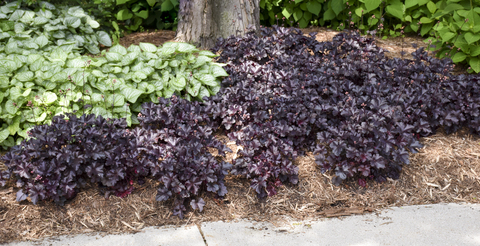

| |
|
Want More
photos of this plant? Try
Google Image Search!
|
|
Pricing and Availability HistoryClick a label to toggle visibility for that size
|
|
Past Availability2025 : 02/05 - 05/172024 : 02/08 - 09/08 2023 : 03/02 - 05/21 |
|