 North Shore Plant Club
- Shop For Plants
- Search Plants
- Resources for Gardeners
- Color Wheel of Plants
- Interactive Landscapes
- Photos of Planters & Hanging Baskets
- November Photos from Our Community
- Botanic Gardens: Chicago & Beyond
- Local Nurseries
- Upcoming Plant Events
- Plant Club Articles & Answers
- Gardening in the News
- Chicagoland Garden Calendar
- Explaining Plant Container Sizes
- Thrillers, Fillers & Spillers
- Join Free!
- Mundelein
Blue Mistflower (Conoclinium coelestinum)
|
|||||
| Deciduous Perennial Clumping, Spreading (Rhizomatous) in the Asteraceae Family | |||||
Buy Blue Mistflower | |||||
|
|||||
A tough native perennial with fuzzy sky-blue flower clusters that bloom from midsummer into fall, when little else in the garden still has color to offer pollinators. |
|||||
|
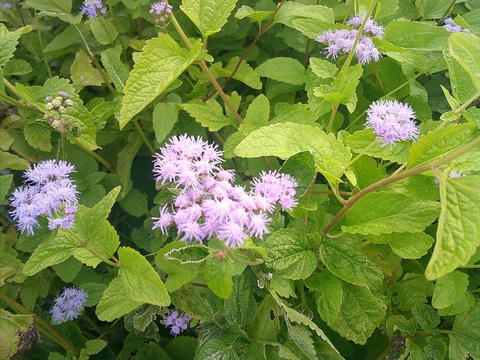
Blue Mistflower is a vigorous native perennial wildflower in the aster family, grown for its fuzzy, flat-topped clusters of sky-blue to lavender flowers that bloom from midsummer right up until frost -- a season when few other perennials are still offering color. The branching, 1.5-3 ft. stems carry opposite, triangular-to-oval, coarsely toothed leaves, and the flowerheads are made up entirely of small tubular disc florets (no ray petals), giving each cluster a soft, fluffy look. It spreads readily by rhizomes and self-seeding, forming expanding colonies rather than staying in a tight clump, so it reads more as a spreading groundcover than a well-behaved border perennial. In the wild it is found along stream banks, pond edges, wet meadows, and woodland clearings across the eastern and central U.S., and it brings that same easy tolerance of damp, even occasionally flooded, soil to the garden. |
|||||
Pros
|
|||||
Cons
|
|||||
| Why Like | One of the few native wildflowers offering true blue color this late in the season -- its fuzzy flowerheads open in midsummer and keep going right up to frost, exactly when migrating monarchs, skippers, and other butterflies most need a reliable nectar source. Several moth species use it as a host plant, and songbirds eat the seeds once the flowers fade. In the wild it colonizes damp, disturbed ground along streams, pond margins, and wet meadows, helping stabilize soil in exactly the spots most prone to erosion. | ||||
| Highlights |
|
||||
Plant Data | |||||
| Mature Size | 18 - 36 inches tall. 18 - 36 inches wide. | ||||
| Growth Rate | Fast | ||||
| Sun Exposure | Partial Shade - Full Sun | ||||
| Moisture Tolerance | Medium - Wet: Thrives in consistently moist to wet sites -- stream banks, pond edges, wet meadows, and ditches are its natural habitat -- and it tolerates brief flooding without trouble. Needs regular water during dry spells; it is not a drought-tolerant plant. | ||||
| Zones | 5a - 10b (Usually hardy to -20° F) | ||||
| Tags | Attracts Bees, Attracts Butterflies, Attracts Pollinators, Deciduous, Deer Resistant, Erosion Control, Extended Bloom Time, Fast Growth Rate, Full Sun, Good for Borders, Good for Butterfly Garden, Good for Mass Planting, Good for Rain Garden, Groundcover, Illinois Native, Medium, Native to North America, Naturalizing, Partial Shade, Partial Sun, Perennial, Pond, Prairie Garden, Showy Flowers, Tolerant of Clay Soil, Tolerant of Moist Soil, Wet, Wet Site Tolerant, Woodland Garden | ||||
| Bloom Period | July to October | ||||
| Flower Color | Blue, Lavender-Purple
|
||||
| Foliage Color | Green | ||||
Most Popular Plants |
|||||
|
"Pond" #24
|
|||||
More Info from Experts |
|||||
Commonly Planted with...Goldenrod (Solidago), New England and aromatic asters, cardinal flower (Lobelia cardinalis), Joe-Pye Weed (Eutrochium), cutleaf coneflower, and tall sunflowers all share its late-summer bloom window and damp-soil tolerance, and the blue flowers contrast nicely against their yellow, white, or red tones. |
|||||

| |
|
Want More
photos of this plant? Try
Google Image Search!
|
|
Pricing and Availability HistoryClick a label to toggle visibility for that size
|
|
Past Availability2025 : 04/13 - 09/202024 : 05/16 - 09/21 2023 : 06/21 - 09/30 |
|