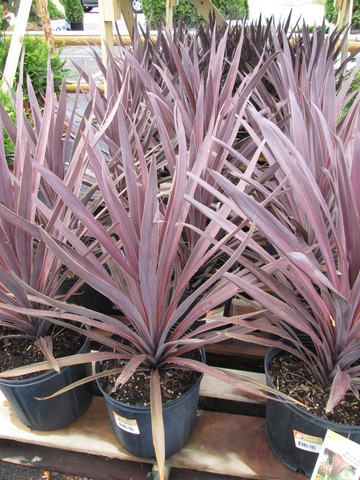
Cabbage Tree (Cordyline australis)
[kor-dih-LYE-nee oss-TRAL-iss]

Evergreen Perennial (usually grown as an annual near you) Upright, Palm-Like in the Asparagaceae Family
Cabbage tree (ti kouka) is an iconic New Zealand native, a palm-like, single- or multi-trunked tree with long, sword-shaped leaves clustered at the branch tips. In its native habitat it can reach 20 to 30 feet or more over decades, but it's most often grown here as a smaller container or landscape accent, prized for its bold, architectural foliage rather than its size. Established plants send up tall, branching panicles of small, fragrant cream-white flowers in late spring to early summer, though container-grown plants rarely bloom. It's remarkably tough once established, shrugging off wind, salt spray, and both wet and dry soil.

Pros

  • Bold, architectural, palm-like silhouette
  • Tolerant of wind, salt spray, and both wet and dry soil once established
  • Low maintenance
  • Fragrant flowers attract pollinators

Cons

  • Mildly toxic to dogs and cats if chewed or eaten
  • Only hardy outdoors in zones 9-11; needs container culture or winter protection elsewhere
  • Can take many years to flower
This plant is probably not winter-hardy outdoors where you live.
Why Like In its native New Zealand, cabbage tree is a familiar sight along coastlines, riverbanks, and open country, valued historically by Māori for its fibrous leaves and starchy root. Its tall, branching silhouette and crown of sword-like leaves make it one of New Zealand's most recognizable native trees, and it's tough enough to colonize windswept, salt-sprayed coastal sites where few other trees survive.
Highlights
  • Native to New Zealand
  • Bold architectural foliage
  • Tolerant of wind and salt spray
  • Low maintenance
 

Plant Data

Mature Size 6 - 15 feet tall. 3 - 6 feet wide.
Growth Rate Medium
Sun Exposure Partial Shade - Full Sun
Moisture Tolerance Dry - Wet
Zones 9a - 11b (Usually hardy to 20° F)
Tags Dry, Evergreen, Full Sun, Medium, Partial Shade, Partial Sun, Perennial, Wet
Bloom Period Late Spring To Early Summer
Flower Color Creamy White
Foliage Color
 

More Info from Experts

Want More photos of this plant? Try Google Image Search!


Pricing and Availability History

Click a label to toggle visibility for that size


© North Shore Plant Club 2026. Privacy Policy, Terms & Conditions.

Field-Grown vs. Greenhouse-Grown Plants

Plants which are well-adapted to our local climate are most often field-grown (outside). Field-grown plants are generally cheaper and have the advantage of already somewhat acclimated to our cold winters, but that means they’re not artificially far along in the spring and tend to bloom at the normal time in our area.

Spring annuals and tender perennials are typically grown in Greenhouses so they can be ready and luxurious exactly when customers want them. Some perennials are also “forced” into early bloom in greenhouses. In May, there can be a very big difference between field-grown and greenhouse-grown plants of the same type. The latter typically look good right away (so they’re a great choice where that’s important), but we typically pay a premium for it.


Estimated Recipe Cost

The cost of this recipe's ingredients will vary depending on the season and the sizes and varieties you select.


Benefits of Membership

Want a better way to get great plants and make your yard look awesome? Create your account below and get:

  • The best plants… from the same sources the pros use, but at near wholesale prices
  • More plants in more sizes than anywhere else… whether you’re looking for classics or rarities; annuals, perennials or shrubs; one plant or a whole yardful!
  • "No Contact" delivery or easy pick-up at a site near you without fighting the retail crowds. You choose!

Membership is free, but — since we rely on delivery and local pick-up — you have to live near one of our hubs (or be willing to drive to a site to pick them up). If you live farther away, and would like to help us bring the club to your neighbors, please email helpusgrow@northshoreplantclub.com.

Already a member?
Login
About Ordering From The Plant Club

To secure the best prices for club members and make sure we know the current plants available from each nursery, we take orders only a couple of times a month.

Shoot us an email at help@northshoreplantclub.com, and we'll be happy to talk about plants or let you know when it's time to buy them!


No Pricing or Availability Right Now

We order from a rotating cast of the best nurseries in the Great Lakes region. It looks like we've offered this plant in the past, but the nurseries we're working with this week don't appear to have it in stock at the moment.

Our goal is to bring as many plants together under "one roof" as possible, so we'll try hard to make it available again in the future!