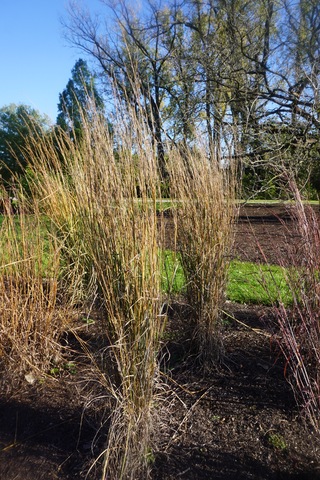
Hi Ho Silver Big Bluestem (Andropogon gerardii 'Hi Ho Silver')
an-dro-PO-gon jer-AR-dee-eye 'Hi Ho Silver'

Deciduous Perennial in the Poaceae Family

Andropogon gerardii, commonly known as big bluestem, is a warm-season native grass that is a keystone species of the tallgrass prairie ecosystem. This robust, clump-forming perennial reaches 4-8 feet tall, with distinctive three-pronged flower spikes that resemble a turkey's foot, giving rise to the common name "turkeyfoot." In spring, the foliage emerges blueish-green, deepening to rich green over the growing season, then turning shades of red, orange, and purple in autumn. Its deep, fibrous root system makes it highly drought-tolerant and an excellent choice for erosion control, and as a keystone species it provides food and habitat for pollinators, birds, and small mammals throughout the tallgrass prairie.

Pros

  • Keystone native prairie grass supporting pollinators, birds, and skipper butterfly larvae
  • Deep, fibrous roots provide excellent drought tolerance and erosion control
  • Distinctive "turkeyfoot" seed heads and fall color add multi-season interest
  • Deer resistant and adaptable to poor, dry soils

Cons

  • Can flop or lodge, especially in overly rich soil
  • Self-seeds readily; can be too aggressive for small garden spaces
  • Slow to establish in its first year, typical of warm-season grasses
 

Plant Data

Mature Size 4 - 6 feet tall. 24 - 36 inches wide.
Sun Exposure Full Sun - Full Sun
Moisture Tolerance - Medium
Zones 4a - 9b (Usually hardy to -30° F)
Tags Deciduous, Full Sun, Full Sun, Grasses, Medium, Most Popular, Nativar, Perennial
Bloom Period September to February
Foliage Color
 

Plant Club Content

Want More photos of this plant? Try Google Image Search!


Pricing and Availability History

Click a label to toggle visibility for that size


© North Shore Plant Club 2026. Privacy Policy, Terms & Conditions.

Field-Grown vs. Greenhouse-Grown Plants

Plants which are well-adapted to our local climate are most often field-grown (outside). Field-grown plants are generally cheaper and have the advantage of already somewhat acclimated to our cold winters, but that means they’re not artificially far along in the spring and tend to bloom at the normal time in our area.

Spring annuals and tender perennials are typically grown in Greenhouses so they can be ready and luxurious exactly when customers want them. Some perennials are also “forced” into early bloom in greenhouses. In May, there can be a very big difference between field-grown and greenhouse-grown plants of the same type. The latter typically look good right away (so they’re a great choice where that’s important), but we typically pay a premium for it.


Estimated Recipe Cost

The cost of this recipe's ingredients will vary depending on the season and the sizes and varieties you select.


Benefits of Membership

Want a better way to get great plants and make your yard look awesome? Create your account below and get:

  • The best plants… from the same sources the pros use, but at near wholesale prices
  • More plants in more sizes than anywhere else… whether you’re looking for classics or rarities; annuals, perennials or shrubs; one plant or a whole yardful!
  • "No Contact" delivery or easy pick-up at a site near you without fighting the retail crowds. You choose!

Membership is free, but — since we rely on delivery and local pick-up — you have to live near one of our hubs (or be willing to drive to a site to pick them up). If you live farther away, and would like to help us bring the club to your neighbors, please email helpusgrow@northshoreplantclub.com.

Already a member?
Login
About Ordering From The Plant Club

To secure the best prices for club members and make sure we know the current plants available from each nursery, we take orders only a couple of times a month.

Shoot us an email at help@northshoreplantclub.com, and we'll be happy to talk about plants or let you know when it's time to buy them!


No Pricing or Availability Right Now

We order from a rotating cast of the best nurseries in the Great Lakes region. It looks like we've offered this plant in the past, but the nurseries we're working with this week don't appear to have it in stock at the moment.

Our goal is to bring as many plants together under "one roof" as possible, so we'll try hard to make it available again in the future!