 North Shore Plant Club
- Shop For Plants
- Search Plants
- Resources for Gardeners
- Color Wheel of Plants
- Interactive Landscapes
- Photos of Planters & Hanging Baskets
- November Photos from Our Community
- Botanic Gardens: Chicago & Beyond
- Local Nurseries
- Upcoming Plant Events
- Plant Club Articles & Answers
- Gardening in the News
- Chicagoland Garden Calendar
- Explaining Plant Container Sizes
- Thrillers, Fillers & Spillers
- Join Free!
- Mundelein
Closed Gentian (Gentiana andrewsii)
|
|
| Deciduous Perennial Upright, Clump-Forming in the Gentianaceae Family | |
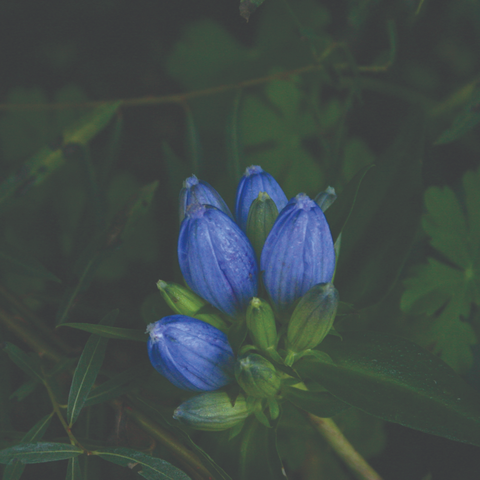
Striking violet-blue flowers stay bottle-shaped and never fully open, even at maturity -- only sturdy bumblebees are strong enough to force their way in to pollinate them. |
|
|
Gentiana andrewsii (Bottle or Closed Gentian) is a native perennial of moist black-soil prairies, floodplain-forest openings, fens, and swampy ground across the eastern and midwestern United States -- occasional in the northern half of Illinois but increasingly uncommon as wetland habitat is lost. Its violet-blue flowers cluster at the stem tips and in the upper leaf axils, each one shaped like a closed bud even once fully mature -- the corolla never really opens, and the five lobes are nearly hidden behind a fringe that is actually taller than they are. Only strong-bodied bumblebees are able to force their way past the closed tip to reach the nectar, a pollination strategy that keeps smaller, less effective insects from robbing the flower. Plants grow 1-2 feet tall on multiple unbranched stems rising from a single taproot, with smooth, dark green, opposite leaves. Bloom comes late in the season, from August into October, often lasting until the first frost. Left undisturbed in the right conditions -- consistently moist, rich soil in full to partial sun -- plants will naturalize into substantial clumps over time. |
|
Pros
|
|
Cons
|
|
| Why Like | An increasingly uncommon native as the wet prairies, fens, and floodplain habitats it depends on are lost to development and drainage -- planting it helps support a genuinely declining wild population. Its tightly closed, bottle-shaped flowers are one of the more remarkable pollination relationships among native wildflowers: only bumblebees strong enough to force the corolla open can reach the nectar, making this an excellent late-season nectar source precisely when fewer other native flowers are still blooming. |
Plant Data | |
| Mature Size | 18 - 24 inches tall. 12 - 18 inches wide. |
| Sun Exposure | Partial Shade - Full Sun |
| Moisture Tolerance | Medium - Wet: Needs consistently moist to wet soil during the growing season; does not tolerate a site that stays waterlogged through winter. |
| Zones | 3a - 7b (Usually hardy to -40° F) |
| Tags | Attracts Bees, Attracts Pollinators, Deciduous, Full Sun, Illinois Native, Medium, Native to North America, Non-Allergenic, Partial Shade, Partial Sun, Perennial, Wet, Wet Site Tolerant |
| Bloom Period | August to September |
| Flower Color | Dark Blue |
More Info from Experts |
|
| |
|
Want More
photos of this plant? Try
Google Image Search!
|
|
Pricing and Availability HistoryClick a label to toggle visibility for that size
|
|
Past Availability2025 : 04/13 - 09/202024 : 05/01 - 10/05 2023 : 06/21 - 07/22 |
|