 North Shore Plant Club
- Shop For Plants
- Search Plants
- Resources for Gardeners
- Color Wheel of Plants
- Interactive Landscapes
- Photos of Planters & Hanging Baskets
- November Photos from Our Community
- Botanic Gardens: Chicago & Beyond
- Local Nurseries
- Upcoming Plant Events
- Plant Club Articles & Answers
- Gardening in the News
- Chicagoland Garden Calendar
- Explaining Plant Container Sizes
- Thrillers, Fillers & Spillers
- Join Free!
- Mundelein
Prairie Smoke (Geum triflorum)
|
|
| Semi-Evergreen Perennial in the Rosaceae Family | |
One of the earliest prairie wildflowers to bloom, known for its nodding pink flowers and smoky, feathery seed heads. |
|
|
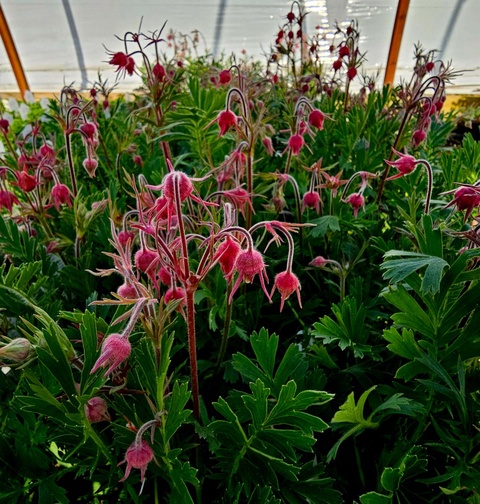
Geum triflorum, Prairie Smoke, is a North American native found in dry, gravelly prairies and hill prairies, including scattered sites in northern Illinois. It forms a low rosette of fern-like, gray-green, hairy leaves and is among the earliest tallgrass-prairie wildflowers to bloom, sending up nodding, bell-shaped pink-to-red flowers in early spring. After bloom, the fused, feathery sepals elongate into smoky pink plumes that give the plant its common name, often persisting well into summer. |
|
Pros
|
|
Cons
|
|
| Why Like | Prairie Smoke is a conservative species associated with high-quality, undisturbed prairie remnants, and one of the very first prairie wildflowers to bloom each year. Its nodding flowers depend on bumblebees — especially newly-emerged spring queens — for buzz pollination, since the fused sepals require force to access the nectar inside; a handful of other insects act as 'nectar thieves,' chewing openings to reach it without providing pollination service. |
Plant Data | |
| Mature Size | 6 - 18 inches tall. 6 - 10 inches wide. |
| Growth Rate | Slow |
| Sun Exposure | Partial Shade - Full Sun |
| Moisture Tolerance | Dry - Medium |
| Zones | 3a - 7b (Usually hardy to -40° F) |
| Tags | Attracts Bees, Attracts Pollinators, Drought Tolerant, Dry, Full Sun, Good for Rock Garden, Illinois Native, Low Maintenance, Medium, Native to North America, Partial Shade, Partial Sun, Perennial, Prairie Garden |
| Bloom Period | Early To Mid-Spring |
| Flower Color | Pale Pink To Purplish-Red
|
| Foliage Color | Gray-Green
|
Awards |
|
Most Popular Plants |
|
Absolutely Easy Garden Recipes that include Prairie Smoke |
|
More Info from Experts |
|
Photos of This with...Pink Cotton Candy Wood Betony |
|


| |
|
Want More
photos of this plant? Try
Google Image Search!
|
|
Pricing and Availability HistoryClick a label to toggle visibility for that size
|
|
Past Availability2025 : 04/03 - 10/042024 : 05/01 - 09/21 2023 : 04/13 - 09/30 |
|