 North Shore Plant Club
- Shop For Plants
- Search Plants
- Resources for Gardeners
- Color Wheel of Plants
- Interactive Landscapes
- Photos of Planters & Hanging Baskets
- November Photos from Our Community
- Botanic Gardens: Chicago & Beyond
- Local Nurseries
- Upcoming Plant Events
- Plant Club Articles & Answers
- Gardening in the News
- Chicagoland Garden Calendar
- Explaining Plant Container Sizes
- Thrillers, Fillers & Spillers
- Join Free!
- Mundelein
Kalm's St. John's Wort (Hypericum kalmianum)
|
|
| Deciduous Perennial Shrub, Mounded in the Hypericaceae Family | |
A hardy native shrub with cheerful yellow summer flowers and easy wet-or-dry adaptability. |
|
|
Hypericum kalmianum, commonly called Kalm's St. John's Wort, is a native North American shrub hardy in USDA Zones 4a-7b. It grows naturally in moist, open areas and along woodland edges throughout the northeastern and north-central United States and eastern Canada, including the shorelines of the Great Lakes. This compact, deciduous shrub typically reaches 2-4 feet tall and 2-3 feet wide, with a rounded, mounding growth habit. Its narrow, blue-green leaves have a slightly glaucous cast and turn a coppery bronze in fall. From midsummer into early fall, the shrub produces an abundance of bright golden-yellow, five-petaled flowers about 1 to 1.5 inches across, each with a prominent cluster of stamens. Kalm's St. John's Wort prefers full sun to partial shade and moist, well-drained soil, tolerating a wide range of pH from acidic to alkaline. It is drought-tolerant once established and also tolerates brief periods of standing water, making it a versatile choice for rain gardens and pond edges as well as drier sites. Its nectar-rich flowers are a valuable food source for bees and butterflies, and its persistent, chocolate-brown seed capsules add winter interest. |
|
Pros
|
|
Cons
|
|
| Why Like | A true Midwest and Great Lakes native, Kalm's St. John's Wort fills an important niche along lakeshores and wetland margins, where its nectar-rich flowers support bees and butterflies through the heart of summer. Its tolerance for both occasional flooding and drought reflects its adaptation to fluctuating shoreline water levels in the wild. |
| Highlights | A tough, adaptable native shrub with months of cheerful yellow blooms, standout winter seed heads, and genuine wet-or-dry-site versatility. |
Plant Data | |
| Mature Size | 24 - 48 inches tall. 24 - 36 inches wide. |
| Growth Rate | Moderate |
| Sun Exposure | Partial Shade - Full Sun |
| Moisture Tolerance | Dry - Wet: Tolerates brief periods of standing water as well as drought once established. |
| Zones | 4a - 7b (Usually hardy to -30° F) |
| Tags | Attracts Bees, Attracts Butterflies, Attracts Pollinators, Attracts Wildlife, Deciduous, Deer Resistant, Drought Tolerant, Dry, Full Sun, Good for Rain Garden, Illinois Native, Medium, Native to North America, Non-Allergenic, Partial Shade, Partial Sun, Perennial, Potentially Toxic, Rabbit Resistant, Shrub, Tolerant of Clay Soil, Tolerant of Loamy Soil, Tolerant of Sandy Soil, Well-Drained Soil, Wet, Wet Site Tolerant, Winter Interest |
| Bloom Period | Midsummer to Early Fall |
| Flower Color | Golden Yellow |
| Foliage Color | Blue-Green
|
More Info from Experts |
|
Commonly Planted with...Pairs well with other sun-loving native wetland-edge plants such as Swamp Milkweed (Asclepias incarnata), Joe Pye Weed (Eutrochium), Switchgrass (Panicum virgatum), and Blue Flag Iris (Iris versicolor), or with ornamental grasses and ferns in a rain garden setting. |
|
Photos of This with...Cardinal Flower |
|
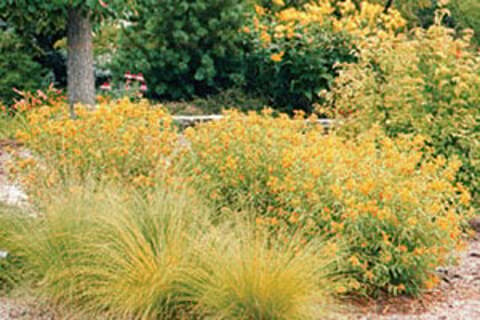


| |
|
Want More
photos of this plant? Try
Google Image Search!
|
|
Pricing and Availability HistoryClick a label to toggle visibility for that size
|
|
Past Availability2025 : 04/13 - 10/042024 : 05/01 - 10/05 2023 : 05/04 - 09/10 |
|