 North Shore Plant Club
- Shop For Plants
- Search Plants
- Resources for Gardeners
- Color Wheel of Plants
- Interactive Landscapes
- Photos of Planters & Hanging Baskets
- November Photos from Our Community
- Botanic Gardens: Chicago & Beyond
- Local Nurseries
- Upcoming Plant Events
- Plant Club Articles & Answers
- Gardening in the News
- Chicagoland Garden Calendar
- Explaining Plant Container Sizes
- Thrillers, Fillers & Spillers
- Join Free!
- Mundelein
Winterberry (Ilex verticillata)
|
|
| Deciduous Perennial Shrub in the Aquifoliaceae Family | |
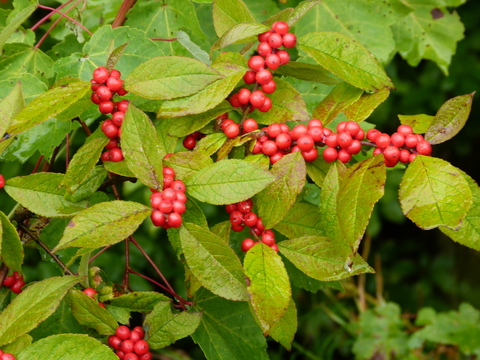
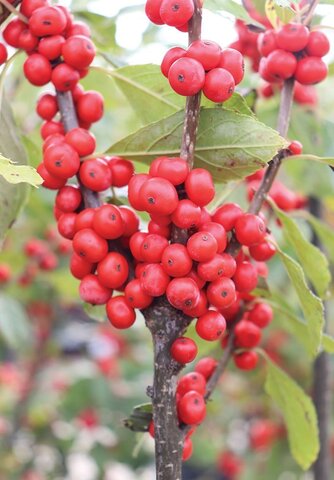
A Midwest native, deciduous holly grown for its bare winter branches loaded with bright red berries - a classic cold-season landscape feature. |
|
| Winterberry is a deciduous holly native to wet woods, swamps, and bog edges across eastern North America, including northern Illinois. Unlike most hollies, it drops its leaves in fall, which is exactly the point: that reveals bare, twiggy branches studded with small, bright red berries that persist through winter, feeding dozens of bird species when other food sources are scarce. Inconspicuous greenish-white flowers appear in late spring (May to June in the Chicago area); plants are dioecious, so a male plant must grow within about 50 feet of female plants for the females to set fruit. It tolerates consistently moist to seasonally wet, acidic soil in full sun to partial shade, and suckers over time to form a multi-stemmed clump. | |
Pros
|
|
Cons
|
|
| Why Like | A true Illinois native, occasional in the northern part of the state in bottomland woods, damp woodland edges, sandy flatwoods, and shrub bogs. Its persistent winter berries are an important late-season food source for birds like cedar waxwings, hermit thrushes, and bobwhite quail, especially once other fruit has been stripped - and the berries also help birds disperse its seed. |
| Highlights | One of the very few truly native, cold-hardy hollies for the Chicago area, and one of the best wildlife plants for winter interest - its leafless red-berried branches are a signature look of the native Midwest winter landscape, and a favorite for cut-branch arrangements. |
Plant Data | |
| Mature Size | 3 - 12 feet tall. 3 - 12 feet wide. |
| Sun Exposure | Partial Shade - Full Sun |
| Moisture Tolerance | Medium - Wet: Tolerates consistently moist to occasionally wet, poorly-drained soil, and some drought once established (dry soil can cause early fruit drop). |
| Zones | 3a - 9b (Usually hardy to -40° F) |
| Tags | Attracts Bees, Attracts Birds, Attracts Pollinators, Deciduous, Disease Resistant, Drought Tolerant, Fall interest, Full Sun, Good for Borders, Good for Hedges, Good for Rain Garden, Illinois Native, Low Maintenance, Medium, Native to North America, Partial Shade, Partial Sun, Perennial, Potentially Toxic, Shrub, Tolerant of Acidic Soil, Tolerant of Moist Soil, Wet, Wet Site Tolerant, Winter Interest |
| Bloom Period | May To June |
| Flower Color | Greenish-White |
More Info from Experts |
|
Commonly Planted with...Pairs beautifully with other wet-tolerant native shrubs for winter interest, such as Cornus sericea (Red-Twig Dogwood). |
|


| |
|
Want More
photos of this plant? Try
Google Image Search!
|
|
Pricing and Availability HistoryClick a label to toggle visibility for that size
|
|
|
|
|