 North Shore Plant Club
- Shop For Plants
- Search Plants
- Resources for Gardeners
- Color Wheel of Plants
- Interactive Landscapes
- Photos of Planters & Hanging Baskets
- November Photos from Our Community
- Botanic Gardens: Chicago & Beyond
- Local Nurseries
- Upcoming Plant Events
- Plant Club Articles & Answers
- Gardening in the News
- Chicagoland Garden Calendar
- Explaining Plant Container Sizes
- Thrillers, Fillers & Spillers
- Join Free!
- Mundelein
False Spikenard (Maianthemum racemosum)
|
|
| Deciduous Perennial Upright, Arching in the Asparagaceae Family | |
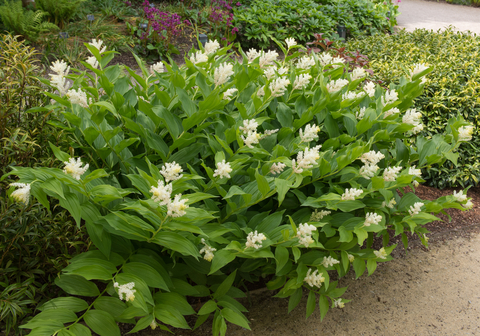
A graceful native woodland perennial with feathery plumes of fragrant white flowers in late spring, followed by berries that ripen to bright red by late summer. |
|
| Maianthemum racemosum, also called False Spikenard or False Solomon's Seal, is a native woodland perennial found in rich, shaded habitats across most of North America, including Illinois. Unbranched, gently arching stems rise 2 to 3 feet tall from spreading rhizomes, each lined with alternate, oblong leaves. In late spring, every stem ends in a feathery, plume-like cluster of dozens of tiny, star-shaped, creamy-white flowers. The flowers give way to clusters of berries that start mottled green and copper before ripening to bright red by late summer, adding a second season of interest. Its slow-spreading, rhizomatous habit and preference for consistent moisture make it a graceful, low-maintenance companion for ferns, hostas, and other shade perennials in a woodland garden. | |
Pros
|
|
Cons
|
|
| Why Like | A true Midwest woodland native, False Spikenard is a graceful companion to ferns, trilliums, and other spring ephemerals in a shaded native garden. Its flowers support early-season pollinators, and its red berries are eaten by songbirds and small mammals, which also help disperse its seed. Because it spreads slowly and doesn't aggressively colonize, it's a well-behaved choice for restoring a woodland understory without the maintenance concerns of more aggressive native spreaders. |
| Highlights | The plume-like clusters of fragrant, creamy-white flowers in late spring put on a two-part show, followed by berries that ripen through green, copper, and finally bright red by late summer -- giving this woodland native nearly four seasons of visual interest for very little care. |
Plant Data | |
| Mature Size | 24 - 36 inches tall. 18 - 24 inches wide. |
| Growth Rate | Slow |
| Sun Exposure | Partial Sun - Full Shade |
| Moisture Tolerance | Medium |
| Zones | 3a - 8b (Usually hardy to -40° F) |
| Tags | Deciduous, Full Shade, Illinois Native, Medium, Native to North America, Partial Sun, Perennial, Shade Tolerant |
| Bloom Period | May - June |
| Flower Color | Creamy White
|
More Info from Experts |
|
Commonly Planted with...Pairs naturally with ferns, hostas, Solomon's seal (Polygonatum), wild ginger, and spring ephemerals such as trillium in a shaded woodland setting. |
|
| |
|
Want More
photos of this plant? Try
Google Image Search!
|
|
Pricing and Availability HistoryClick a label to toggle visibility for that size
|
|
Past Availability2025 : 05/18 - 10/042024 : 05/01 - 08/24 2023 : 04/13 - 08/27 |
|