 North Shore Plant Club
- Shop For Plants
- Search Plants
- Resources for Gardeners
- Color Wheel of Plants
- Interactive Landscapes
- Photos of Planters & Hanging Baskets
- October Photos from Our Community
- Botanic Gardens: Chicago & Beyond
- Local Nurseries
- Upcoming Plant Events
- Plant Club Articles & Answers
- Gardening in the News
- Chicagoland Garden Calendar
- Explaining Plant Container Sizes
- Thrillers, Fillers & Spillers
- Join Free!
- Mundelein
Arrowwood Viburnum (Viburnum dentatum)
|
|
| Deciduous Perennial Shrub in the Adoxaceae Family | |
|
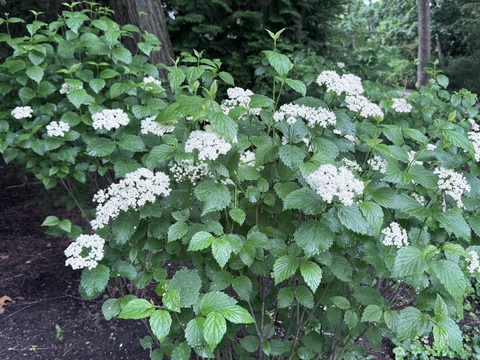
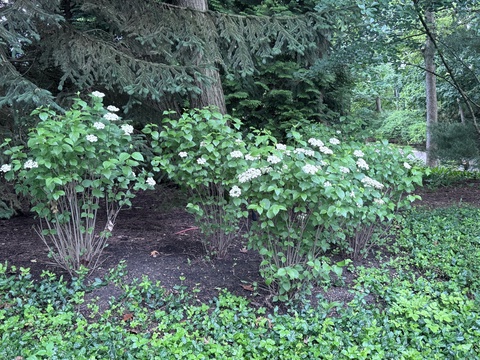
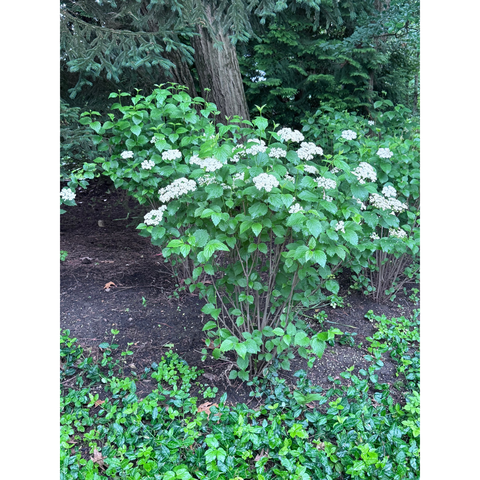
Viburnum dentatum, commonly known as Arrowwood Viburnum, is a versatile, deciduous native shrub that brings natural beauty and wildlife appeal to the garden. It typically grows 8-12 feet tall and wide, with a rounded, multi-stemmed, somewhat suckering habit and dark green, coarsely toothed leaves. In May and June, it produces flat-topped clusters of small white flowers with yellow stamens that attract pollinators, followed by clusters of blue-black berries that ripen in late summer and persist into fall as a valuable food source for birds. Viburnum dentatum is adaptable to a wide range of soils and moisture levels, from dry to wet, and thrives in full sun to partial shade. It is a relatively low-maintenance shrub well suited to borders, hedges, naturalized areas, and wildlife gardens, and its fall foliage often turns shades of yellow, orange, and reddish-purple before dropping. |
|
Pros
|
|
Cons
|
|
| Why Like | In the wild, Arrowwood Viburnum is easy to spot in October: its clusters of blue-black berries ripen just as fall color comes in, and the combination draws flocks of songbirds working through hedgerows, woodland edges, and stream banks. It's also one of the host plants for Spring Azure butterfly caterpillars earlier in the season, so a wild thicket of arrowwood supports wildlife nearly year-round, not just in fall. |
| Highlights | One of the most reliable native shrubs for fall and winter wildlife interest — its blue-black berries ripen right around October and often persist into winter, feeding birds when little else is available. It's also the classic "arrow shaft" plant: straight young stems were historically used by Native Americans to make arrow shafts, which is where both the common and species names come from. |
Plant Data | |
| Mature Size | 8 - 12 feet tall. 8 - 12 feet wide. |
| Growth Rate | Fast |
| Sun Exposure | Partial Shade - Full Sun |
| Moisture Tolerance | Dry - Wet: Unusually wide moisture tolerance for a garden shrub — handles everything from dry soils to periodic flooding, making it a good choice for both drought-prone spots and low, wet areas like rain garden edges. |
| Zones | 2a - 8b (Usually hardy to -50° F) |
| Tags | Deciduous, Dry, Fall Color, Foundation, Full Sun, Good for Cottage Garden, Illinois Native, Medium, Native to North America, Partial Shade, Partial Sun, Perennial, Rabbit Resistant, Shrub, Wet, Wet Site Tolerant Deer Resistant Shrubs, Flowering Shrubs, White Flowering Shrubs, Wildlife Shrubs |
| Bloom Period | May to June (First Bloom: 534 GDD, Full Bloom: 621 GDD) |
| Flower Color | White |
| Foliage Color | Green
|
Most Popular Plants |
|
More Info from Experts |
|
Photos of This with...Purple Wintercreeper Euonymus |
|



| |
|
Want More
photos of this plant? Try
Google Image Search!
|
|
Pricing and Availability HistoryClick a label to toggle visibility for that size
|
|
Past Availability2025 : 04/03 - 10/042024 : 05/01 - 10/05 2023 : 05/04 - 09/30 |
|