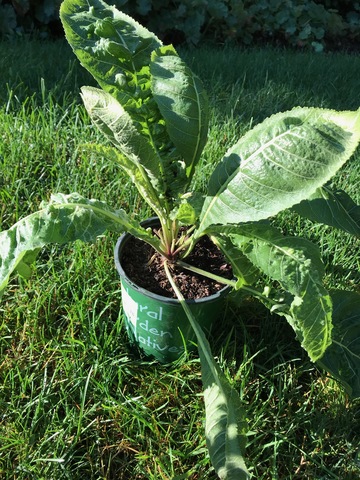
Wild Quinine (Parthenium integrifolium)
[par-THEN-ee-um in-teg-rih-FOE-lee-um]

Deciduous Perennial Upright, Clump-Forming in the Asteraceae Family
 
Buy Wild Quinine
Size Notes Price Availability
Tray of 6 #1 gallons Field

Grower approved but probably not garden center ready. (9/13)

$69.75 Likely available
1/24 - 4/4

Parthenium integrifolium, commonly known as wild quinine, is an upright, clump-forming perennial native to tallgrass prairies and open woods of eastern and central North America, including Illinois. It typically grows 3 to 4 feet tall, with large, coarse, toothed leaves and flat-topped clusters of small, woolly white flower heads from June into September. The common name references its historical use as a World War I-era substitute for cinchona bark (the source of true quinine) in treating fevers. A deep taproot makes it tough, drought-tolerant, and long-lived once established, though it resents being moved. Note: the related catalog species Parthenium hispidum carries the similar-sounding common name "American Feverfew" — a different plant, distinguished by its noticeably hairier ("hispid") stems and leaves.

Why Like A true tallgrass-prairie native with a long history of human use: Native Americans and, during a WWI shortage of imported cinchona bark, the US Army both used it as a substitute source of quinine-like compounds for treating fevers. In the wild it's an unmistakable midsummer presence in prairies and open woods — a sturdy, deep-taprooted anchor plant that shrugs off drought and poor soil, while its flat-topped clusters of small white flower heads draw in a steady stream of bees, wasps, and pollen-feeding beetles through the heat of summer.
 

Plant Data

Mature Size 3 - 4 feet tall. 18 - 24 inches wide.
Sun Exposure Full Sun - Full Sun
Moisture Tolerance Dry
Zones 4a - 8b (Usually hardy to -30° F)
Tags Attracts Bees, Attracts Pollinators, Deciduous, Deer Resistant, Drought Tolerant, Dry, Full Sun, Good for Borders, Good for Cottage Garden, Illinois Native, Low Maintenance, Native to North America, Normal Soil, Perennial, Prairie Garden, Tolerant of Clay Soil, Tolerant of Hot Dry Site, Tolerant of Poor Soil, Tolerant of Sandy Soil, Tolerant of Shallow Soil, Well-Drained Soil
Bloom Period June - September
Flower Color White
Foliage Color
 

More Info from Experts

Want More photos of this plant? Try Google Image Search!


Pricing and Availability History

Click a label to toggle visibility for that size

Past Availability
2025 : 04/03 - 10/04
2024 : 05/01 - 10/05
2023 : 04/13 - 09/30

© North Shore Plant Club 2026. Privacy Policy, Terms & Conditions.

Field-Grown vs. Greenhouse-Grown Plants

Plants which are well-adapted to our local climate are most often field-grown (outside). Field-grown plants are generally cheaper and have the advantage of already somewhat acclimated to our cold winters, but that means they’re not artificially far along in the spring and tend to bloom at the normal time in our area.

Spring annuals and tender perennials are typically grown in Greenhouses so they can be ready and luxurious exactly when customers want them. Some perennials are also “forced” into early bloom in greenhouses. In May, there can be a very big difference between field-grown and greenhouse-grown plants of the same type. The latter typically look good right away (so they’re a great choice where that’s important), but we typically pay a premium for it.


Estimated Recipe Cost

The cost of this recipe's ingredients will vary depending on the season and the sizes and varieties you select.


Benefits of Membership

Want a better way to get great plants and make your yard look awesome? Create your account below and get:

  • The best plants… from the same sources the pros use, but at near wholesale prices
  • More plants in more sizes than anywhere else… whether you’re looking for classics or rarities; annuals, perennials or shrubs; one plant or a whole yardful!
  • "No Contact" delivery or easy pick-up at a site near you without fighting the retail crowds. You choose!

Membership is free, but — since we rely on delivery and local pick-up — you have to live near one of our hubs (or be willing to drive to a site to pick them up). If you live farther away, and would like to help us bring the club to your neighbors, please email helpusgrow@northshoreplantclub.com.

Already a member?
Login
About Ordering From The Plant Club

To secure the best prices for club members and make sure we know the current plants available from each nursery, we take orders only a couple of times a month.

Shoot us an email at help@northshoreplantclub.com, and we'll be happy to talk about plants or let you know when it's time to buy them!


No Pricing or Availability Right Now

We order from a rotating cast of the best nurseries in the Great Lakes region. It looks like we've offered this plant in the past, but the nurseries we're working with this week don't appear to have it in stock at the moment.

Our goal is to bring as many plants together under "one roof" as possible, so we'll try hard to make it available again in the future!