 North Shore Plant Club
- Shop For Plants
- Search Plants
- Resources for Gardeners
- Color Wheel of Plants
- Interactive Landscapes
- Photos of Planters & Hanging Baskets
- November Photos from Our Community
- Botanic Gardens: Chicago & Beyond
- Local Nurseries
- Upcoming Plant Events
- Plant Club Articles & Answers
- Gardening in the News
- Chicagoland Garden Calendar
- Explaining Plant Container Sizes
- Thrillers, Fillers & Spillers
- Join Free!
- Mundelein
Northern Sea Oats (Chasmanthium latifolium)
|
|
| Deciduous Perennial Upright, Arching in the Poaceae Family | |
A graceful native grass whose arching leaves and dangling, oat-like seed heads shift from green to coppery bronze-purple—striking fresh or dried, and one of the few ornamental grasses that thrives in shade. |
|
|
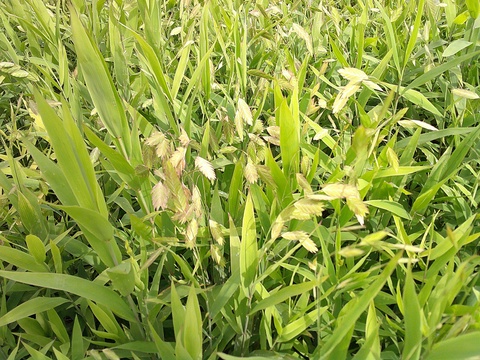
Chasmanthium latifolium is a clump-forming, ornamental grass native to the eastern United States. It typically reaches heights of 2-3 feet tall and 2-3 feet wide, forming graceful, arching mounds. The plant's most distinctive feature is its flat, oat-like seed heads that dangle in clusters above the foliage. These seed heads start green and mature to a lovely bronze or purple color, providing seasonal interest. The flat, broad leaf blades of C. latifolium are a medium to dark green color, turning golden yellow in the fall before dying back to the ground. Northern sea oats prefers partial to full shade and moist, well-drained soil. It is hardy in USDA Zones 5-9. This ornamental grass works well in woodland gardens, shade gardens, along ponds or streams, and in mixed perennial beds. Minimal maintenance is required, with occasional cutting back of dead foliage in late winter or early spring. Northern sea oats can self-seed readily, but the seedlings are easily removed if needed. Overall, Chasmanthium latifolium is a versatile ornamental grass that adds graceful movement, texture, and seasonal color to shaded areas of the landscape. |
|
Pros
|
|
Cons
|
|
| Why Like | A North Carolina Wildflower of the Year, Chasmanthium latifolium is native to moist woodlands, stream banks, and bottomlands across much of the eastern and central United States. Its wind-pollinated flowers need no pollinators, but the seeds are an important late-season food source for songbirds and small mammals, and the foliage serves as a larval host plant for the Northern Pearly-Eye butterfly and several skipper species. Left unmown along a streambank or woodland edge, it forms loose, deer-resistant colonies that help stabilize soil in exactly the damp, shaded sites where few other grasses compete. |
| Highlights | Chasmanthium latifolium is grown first and foremost for its seed heads: flat, dangling, oat-like spikelets that nod gracefully above arching green foliage from midsummer into fall, aging from green to a coppery bronze-purple that catches both light and wind. It's also one of the very few ornamental grasses that genuinely thrives in shade, making it a go-to choice for adding grass-like texture to woodland and shade gardens where most grasses struggle. |
Plant Data | |
| Mature Size | 3 - 5 feet tall. 18 - 24 inches wide. |
| Growth Rate | Medium |
| Sun Exposure | Full Shade - Full Sun |
| Moisture Tolerance | Medium - Wet: Widely Adaptable |
| Zones | 5a - 9b (Usually hardy to -20° F) |
| Tags | Attracts Birds, Attracts Butterflies, Deciduous, Deer Resistant, Fall Color, Fall interest, Full Shade, Full Sun, Good for Dried Flowers, Good for Rain Garden, Grasses, Illinois Native, Low Maintenance, Medium, Most Popular, Native to North America, Naturalizing, Partial Shade, Partial Sun, Perennial, Pond, Potentially Allergenic, Rabbit Resistant, Shade Tolerant, Wet, Wet Site Tolerant, Winter Interest, Woodland Garden Deer Resistant Perennials, Fall Blooming Perennials, Large Perennials, Ornamental Grass |
| Bloom Period | June To October |
| Flower Color | Green, Aging To Bronze-Purple
|
| Foliage Color | Green
|
Most Popular Plants |
|
|
"Potentially Allergenic" #7,
"Pond" #10,
"Grasses" #12,
"Good for Dried Flowers" #14,
"Winter Interest" #16,
"Wet Site Tolerant" #22,
"Fall interest" #22,
"Illinois Native" #22
|
|
Absolutely Easy Garden Recipes that include Northern Sea Oats |
|
More Info from Experts |
|
Commonly Planted with...Pairs well with Mertensia virginica (Virginia Bluebells): both are shade-tolerant native woodland perennials with similar moisture needs, and their seasons dovetail neatly. Bluebells put on their spring show and then go dormant and disappear by early summer, just as Chasmanthium’s arching foliage fills back in to carry textural interest through the rest of the growing season (per Gardenia.net’s companion-planting guidance for this species). |
|
Photos of This with...Marshmallow Begonia, White Lava Elephant's Ear, Sweetheart Ivy, Ceylon Bowstring Hemp, Wildfire Smoky Rose Coleus |
|



| |
|
Want More
photos of this plant? Try
Google Image Search!
|
|
Pricing and Availability HistoryClick a label to toggle visibility for that size
|
|
Past Availability2025 : 04/03 - 10/042024 : 05/01 - 10/05 2023 : 04/13 - 09/30 |
|