 North Shore Plant Club
- Shop For Plants
- Search Plants
- Resources for Gardeners
- Color Wheel of Plants
- Interactive Landscapes
- Photos of Planters & Hanging Baskets
- November Photos from Our Community
- Botanic Gardens: Chicago & Beyond
- Local Nurseries
- Upcoming Plant Events
- Plant Club Articles & Answers
- Gardening in the News
- Chicagoland Garden Calendar
- Explaining Plant Container Sizes
- Thrillers, Fillers & Spillers
- Join Free!
- Mundelein
Tiger Eyes Staghorn Sumac (Rhus typhina 'Bailtiger' TIGER EYES)
|
|
| Deciduous Perennial Shrub in the Anacardiaceae Family | |
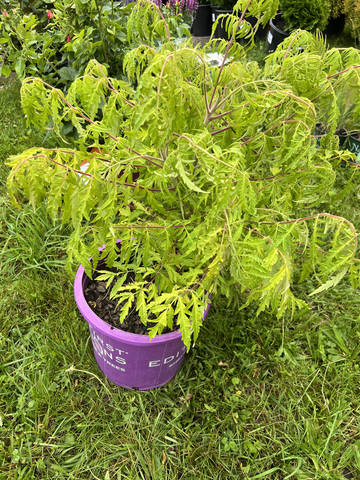
Chartreuse green quickly changes to bright yellow with rosy pink leaf stems. |
|
| Rhus typhina 'Bailtiger', marketed as TIGER EYES, is a patented (US PP16,185) dwarf, cutleaf cultivar of staghorn sumac. It was discovered as a naturally occurring sport among Laciniata-type plants at a Minnesota nursery in 1985 and introduced by Bailey Nurseries. Finely dissected, fern-like leaves emerge chartreuse-green and quickly turn bright yellow, held on contrasting rosy-pink stems, before shifting to orange and scarlet in fall. Considerably more compact than the wild species, TIGER EYES spreads slowly by suckering but lacks the aggressive colonizing habit of species-type sumacs. | |
Plant Data | |
| Mature Size | 4 - 6 feet tall. 4 - 6 feet wide. |
| Sun Exposure | Partial Shade - Full Sun |
| Moisture Tolerance | Medium |
| Zones | 4a - 8b (Usually hardy to -30° F) |
| Tags | Adaptable, Colorful Foliage, Deciduous, Drought Tolerant, Fall Color, Foundation, Full Sun, Good for Accents, Good for Borders, Good for Rain Garden, Grown For Attractive Foliage, Medium, Normal Soil, Partial Shade, Partial Sun, Perennial, Popular For Fall, Rabbit Resistant, Shrub, Tolerant of Moist Soil |
| Bloom Period | July - August |
| Flower Color | Greenish-Yellow |
| Foliage Color | Chartreuse
|
Awards |
|
Most Popular Plants |
|
|
"Adaptable" #17
|
|
More Info from Experts |
|
Photos of This with...Paprika Yarrow, Buzz Violet Blue Butterfly Bush, Lanceleaf Coreopsis, Diamond Mountain Euphorbia, Daylily, Ornamental Oregano, Supertunia Vista Snowdrift Petunia, Ping Pong Phlox, Rockin' Blue Suede Shoes Salvia, Big Ears Lamb's Ear, Nettle-Leaved Mullein, Meteor Shower Verbena, Dark Horse Weigela |
|


| |
|
Want More
photos of this plant? Try
Google Image Search!
|
|
Pricing and Availability HistoryClick a label to toggle visibility for that size
|
|
Past Availability2025 : 04/13 - 10/042024 : 05/01 - 10/05 2023 : 05/04 - 09/30 |
|