 North Shore Plant Club
- Shop For Plants
- Search Plants
- Resources for Gardeners
- Color Wheel of Plants
- Interactive Landscapes
- Photos of Planters & Hanging Baskets
- September Photos from Our Community
- Botanic Gardens: Chicago & Beyond
- Local Nurseries
- Upcoming Plant Events
- Plant Club Articles & Answers
- Gardening in the News
- Chicagoland Garden Calendar
- Explaining Plant Container Sizes
- Thrillers, Fillers & Spillers
- Join Free!
- Mundelein
Yarrow (Achillea millefolium)
|
|||||
| Deciduous Perennial Upright, Spreading in the Asteraceae Family | |||||
Buy Yarrow | |||||
|
|||||
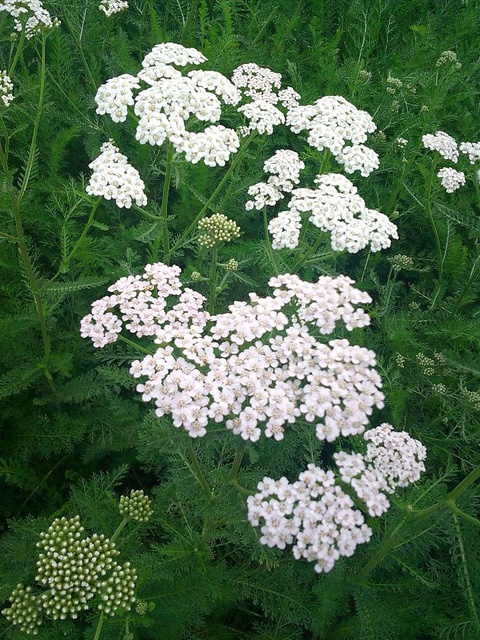
The classic wild yarrow — tough, drought-tolerant, and beloved by pollinators, with feathery aromatic foliage and flat clusters of white flowers from early summer into fall. |
|||||
|
Whether you’re a lazy gardener or a botanical overachiever, Yarrow’s got your back. Plant it once, forget it forever, and enjoy the drama-free beauty. So named because Achilles allegedly used this plant to speed his wounded soldiers’ healing during the Trojan War, Yarrow has historically been prized for its anti-inflammatory, antiseptic and astringent properties both in European folk medicine and indigenous North America. Achillea is drought-tolerant and deer-resistant, and blooms with lacy, flat caps of flowers for much of the summer. |
|||||
Pros
|
|||||
Cons
|
|||||
| Why Like | Wild yarrow earns its keep as a workhorse for pollinator and beneficial-insect habitat — it's rated as having special value to native bees, and its flowers draw green lacewings, lady beetles, hoverflies, and other predatory insects that help keep garden pests in check. It's also the primary nectar source for the blue copper butterfly in parts of its range. The plant carries real history: its genus name comes from Achilles, tied to an ancient legend that he used yarrow to treat wounded soldiers, and it has a long documented record of traditional use for wound care and inflammation across European and Native American herbal traditions, dating back at least to the writings of the ancient physician Dioscorides. Ecologically, it's an extremely tough, adaptable plant — tolerating soils from sandy to clay, acidic to alkaline, and growing from sea level to over 11,000 feet in the wild — which makes it a reliable choice for naturalizing in meadows, prairies, and other low-input plantings, and a standard component of conservation and erosion-control seed mixes. | ||||
| Highlights | A tough, adaptable native-naturalized wildflower valued for pollinator support, historic medicinal use dating to antiquity, and reliable performance in meadows, prairies, and low-maintenance plantings. | ||||
Plant Data | |||||
| Mature Size | 12 - 36 inches tall. 12 - 36 inches wide. | ||||
| Growth Rate | Fast | ||||
| Sun Exposure | Full Sun - Full Sun | ||||
| Moisture Tolerance | Dry - Medium: Dry to Moist | ||||
| Zones | 3a - 9b (Usually hardy to -40° F) | ||||
| Tags | Attracts Beneficial Insects, Attracts Birds, Attracts Butterflies, Attracts Pollinators, Deciduous, Deer Resistant, Drought Tolerant, Dry, Extended Bloom Time, Fast Growth Rate, Formal Garden, Fragrant Flowers, Fragrant Foliage, Full Sun, Full Sun, Good for Borders, Good for Butterfly Garden, Good for Cottage Garden, Good for Cut Flowers, Low Maintenance, Medium, Native to North America, Naturalizing, Normal Soil, Perennial, Prairie Garden, Rabbit Resistant, Repels Unwanted Insects, Showy Flowers, Thrillers, Tolerant of Clay Soil, Tolerant of Moist Soil, Tolerant of Poor Soil, Tolerant of Salt, Tolerant of Sandy Soil, Well-Drained Soil, Woodland Garden Full Sun Perennials, Pink or Red Flowering Perennials, Summer Blooming Perennials | ||||
| Bloom Period | June to September | ||||
| Flower Color | White
|
||||
More Info from Experts |
|||||
Commonly Planted with...Butterfly milkweed, rudbeckia daisies, purple coneflower and native grasses. |
|||||
Photos of This with...Star Tickseed, Iris |
|||||




| |
|
Want More
photos of this plant? Try
Google Image Search!
|
|
Pricing and Availability HistoryClick a label to toggle visibility for that size
|
|
Past Availability2025 : 04/13 - 09/202024 : 07/18 - 09/21 |
|


