 North Shore Plant Club
- Shop For Plants
- Search Plants
- Resources for Gardeners
- Color Wheel of Plants
- Interactive Landscapes
- Photos of Planters & Hanging Baskets
- November Photos from Our Community
- Botanic Gardens: Chicago & Beyond
- Local Nurseries
- Upcoming Plant Events
- Plant Club Articles & Answers
- Gardening in the News
- Chicagoland Garden Calendar
- Explaining Plant Container Sizes
- Thrillers, Fillers & Spillers
- Join Free!
- Mundelein
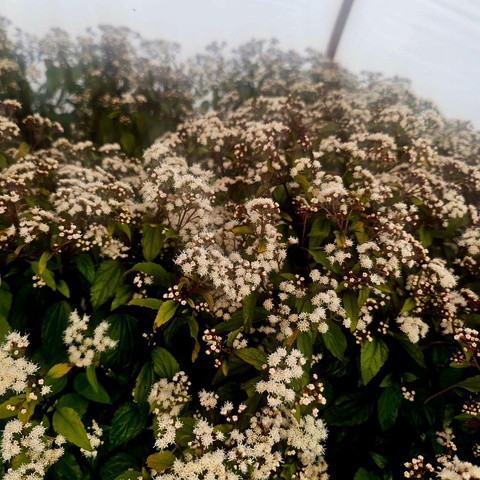
Chocolate Snakeroot (Ageratina altissima 'Chocolate')
|
|
| Deciduous Perennial Upright, Clump-Forming in the Asteraceae Family | |
A striking foliage selection of White Snakeroot with dark chocolate-purple leaves all season, topped by frothy white flower clusters from September until frost. |
|
|
Ageratina altissima 'Chocolate' (sold for decades as Eupatorium rugosum 'Chocolate') is a foliage selection of native White Snakeroot, chosen by Dr. Richard Lighty at Mt. Cuba Center for its dark chocolate-purple leaves on purple stems. Unlike the plain green-leaved species, this cultivar holds its rich color through the growing season, deepening with more sun exposure. In September, flat-topped clusters of small white flowers appear atop the dark foliage and continue blooming until frost, making it one of the latest native perennials to flower. It grows 3 to 5 feet tall and 2 to 4 feet wide, and tolerates everything from full shade to full sun and dry to wet soil once established. Like the wild species, all parts of this plant are toxic and should never be planted where grazing livestock can reach it. |
|
Pros
|
|
Cons
|
|
| Highlights |
|
Plant Data | |
| Mature Size | 3 - 5 feet tall. 24 - 48 inches wide. |
| Growth Rate | Moderate |
| Sun Exposure | Full Shade - Full Sun |
| Moisture Tolerance | Dry - Wet |
| Zones | 4a - 8b (Usually hardy to -30° F) |
| Tags | Attracts Bees, Attracts Butterflies, Attracts Pollinators, Colorful Foliage, Container, Deciduous, Deer Resistant, Drought Tolerant, Dry, For a Shady Spot, Formal Garden, Fragrant Flowers, Full Shade, Full Sun, Good for Accents, Good for Borders, Good for Butterfly Garden, Good for Cottage Garden, Good for Cut Flowers, Good for Mass Planting, Good for Rock Garden, Grown For Attractive Foliage, Illinois Native, Low Maintenance, Medium, Nativar, Native to North America, Naturalizing, Normal Soil, Partial Shade, Partial Sun, Perennial, Popular For Fall, Potentially Toxic, Rabbit Resistant, Shade Tolerant, Showy Flowers, Tolerant of Clay Soil, Tolerant of Moist Soil, Tolerant of Sandy Soil, Well-Drained Soil, Wet, Woodland Garden |
| Bloom Period | September To Frost |
| Flower Color | White |
| Foliage Color | Chocolate-Purple
|
Absolutely Easy Garden Recipes that include Chocolate Snakeroot |
|
More Info from Experts |
|
Commonly Planted with...Pair with pale or chartreuse-foliaged shade plants, native asters, and goldenrod for color contrast and a long season of late-fall pollinator interest. |
|
Photos of This with...Laura Garden Phlox |
|




| |
|
Want More
photos of this plant? Try
Google Image Search!
|
|
Pricing and Availability HistoryClick a label to toggle visibility for that size
|
|
Past Availability2025 : 04/13 - 10/042024 : 05/09 - 08/24 2023 : 04/13 - 09/30 |
|