 North Shore Plant Club
- Shop For Plants
- Search Plants
- Resources for Gardeners
- Color Wheel of Plants
- Interactive Landscapes
- Photos of Planters & Hanging Baskets
- September Photos from Our Community
- Botanic Gardens: Chicago & Beyond
- Local Nurseries
- Upcoming Plant Events
- Plant Club Articles & Answers
- Gardening in the News
- Chicagoland Garden Calendar
- Explaining Plant Container Sizes
- Thrillers, Fillers & Spillers
- Join Free!
- Mundelein
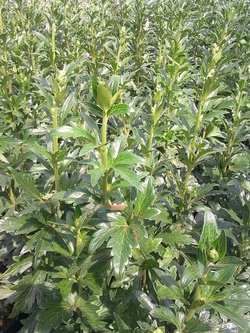
Azure Monkshood (Aconitum carmichaelii)
|
|
| Deciduous Perennial Upright in the Ranunculaceae Family | |
Spires of deep violet-blue, hooded flowers from September into October — the wild species behind cultivars like 'Arendsii' and 'Royal Flush.' Prefers moist, rich soil, part shade to sun. All parts are highly toxic; handle with gloves. |
|
|
Native to China and northern Vietnam, Aconitum carmichaelii is an upright, clump-forming perennial that can reach up to 5 feet tall, with dark green, deeply lobed foliage and dense, branching spikes of hooded, deep violet-blue flowers in late summer and fall — among the last perennials to bloom each year. It is the true wild species behind several popular garden cultivars bred from it, including 'Arendsii' and 'Royal Flush.' All plant parts are highly toxic and should be considered poisonous, containing aconitine alkaloids that can cause serious illness if ingested and can be absorbed through the skin during handling. Wear gloves when working with this plant, and site it away from children, pets, and edible gardens. |
|
Pros
|
|
Cons
|
|
| Why Like | In its native woodlands and streamsides across China and northern Vietnam, Aconitum carmichaelii is a valuable late-season nectar source for bumblebees, which are strong enough to force open the flower's hooded upper sepal to reach the nectar and pollen inside — a relationship few smaller pollinators can manage. Its late bloom time, well into fall, extends the local pollinator season after most other wildflowers have finished, and its toxicity to browsing mammals has helped it remain a reliably persistent presence in the woodland-edge and stream-margin habitats where it grows wild. |
| Highlights | The wild species behind popular garden cultivars 'Arendsii' and 'Royal Flush,' this true species offers the same striking late-season violet-blue flower spikes in an unselected, straight-species form. One of the last perennials to bloom each fall. |
Plant Data | |
| Mature Size | 24 - 60 inches tall. 18 - 30 inches wide. |
| Growth Rate | Slow |
| Sun Exposure | Partial Shade - Full Sun |
| Moisture Tolerance | Medium : Needs consistently moist soil and does not tolerate drought. Also does not tolerate prolonged waterlogging — good drainage matters as much as consistent moisture. |
| Zones | 3a - 7b (Usually hardy to -40° F) |
| Tags | Attracts Bees, Attracts Birds, Attracts Butterflies, Attracts Pollinators, Deciduous, Deer Resistant, Fall interest, Full Sun, Good for Bedding, Good for Butterfly Garden, Good for Cut Flowers, Medium, Medium, Native to Asia, Partial Shade, Partial Sun, Perennial, Pond, Potentially Toxic, Rabbit Resistant, Shade Tolerant, Showy Flowers, Slow Growth Rate, Specimen, Tolerant of Moist Soil, Well-Drained Soil, Woodland Garden |
| Bloom Period | September to October |
| Flower Color | Deep Violet-Blue |
More Info from Experts |
|
Commonly Planted with...Pairs well with other late-season, moisture-tolerant perennials such as sedum, warm-season ornamental grasses, hardy chrysanthemums, and bugbane (Actaea/Cimicifuga ramosa) — all sharing its fall bloom window and appreciation for consistently moist soil. |
|

| |
|
Want More
photos of this plant? Try
Google Image Search!
|
|
Pricing and Availability HistoryClick a label to toggle visibility for that size
|
|
Past Availability2024 : 07/02 - 09/082023 : 06/21 - 09/10 |
|