 North Shore Plant Club
- Shop For Plants
- Search Plants
- Resources for Gardeners
- Color Wheel of Plants
- Interactive Landscapes
- Photos of Planters & Hanging Baskets
- September Photos from Our Community
- Botanic Gardens: Chicago & Beyond
- Local Nurseries
- Upcoming Plant Events
- Plant Club Articles & Answers
- Gardening in the News
- Chicagoland Garden Calendar
- Explaining Plant Container Sizes
- Thrillers, Fillers & Spillers
- Join Free!
- Mundelein
Aug 4, 2026
The History of America's Love Affair with Fall Annuals
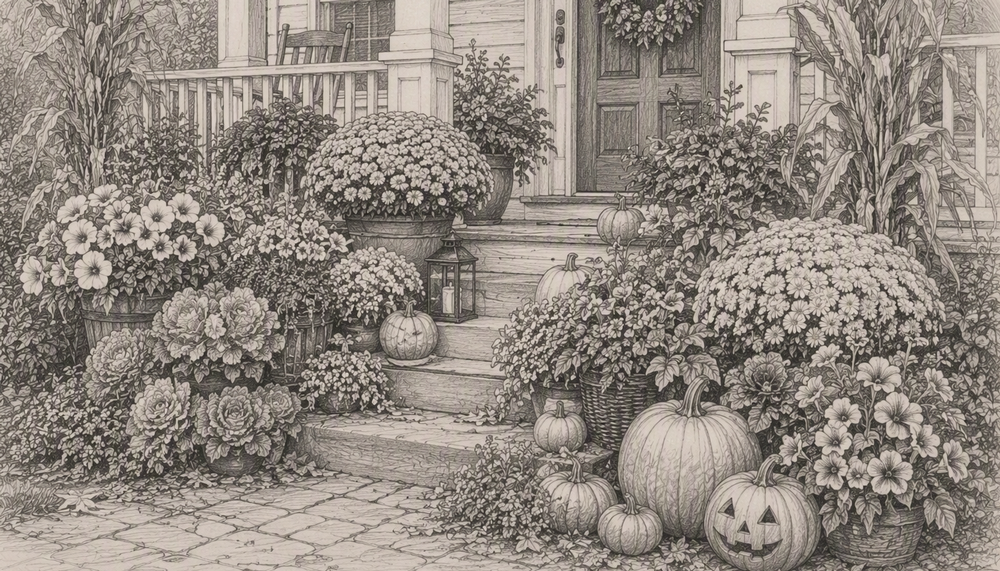
Every autumn, front porches across the Midwest transform into colorful displays of chrysanthemums, ornamental kale, asters, pumpkins, gourds, and eventually skeletons, ghosts, and glowing jack-o'-lanterns. What feels like a timeless tradition is actually the result of more than 150 years of changing gardening styles, home design trends, agricultural practices, and holiday celebrations. The familiar scene of mums and pumpkins on a front porch did not appear all at once. Instead, it evolved through several distinct stages that gradually turned simple fall plantings into today's elaborate Halloween showcases.
The Victorian Beginning: Decorating the Porch with Plants
The story begins in the late nineteenth century. During the Victorian era, porches became an important architectural feature of American homes. These outdoor rooms served as places to socialize, catch a breeze, and display a family's taste and prosperity. At the same time, advances in greenhouse production made a wider range of ornamental plants available to ordinary homeowners. As the middle class grew, large urns, decorative containers, and potted specimens became fashionable status symbols on porches and entryways, where visitors could admire them from the street and while approaching the front door.
However, these displays were not specifically autumn-themed. Instead, the goal was simply to keep the porch colorful and attractive for as much of the year as possible.
The Rise of Fall Flowers
By the early twentieth century, gardeners began paying more attention to extending seasonal color into autumn. Chrysanthemums, imported from Asia and widely promoted by horticultural societies, became the stars of the fall garden. Their ability to produce brilliant blooms well after many summer flowers had faded made them especially valuable.
Asters — both European varieties and native American species like the New England aster (Symphyotrichum novae-angliae) — gained popularity for their late-season resilience. Together, mums and asters solved the gardener's perennial dilemma: maintaining vibrant color after Labor Day while bridging the gap before winter dormancy sets in.
The Post-War Boom: Why the Mum Became King
As suburban homeownership exploded following World War II, front yards shifted from functional gardens into public-facing showpieces. Neighborhood culture and suburban property values created a newfound desire for immediate curb appeal. Commercial growers capitalized on this shift by perfecting thermal and photoperiod control in greenhouses, enabling them to force chrysanthemums into full, uniform bloom precisely for post-Labor Day sales. Busy homeowners no longer had to stake or disbud chrysanthemums for months; they could simply purchase instant, vibrant color off the rack.
At the same time, gardeners began rediscovering other late-season native species, especially goldenrod (Solidago). Where Asian chrysanthemum cultivars offered neat, manicured mounds, these native fall bloomers provided a naturalistic aesthetic that bridged the gap between cultivated flowerbeds and wild prairie landscapes.
Container Gardening Takes Center Stage
The next major development came in the second half of the twentieth century with the growing popularity of container gardening. Americans were spending more time decorating patios, decks, and entryways. Garden centers began selling decorative planters specifically designed for seasonal displays.
Container gardening appealed to busy homeowners because it offered instant impact with minimal commitment. A pot filled with chrysanthemums, ornamental peppers, flowering kale, pansies, or grasses could transform a porch in minutes.
Garden designers also promoted the idea of creating seasonal "outdoor rooms." Just as homeowners decorated their interiors for different holidays, they could refresh porch containers several times per year. Spring flowers gave way to summer annuals, which were replaced by fall combinations featuring mums, asters, kale, and ornamental grasses. This seasonal rotation became a profitable business for garden centers and a popular hobby for gardeners.
Enter the Pumpkin
While chrysanthemums supplied color, pumpkins supplied symbolism.
Pumpkins had long been associated with harvest celebrations, rural life, and Thanksgiving. Yet for much of American history they were valued more as food than as decorations. During the twentieth century, improved transportation and commercial pumpkin farming made pumpkins inexpensive and widely available.
As suburban homeowners sought simple ways to celebrate autumn, pumpkins naturally migrated from barns and farm stands onto front porches. Gardeners quickly discovered that pumpkins paired beautifully with chrysanthemums. The orange fruits echoed the warm colors of fall flowers and lasted for weeks without maintenance.
By the 1970s and 1980s, the classic combination of pumpkins and mums had become a recognizable symbol of autumn in American neighborhoods.
Harvest Decorating Becomes a Lifestyle
The 1980s and 1990s saw another important shift. Fall decorating expanded beyond gardening and entered the broader home décor industry.
Magazines such as Better Homes & Gardens and Martha Stewart Living featured harvest-themed entryways filled with pumpkins, corn stalks, gourds, hay bales, lanterns, and seasonal flowers, helping popularize the idea of the front entry as a fully styled seasonal scene.
Homeowners were no longer simply placing a few pots near the front door. They were designing complete displays. Ornamental cabbages, kale, millet, bittersweet vines, and decorative grasses joined the mix. The front porch became a stage for celebrating autumn itself.
For gardeners, this was a golden age. Horticultural suppliers responded with an ever-expanding palette of plants specifically marketed for fall containers, helping turn seasonal decorating into an annual tradition.
The Halloween Transformation
Beginning in the early 2000s, Halloween evolved from a children's holiday into a major decorating season. Retailers recognized that consumers were willing to spend heavily on outdoor displays, and enormous selections of decorations became available: skeletons, giant spiders, animatronic creatures, fog machines, and theatrical lighting. The scale of that shift shows up in the numbers — from 2019 to 2024 alone, spending on Halloween decorations grew 42%, outpacing growth in overall Halloween spending over the same period.
Rather than replacing traditional fall displays, these Halloween decorations were layered on top of them. The chrysanthemums, ornamental kale, pumpkins, and gourds remained the foundation, with spooky elements simply added around them. The combination worked brilliantly because the plants provided authenticity — a skeleton looks more convincing sitting among real pumpkins and flowering mums than standing alone on a lawn.
Social media accelerated the trend. Homeowners began sharing increasingly elaborate displays online, turning front-yard decorating into a friendly form of neighborhood competition. Giant skeletons surrounded by colorful fall annuals became a modern expression of the same impulse that once led Victorian gardeners to display elegant urns on their porches: the desire to create beauty, attract attention, and welcome visitors.
The Modern Pivot: Ecological Consciousness at the Entryway
More recently, the harvest display has undergone a further evolution — one driven by ecological awareness. As garden club members and eco-conscious homeowners learn more about the importance of late-season forage for pollinators, traditional florists' mums (which often lack accessible pollen or nectar) are increasingly paired with native perennials and wildlife-friendly annuals.
Modern container arrangements frequently feature native grasses like little bluestem (Schizachyrium scoparium), native asters, and seed-bearing plants like echinacea or ornamental millet. These additions don't just add texture and movement; they turn a decorative front porch into a late-season fueling station for migrating monarch butterflies and bumblebees preparing for winter. The post-Halloween routine has shifted toward sustainability too, with more gardeners composting pumpkins, repurposing straw bales as winter mulch, and planting hardy native container additions directly into the landscape before the ground freezes.
A Living Tradition
Today, when we arrange a pot of chrysanthemums beside a pumpkin, we are participating in a tradition that combines Victorian porch culture, twentieth-century suburban gardening, harvest celebrations, container gardening, and modern Halloween enthusiasm. For gardeners in the Chicago area, that tradition remains especially satisfying: few sights capture the arrival of autumn more perfectly than a crisp evening, brightly colored mums, and a welcoming porch dressed for the season ahead.