 North Shore Plant Club
- Shop For Plants
- Search Plants
- Resources for Gardeners
- Color Wheel of Plants
- Interactive Landscapes
- Photos of Planters & Hanging Baskets
- October Photos from Our Community
- Botanic Gardens: Chicago & Beyond
- Local Nurseries
- Upcoming Plant Events
- Plant Club Articles & Answers
- Gardening in the News
- Chicagoland Garden Calendar
- Explaining Plant Container Sizes
- Thrillers, Fillers & Spillers
- Join Free!
- Mundelein
New England Aster (Symphyotrichum novae-angliae)
|
|
| Deciduous Perennial Upright, Clump-Forming in the Asteraceae Family | |
|
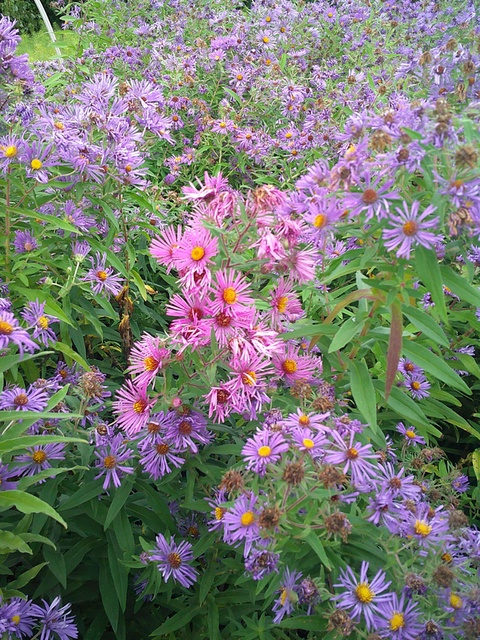
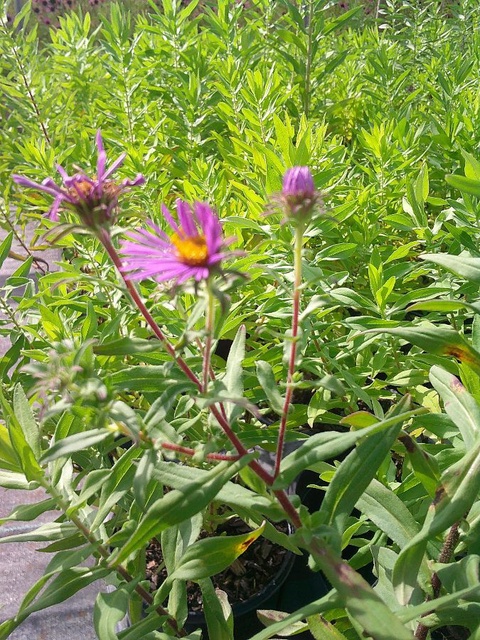
Symphyotrichum novae-angliae, or New England Aster, is a robust native perennial that provides some of the boldest color in the fall garden. It forms an upright, clump-forming stand of hairy, branching stems typically reaching 3-6 feet tall and 2-3 feet wide, though shorter cultivars are widely available. From August into October, the plant is covered in daisy-like flower heads about 1-2 inches across, each with 30 or more narrow, deep pink-purple ray florets surrounding a yellow-orange center disk. The display is a magnet for pollinators, especially monarch butterflies fueling up for their fall migration south. New England Aster is adaptable to a wide range of soils and moisture levels, from dry to consistently wet, and grows best in full sun to partial shade. Its height makes it a good fit for the middle or back of a border, and it can also be used as a specimen or in mass plantings for a striking late-season show. |
|
Pros
|
|
Cons
|
|
| Why Like | In the wild, New England Aster is one of the last big nectar sources of the year — its purple-pink blooms peak in September and October, right when monarch butterflies are staging and refueling for their long migration south. Wet meadows, roadside ditches, and prairie edges thick with this aster in October are also thick with monarchs, making it one of the best wild plants to watch for fall pollinator activity in the Chicago area. |
| Highlights | One of the best native plants for extending pollinator season into fall, and especially valuable for monarch butterflies fueling up for migration. This species is also the parent of popular compact garden cultivars like 'Purple Dome.' |
Plant Data | |
| Mature Size | 3 - 6 feet tall. 24 - 36 inches wide. |
| Growth Rate | Fast |
| Sun Exposure | Partial Shade - Full Sun |
| Moisture Tolerance | Dry - Wet |
| Zones | 3a - 8b (Usually hardy to -40° F) |
| Tags | Attracts Butterflies, Deciduous, Dry, Fall Color, Fall interest, Full Sun, Good for Rain Garden, Illinois Native, Medium, Native to North America, Partial Shade, Partial Sun, Perennial, Popular For Fall, Wet |
| Bloom Period | August to October |
| Flower Color | Deep Pink-Purple
|
Plant Club Content |
|
|
|
In The News |
|
|
|
More Info from Experts |
|

| |
|
Want More
photos of this plant? Try
Google Image Search!
|
|
Pricing and Availability HistoryClick a label to toggle visibility for that size
|
|
Past Availability2025 : 04/03 - 09/202024 : 05/01 - 10/05 2023 : 05/04 - 09/30 |
|