 North Shore Plant Club
- Shop For Plants
- Search Plants
- Resources for Gardeners
- Color Wheel of Plants
- Interactive Landscapes
- Photos of Planters & Hanging Baskets
- October Photos from Our Community
- Botanic Gardens: Chicago & Beyond
- Local Nurseries
- Upcoming Plant Events
- Plant Club Articles & Answers
- Gardening in the News
- Chicagoland Garden Calendar
- Explaining Plant Container Sizes
- Thrillers, Fillers & Spillers
- Join Free!
- Mundelein
Jul 6, 2026
July Color in the Illinois Garden: Perennials, Shrubs, and Trees That Shine in Midsummer
By July, Chicago gardens have entered their most challenging season. Temperatures rise, rainfall can be unpredictable, and many of the stars of spring have completed their performance. Yet a well-designed garden is far from finished. July is actually one of the most colorful months of the year, thanks to an outstanding cast of perennials, flowering shrubs, and ornamental trees that thrive during the height of summer.
Perennials That Carry the Summer Garden
Perhaps no perennial is more associated with the Illinois summer landscape than the Purple Coneflower (Echinacea purpurea). Native to Illinois prairies, this durable plant produces large, rose-purple flowers with prominent orange centers. It tolerates heat, humidity, and drought while providing nectar for bees and butterflies. Its seed heads later feed goldfinches and other songbirds.
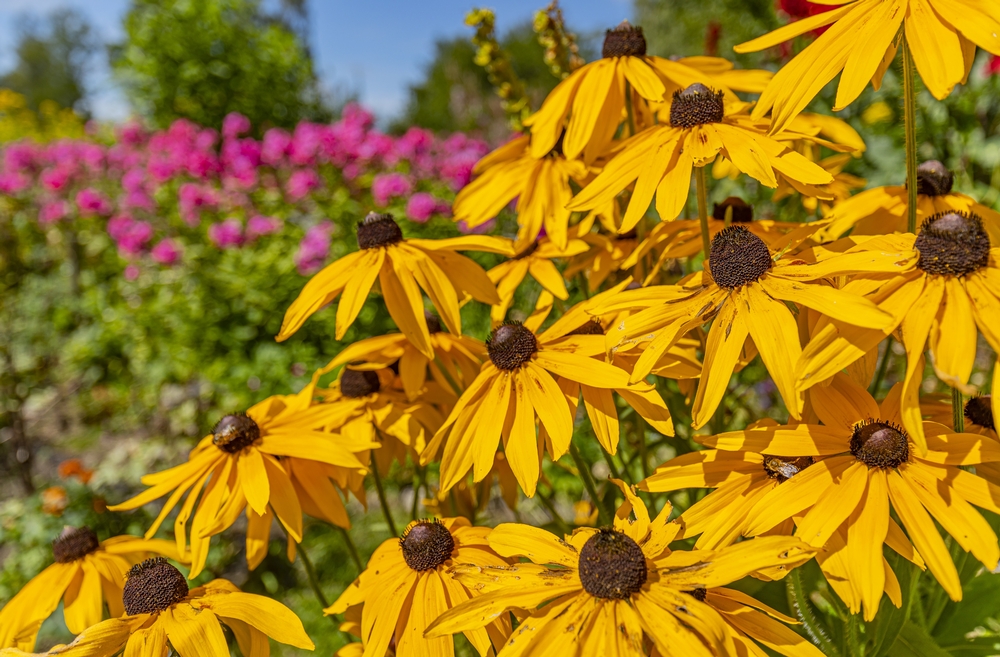
Another Illinois favorite is the Black-Eyed Susan (Rudbeckia). The bright yellow petals and dark central cones seem to capture the very essence of sunshine. Blooming from midsummer into fall, these native plants thrive in full sun and are among the easiest perennials for beginners.
Daylilies (Hemerocallis) are indispensable in Illinois gardens. Available in countless colors and forms, they bloom heavily during July. While individual flowers last only a day, mature clumps often produce blooms continuously for weeks. Many modern varieties also rebloom later in the season.
For dramatic vertical accents, gardeners can rely on Blazing Star (Liatris spicata), a native prairie perennial whose unusual flower spikes open from the top downward. Monarch butterflies and other pollinators are particularly fond of these blooms.
Bee Balm (Monarda) creates fireworks of color with its bright red, pink, or lavender flowers. Hummingbirds frequently visit the blossoms, while bees and butterflies seem unable to resist them. In many Illinois gardens, Bee Balm becomes one of the busiest pollinator plants of midsummer.
For a softer look, Russian Sage (Perovskia) sends up airy spikes of lavender-blue flowers above silver-gray foliage. Its drought tolerance makes it especially valuable during hot Illinois summers, and deer generally leave it alone.
Other notable July bloomers include Garden Phlox, Shasta Daisy, Salvia, Yarrow, Coreopsis, and Hardy Hibiscus, whose enormous tropical-looking flowers create an unforgettable midsummer display.
Flowering Shrubs That Peak in July
Perennials often receive most of the attention, but many shrubs provide equally impressive summer color.
One of the finest is Panicle Hydrangea (Hydrangea paniculata). Varieties such as 'Limelight,' 'Little Lime,' and 'Pinky Winky' begin opening their creamy-white flower clusters in July. As the season progresses, the blooms often develop pink and burgundy tones, extending interest well into autumn.
Smooth Hydrangea (Hydrangea arborescens), including the popular 'Annabelle,' also reaches its peak during midsummer. Huge white flower heads nearly cover the plant, creating an elegant display in part shade.
For pollinator enthusiasts, Buttonbush (Cephalanthus occidentalis) deserves greater attention. Native to Illinois wetlands, it produces unusual spherical white flowers that attract butterflies, bees, and other beneficial insects throughout July.
Another outstanding native is New Jersey Tea (Ceanothus americanus), a compact shrub covered with clusters of white flowers in early to midsummer. Beyond its beauty, it serves as a host plant for several butterfly species.
Gardeners seeking fragrance should consider Summersweet (Clethra alnifolia). Its spikes of white or pink flowers perfume the garden during July and attract numerous pollinators.
Another shrub worth growing is Shrub Cinquefoil (Potentilla fruticosa), which blooms continuously throughout much of the summer with cheerful yellow, white, orange, or pink flowers, depending on the cultivar.
Trees That Bloom During Chicagoland Summers
Flowering trees are often associated with spring, but several notable species save their best show for midsummer.
Perhaps the most spectacular is the Japanese Tree Lilac (Syringa reticulata). Unlike traditional lilacs that bloom in spring, this small ornamental tree produces large, creamy-white flower clusters in June and July. The blossoms are fragrant, abundant, and highly attractive to pollinators.
Golden Rain Tree (Koelreuteria paniculata) is another midsummer standout. Its bright yellow flower clusters appear in July when few other trees are in bloom. The flowers are followed by distinctive lantern-like seed pods that provide additional ornamental interest.
The native American Basswood (Tilia americana) blooms in early to midsummer and is prized by beekeepers. Its fragrant yellow flowers attract countless pollinating insects and contribute significantly to honey production.
Creating a Garden for Continuous July Interest
The secret to a memorable July garden is combining plants of different heights, textures, and bloom forms. Imagine a backdrop of hydrangeas and Japanese tree lilacs, anchored by drifts of coneflowers and Black-Eyed Susans, accented with spikes of Liatris and clouds of Russian Sage. Add Bee Balm for hummingbirds, Buttonbush for butterflies, and a Golden Rain Tree for overhead color, and the result is a landscape alive with activity.
July may bring the hottest days of the year, but it is also when many of Illinois' finest plants come into their own. By incorporating a thoughtful mix of perennials, shrubs, and flowering trees, gardeners can enjoy vibrant color, fragrance, and pollinator activity throughout the height of summer. These proven plants return year after year, creating a landscape that grows richer, fuller, and more beautiful with every season.