 North Shore Plant Club
- Shop For Plants
- Search Plants
- Resources for Gardeners
- Color Wheel of Plants
- Interactive Landscapes
- Photos of Planters & Hanging Baskets
- October Photos from Our Community
- Botanic Gardens: Chicago & Beyond
- Local Nurseries
- Upcoming Plant Events
- Plant Club Articles & Answers
- Gardening in the News
- Chicagoland Garden Calendar
- Explaining Plant Container Sizes
- Thrillers, Fillers & Spillers
- Join Free!
- Mundelein
Sky Blue Aster (Aster azureus)
|
|
| Deciduous Perennial Upright, Bushy in the Asteraceae Family | |
A tough Midwest prairie native lighting up dry, sunny spots with clouds of sky-blue, yellow-centered flowers from late summer into fall — drought-tolerant and a magnet for native bees and butterflies. |
|
|
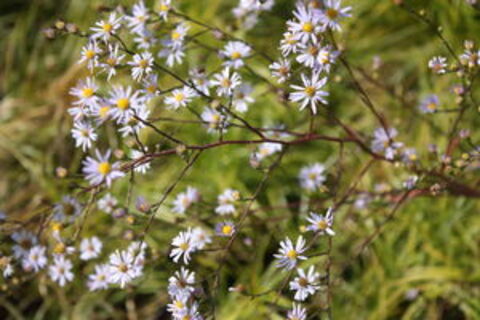
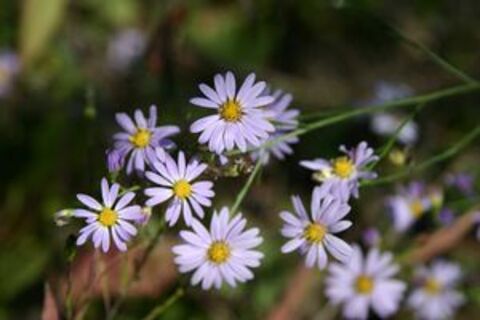
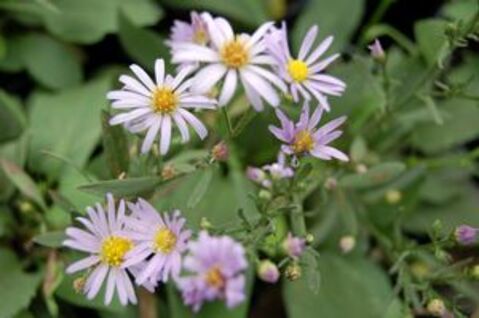
Aster azureus (Symphyotrichum oolentangiense), commonly known as Sky Blue Aster, is a native Midwestern prairie perennial prized for its abundance of small, sky-blue to lavender, daisy-like flowers with bright yellow centers. Blooming from late summer into fall, it forms an airy, upright clump of wiry, often reddish stems and rough, sandpapery leaves, with the lower leaves distinctly stalked. More sun- and drought-tolerant than most blue asters, it thrives in dry to average, well-drained soil and is a dependable late-season nectar source for native bees, butterflies, and other pollinators. |
|
Pros
|
|
Cons
|
|
| Why Like | In its native tallgrass prairies, savannas, and dry rocky woodlands across the central and eastern United States, Sky Blue Aster is one of the last major nectar sources of the year, sustaining migrating monarch butterflies and a wide range of native bees just before frost. Its abundant fluffy seed heads also feed songbirds like sparrows and juncos through the winter. |
| Highlights | One of the most drought-tolerant of the native blue asters, thriving in poor, dry, rocky soils where showier perennials struggle. A crucial late-season nectar source, blooming right as most other prairie flowers are finishing for the year. |
Plant Data | |
| Mature Size | 18 - 36 inches tall. 18 - 24 inches wide. |
| Growth Rate | Medium |
| Sun Exposure | Partial Shade - Full Sun |
| Moisture Tolerance |
Dry - Medium: Prefers dry to average moisture and is notably drought-tolerant once established; does not tolerate consistently wet or poorly-drained soil. |
| Zones | 3a - 8b (Usually hardy to -40° F) |
| Tags | Adaptable, Attracts Bees, Attracts Butterflies, Attracts Pollinators, Deciduous, Dry, Fall interest, Full Sun, Good for Butterfly Garden, Good for Rock Garden, Good for Rocky Soil, Low Maintenance, Medium, Naturalizing, Non-Allergenic, Partial Shade, Partial Sun, Perennial, Popular For Fall, Prairie Garden, Shade Tolerant |
| Bloom Period | Late Summer To Fall |
| Flower Color | Sky Blue To Lavender, Yellow Center
|
Plant Club Content |
|
In The News |
|
|
|
Commonly Planted with...Pairs well with other late-season prairie natives such as goldenrod (Solidago), little bluestem (Schizachyrium scoparium), and prairie dropseed (Sporobolus heterolepis), whose warm golds and tans complement its blue flowers. |
|

| |
|
Want More
photos of this plant? Try
Google Image Search!
|
|
Pricing and Availability HistoryClick a label to toggle visibility for that size
|
|
Past Availability2025 : 04/13 - 10/042024 : 05/01 - 10/05 2023 : 04/13 - 09/30 |
|