 North Shore Plant Club
- Shop For Plants
- Search Plants
- Resources for Gardeners
- Color Wheel of Plants
- Interactive Landscapes
- Photos of Planters & Hanging Baskets
- November Photos from Our Community
- Botanic Gardens: Chicago & Beyond
- Local Nurseries
- Upcoming Plant Events
- Plant Club Articles & Answers
- Gardening in the News
- Chicagoland Garden Calendar
- Explaining Plant Container Sizes
- Thrillers, Fillers & Spillers
- Join Free!
- Mundelein
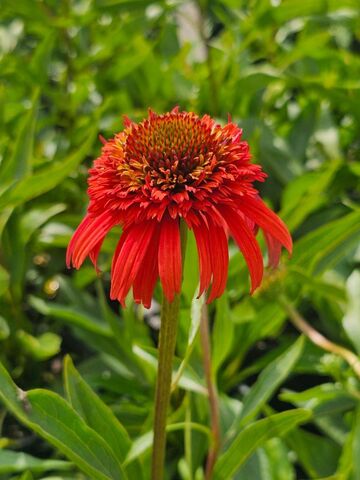
Hot Papaya Cone-Fections Coneflower (Echinacea 'Hot Papaya')
|
|||||
| Deciduous Perennial Upright, Compact in the Asteraceae Family | |||||
Buy Hot Papaya Cone-Fections Coneflower | |||||
|
|||||
Spicy red-orange flowers with papaya-orange halo in pompon center. Deep green foliage and thick stems with maroon markings. |
|||||
|
'Hot Papaya' (US Plant Patent 21,022) is a double-flowered selection in the Cone-Fections™ series, bred by Arie Blom for AB Kwekersrechten B.V. from a 2005 Echinacea hybrida cross made in Vleuten, the Netherlands. Its pompon-style blooms combine brick-orange ray petals with flashes of deep pink, lilac, gold, and yellow around a tufted, papaya-orange center cone -- a far showier form than a typical single-flowered coneflower. Plants are compact and upright, with deep green foliage and sturdy, maroon-marked stems. It reblooms over a long season from midsummer into fall, often carrying several blooms at once, and its spent flowers can be left standing to set seed for songbirds. |
|||||
Pros
|
|||||
Cons
|
|||||
Plant Data | |||||
| Mature Size | 30 - 36 inches tall. 12 - 18 inches wide. | ||||
| Growth Rate | Medium | ||||
| Sun Exposure | Partial Shade - Full Sun | ||||
| Moisture Tolerance |
Dry - Medium: Tolerates dry to moderately moist, well-drained soil once established; adaptable to clay, loamy, normal, and poor soils. |
||||
| Zones | 4a - 9b (Usually hardy to -30° F) | ||||
| Tags | Attracts Birds, Attracts Butterflies, Attracts Hummingbirds, Attracts Pollinators, Attracts Wildlife, Container, Deciduous, Deer Resistant, Drought Tolerant, Dry, Extended Bloom Time, Formal Garden, Fragrant Flowers, Full Sun, Good for Borders, Good for Butterfly Garden, Good for Cottage Garden, Good for Cut Flowers, Good for Mass Planting, Good for Rain Garden, Low Maintenance, Medium, Most Popular, Nativar, Normal Soil, Partial Shade, Partial Sun, Perennial, Popular For Fall, Prairie Garden, Rabbit Resistant, Showy Flowers, Thrillers, Tolerant of Moist Soil, Tolerant of Poor Soil, Well-Drained Soil, Winter Interest Deer Resistant Perennials, Full Sun Perennials, Large Perennials, New and Unique Perennials, Partial Sun Perennials, Summer Blooming Perennials, Yellow or Orange Flowering Perennials | ||||
| Bloom Period | July to September | ||||
| Flower Color | Red-orange
|
||||
Plant Club Content |
|||||
In The News |
|||||
|
|||||


| |
|
Want More
photos of this plant? Try
Google Image Search!
|
|
Pricing and Availability HistoryClick a label to toggle visibility for that size
|
|
Past Availability2025 : 04/03 - 10/042024 : 05/01 - 10/05 2023 : 04/13 - 09/30 |
|