 North Shore Plant Club
- Shop For Plants
- Search Plants
- Resources for Gardeners
- Color Wheel of Plants
- Interactive Landscapes
- Photos of Planters & Hanging Baskets
- November Photos from Our Community
- Botanic Gardens: Chicago & Beyond
- Local Nurseries
- Upcoming Plant Events
- Plant Club Articles & Answers
- Gardening in the News
- Chicagoland Garden Calendar
- Explaining Plant Container Sizes
- Thrillers, Fillers & Spillers
- Join Free!
- Mundelein
Large Coneflower (Rudbeckia maxima)
|
|||||
| Deciduous Perennial Upright, Clump-Forming in the Asteraceae Family | |||||
Buy Large Coneflower | |||||
|
|||||
|
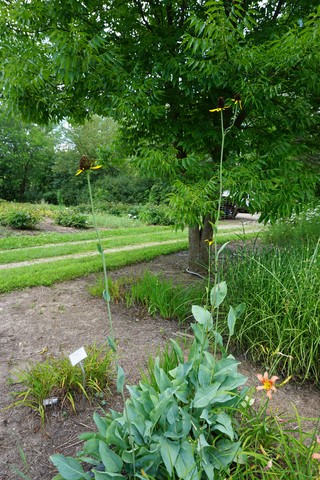
Rudbeckia maxima, commonly called the Great or Giant Coneflower, is a bold native perennial grown as much for its foliage as its flowers. Large, smooth, waxy blue-green basal leaves form a low rosette, from which nearly leafless flower stalks rise 5 to 7 feet or more, each topped with a few daisy-like blooms: drooping golden-yellow rays around an unusually tall, cigar-shaped dark brown cone. Native to moist prairies and roadsides of the south-central United States. |
|||||
Pros
|
|||||
Cons
|
|||||
| Why Like | In the wild it grows in moist prairies and roadside ditches of the south-central US. Valued in restoration plantings for its wide moisture tolerance, pollinator value, and seed heads that feed goldfinches through winter. | ||||
| Highlights | Dramatic, unusually tall dark brown central cone paired with glaucous blue-green, cabbage-like basal leaves — the tallest-coned Rudbeckia in cultivation. | ||||
Plant Data | |||||
| Mature Size | 5 - 8 feet tall. 3 - 4 feet wide. | ||||
| Growth Rate | Moderate | ||||
| Sun Exposure | Partial Shade - Full Sun | ||||
| Moisture Tolerance | Medium - Wet: Water the soil at the base of the plant, as overhead watering puts the plant at risk for mildew and other moisture-related diseases. | ||||
| Zones | 4a - 9b (Usually hardy to -30° F) | ||||
| Tags | Attracts Birds, Attracts Birds, Attracts Butterflies, Attracts Pollinators, Attracts Pollinators, Deciduous, Deciduous, Deer Resistant, Deer Resistant, Dry, Full Sun, Full Sun, Good for Borders, Good for Butterfly Garden, Good for Cottage Garden, Good for Cut Flowers, Good for Mass Planting, Good for Mass Planting, Good for Rain Garden, Good for Rain Garden, Low Maintenance, Low Maintenance, Medium, Medium, Native to North America, Native to North America, Normal Soil, Normal Soil, Partial Shade, Partial Shade, Partial Sun, Partial Sun, Perennial, Perennial, Popular For Fall, Popular For Fall, Rabbit Resistant, Rabbit Resistant, Showy Flowers, Tolerant of Moist Soil, Well-Drained Soil, Well-Drained Soil, Wet, Woodland Garden | ||||
| Bloom Period | July-Aug, 2nd flush Sep-Oct if deadheaded | ||||
| Flower Color | Yellow Rays Surround Dark Brown Center Cone | ||||
| Foliage Color | Blue-Green
| ||||
Awards |
|||||
Plant Club Content |
|||||
In The News |
|||||
|
|||||
More Info from Experts |
|||||
Commonly Planted with...Symphyotrichum novae-angliae, Monarda fistulosa, Penstemon digitalis, Eutrochium (Joe Pye Weed), Vernonia, Silphium, Panicum virgatum, Sporobolus heterolepis |
|||||
| |
|
Want More
photos of this plant? Try
Google Image Search!
|
|
Pricing and Availability HistoryClick a label to toggle visibility for that size
|
|
Past Availability2025 : 08/10 - 08/23 |
|