 North Shore Plant Club
- Shop For Plants
- Search Plants
- Resources for Gardeners
- Color Wheel of Plants
- Interactive Landscapes
- Photos of Planters & Hanging Baskets
- November Photos from Our Community
- Botanic Gardens: Chicago & Beyond
- Local Nurseries
- Upcoming Plant Events
- Plant Club Articles & Answers
- Gardening in the News
- Chicagoland Garden Calendar
- Explaining Plant Container Sizes
- Thrillers, Fillers & Spillers
- Join Free!
- Mundelein
Goldsturm Black-Eyed Susan (Rudbeckia fulgida var. sullivantii 'Goldsturm')
|
|||||
| Deciduous Perennial Upright, Clump-Forming in the Asteraceae Family | |||||
Buy Goldsturm Black-Eyed Susan | |||||
|
|||||
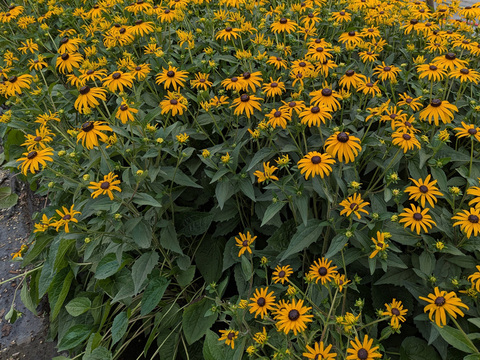
Goldsturm Black-Eyed Susan captivates with its iconic golden petals and dark centers, creating a stunning display that brightens any landscape. Renowned for its hardiness and prolific blooming, thriving from summer to fall. |
|||||
|
'Goldsturm' is the gold-standard clone of Rudbeckia fulgida var. sullivantii, discovered by Heinrich Hagemann while working for the German nurseryman and garden designer Karl Foerster, who introduced it in 1937. Its daisy-like golden-yellow flowers with dark chocolate-brown centers bloom in profusion from midsummer into fall, held above a tidy clump of dark green foliage. One of the most widely planted perennials in American gardens, it spreads slowly by rhizomes to form dense, long-lived colonies. |
|||||
Pros
|
|||||
Cons
|
|||||
| Highlights |
|
||||
Plant Data | |||||
| Mature Size | 24 - 30 inches tall. 18 - 24 inches wide. | ||||
| Growth Rate | Moderate | ||||
| Sun Exposure | Partial Sun - Full Sun | ||||
| Moisture Tolerance | Dry - Medium: Tolerates both average garden moisture and periods of wetness; avoid prolonged drought when newly planted. | ||||
| Zones | 3a - 9b (Usually hardy to -40° F) | ||||
| Tags | Attracts Bees, Attracts Beneficial Insects, Attracts Butterflies, Attracts Hummingbirds, Attracts Pollinators, Container, Deciduous, Deer Resistant, Drought Tolerant, Dry, Edging, Extended Bloom Time, Formal Garden, Full Sun, Good for Beginners, Good for Borders, Good for Butterfly Garden, Good for Cottage Garden, Good for Cut Flowers, Good for Mass Planting, Good for Rain Garden, Low Maintenance, Medium, Most Popular, Nativar, Naturalizing, Normal Soil, Partial Sun, Perennial, Popular For Fall, Prairie Garden, Rabbit Resistant, Showy Flowers, Thrillers, Tolerant of Moist Soil, Well-Drained Soil | ||||
| Bloom Period | July - September | ||||
| Flower Color | Yellow Rays With Brown Center Disk
|
||||
Awards |
|||||
Most Popular Plants |
|||||
|
"Dry" #8,
"Nativar" #9,
"Popular For Fall" #15,
"Attracts Hummingbirds" #17,
"Thrillers" #18,
"Good for Rain Garden" #20,
"Prairie Garden" #20,
"Attracts Beneficial Insects" #20,
"Extended Bloom Time" #21,
"Naturalizing" #21
|
|||||
In The News |
|||||
|
|||||
More Info from Experts |
|||||
Commonly Planted with...Echinacea, Salvia, Aster, Monarda, Agastache, Coreopsis, Sedum, Phlox, Liatris, Veronicastrum. |
|||||
Photos of This with...Moonshine Yarrow, Sun King Udo, Ghost Fern, Karl Foerster Feather Reed Grass, Mixed Combo Pastels Chrysanthemum: Pink/Peach/Pearl, Neon Star Dianthus, Rattlesnake Master, Northwind Switch Grass, Napier Grass, Quickcover Yellow Sedum, Sedum Autumn Fire, |
|||||




| |
|
Want More
photos of this plant? Try
Google Image Search!
|
|
Pricing and Availability HistoryClick a label to toggle visibility for that size
|
|
Past Availability2025 : 04/03 - 10/042024 : 05/01 - 10/05 2023 : 04/13 - 09/30 |
|